
Helena (Saint Helena), mother of Constantine I
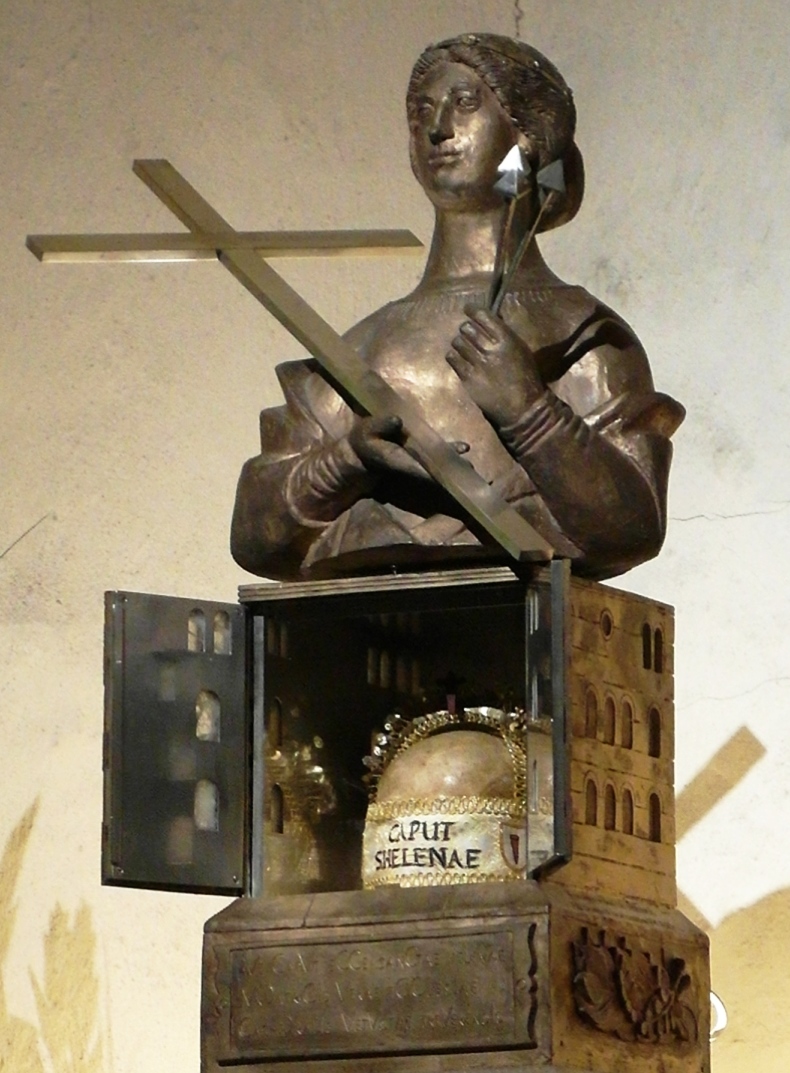
Flavia Julia Helena, traditionally known as Saint Helena, was mother of Constantine the Great. She is remembered for her conversion to Christianity, pilgrimage to the Holy Land, and discovery of the True Cross.
Flavia Julia Helena (c. 250 – c. 329), commonly called Helena or Saint Helena, was the mother of Constantine the Great and a prominent figure in the early fourth century Roman world. Raised to the rank of augusta after her son's accession, she is best known for her association with the early Christian Church and for founding and restoring several important Christian sites. Contemporary and later accounts mix historical record with devotional tradition, so some details of her life remain uncertain.
Image gallery
10 Images



Origins and status
Helena's origins are described variously in ancient sources; she is often said to have been of humble birth and to have been the wife or concubine of the future emperor Constantius I. When her son Constantine became emperor, Helena received imperial honours and influence at court. Though not an emperor herself, she used her position to sponsor religious projects and to promote the newly favoured Christian community within the Roman Empire.
Pilgrimage and discovery
Later Christian writers credit Helena with making a pilgrimage to the eastern provinces and to Jerusalem, where she undertook excavations at sites associated with the life and passion of Jesus. These accounts relate that she found certain relics identified as fragments of the True Cross. Whether taken literally or regarded as pious tradition, the story had a powerful effect on Christian devotion and on the practice of relic veneration in subsequent centuries.
Building patronage
- She is traditionally credited with founding and restoring churches in the Holy Land, especially the Church of the Holy Sepulchre and the Church of the Nativity.
- In Rome and elsewhere she sponsored shrines and churches that preserved relics and commemorated Christian events.
- Her activity helped establish imperial support for Christian architecture and pilgrimage as public phenomena.
Veneration and legacy
Because of the combination of her imperial patronage and the association with holy relics, Helena was venerated as a saint in many Christian traditions; references to her sanctity appear in both Eastern and Western sources (Christianity), and devotional commemoration developed around her memory (Saint Helena). Her reputed discoveries strengthened the cult of relics and shaped medieval pilgrimage routes.
Helena was interred in a mausoleum outside Rome often referred to as the Mausoleum of Helena. Her life sits at the intersection of imperial politics, religious transformation, and devotional storytelling: whether assessed as a political actor, a pious pilgrim, or a symbolic figure, she remains one of the most influential women associated with the Christianization of the Roman Empire.
Related articles
Author
AlegsaOnline.com Helena (Saint Helena), mother of Constantine I Leandro Alegsa
URL: https://en.alegsaonline.com/art/120467