
Hafez: Persian Lyric Poet of Shiraz and Author of the Divan
Hafez (Khwajeh Shams al-Din) was a 14th-century Persian poet from Shiraz whose ghazals in the Divan shaped Persian literature, Sufi thought, and popular culture across centuries.
Overview
Khwajeh Shams al‑Din Muhammad Hafez‑e Shirazi, commonly known as Hafez or Hafiz, is one of the most celebrated poets of classical Persian literature. Writing in the 14th century, he produced a large body of lyric poetry — especially ghazals — that combine musical language, layered symbolism, and moral and mystical reflection. His collected poems are traditionally gathered under the title Divan of Hafez.
Image gallery
10 Images
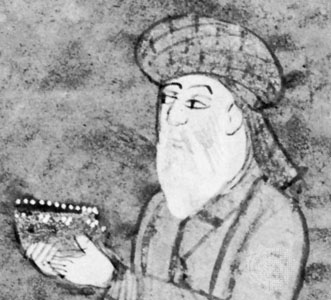


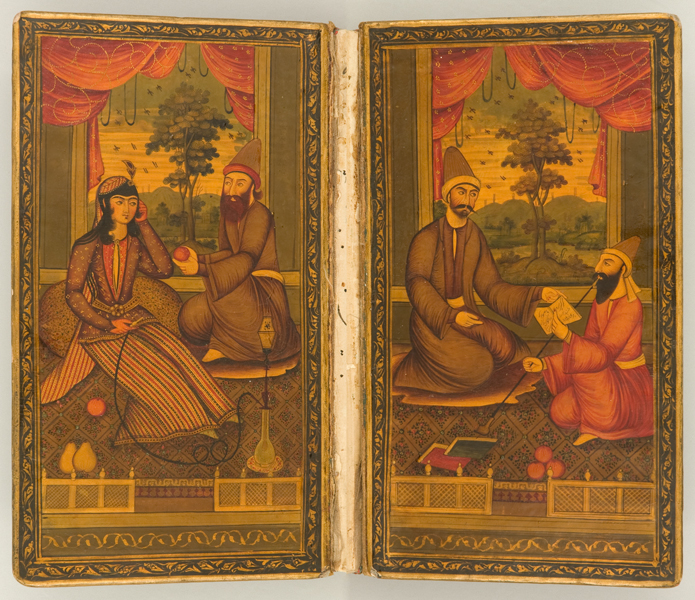
Life and historical context
Hafez was born and raised in the city of Shiraz, in present‑day Iran. Exact dates for his birth and death are uncertain and vary in different accounts, but he is placed in the later medieval period. Early reports emphasize his memorization of the Quran in youth and his training in classical Persian poetic forms. His life unfolded against the backdrop of political turbulence and cultural renewal in southwestern Persia, and Shiraz itself remained an important center of arts and learning.
Themes, form, and style
Hafez wrote mainly in the ghazal form: short, rhymed lyrics that explore love, longing, wine, praise of the beloved, spiritual yearning, and social critique. His style is notable for its:
- Concentration of meaning and musical phrasing;
- Ambiguity that allows both mystical (Sufi) and worldly readings;
- Witty rejoinders and subtle criticism of hypocrisy and pretension.
The Divan and popular practices
The Divan of Hafez is the standard compiled collection of his poems and has enjoyed continuous readership for centuries. Beyond literary study, Hafez’s poetry is woven into everyday Persian life: people commonly learn verses by heart, place the Divan on tables at family gatherings, and practice fal‑e Hafez — a form of bibliomancy in which a passage is opened at random for personal reflection or guidance.
Influence and reception
Hafez exerted a profound influence on subsequent Persian poets, Sufi thinkers, and the culture of the region. His work entered European awareness from the 18th century onward; one of the earliest European renderings was made by William Jones in 1771. Later writers and artists, including figures in Western Romanticism, admired and quoted Hafez. Scholarly debate continues about how to balance mystical and secular interpretations of his images, which is part of his enduring appeal.
Further reading and resources
For the Persian spelling and traditional biographical notes see Persian sources. General overviews of Persian poetry and ghazal technique are available at introductory sites and academic summaries (poetry overview, literary context). Information about his association with Shiraz and local traditions can be found in cultural guides (Shiraz resources). For translations and commentaries in English consult modern editions and translated selections (translations and studies).
Note: Hafez’s language is dense with metaphor and historical nuance; readers often benefit from annotated editions or bilingual texts that clarify classical Persian idioms, cultural references, and possible layers of meaning.
Questions and answers
Q: Who is Hafez?
A: Hafez, whose full name is Khwajeh Shams al-Din Muhammad Hafez-e Shirazi, is a Persian poet born in Shiraz, Iran.
Q: When was Hafez born?
A: Hafez's birth year is uncertain, but he was born between 1310 and 1337.
Q: How old was Hafez when he died?
A: Hafez is believed to have died at the age of 69.
Q: What did Hafez learn at an early age?
A: Hafez learnt the Quran by heart at an early age.
Q: What is Divan e Hafez?
A: Divan e Hafez is a collection of Hafez's poems.
Q: Who translated Hafez's work into English and when?
A: William Jones translated Hafez's work into English in 1771.
Q: Where was Hafez born?
A: Hafez was born in Shiraz, Iran.
Related articles
Author
AlegsaOnline.com Hafez: Persian Lyric Poet of Shiraz and Author of the Divan Leandro Alegsa
URL: https://en.alegsaonline.com/art/120200
Sources
- wikidata.orgQ6240.html : wikidata.orgq6240.html
- authority.bibsys.no : 90191385
- catalogo.bne.es : XX1100102
- catalogue.bnf.fr : cb12648774q
- data.bnf.fr : (data)
- ci.nii.ac.jp : DA03592755
- d-nb.info : 118544632
- isni.org : 0000 0001 2341 8061
- id.loc.gov : n79086812
- kopkatalogs.lv : 000202233
- musicbrainz.org : 9c93120d-9953-4346-979c-852ff15893e5
- id.ndl.go.jp : 00442132
- aleph.nkp.cz : jn20000700682
- nla.gov.au : 40945963
- uli.nli.org.il : 000058807