
Hailemariam Desalegn — Ethiopian political leader and prime minister (2012–2018)
Profile of Hailemariam Desalegn, Ethiopian politician who served as prime minister from 2012 to 2018, his career, policies, challenges and the circumstances of his resignation.
Overview
Hailemariam Desalegn Boshe (born 19 July 1965) is an Ethiopian political figure who served as Prime Minister from July 2012 until his resignation in February 2018. He assumed office after the death of his predecessor Meles Zenawi, led the ruling coalition through a period of rapid economic change and intense domestic unrest, and stepped down amid nationwide protests and political pressure. His name in Amharic appears in some sources as shown here.
Image gallery
9 Images


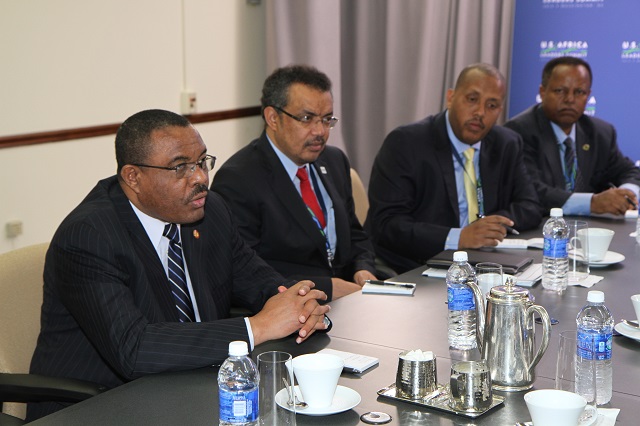
Background and rise
Before becoming prime minister, Hailemariam spent years working within the Ethiopian People's Revolutionary Democratic Front (EPRDF) coalition and the federal government. He held senior government positions, including roles equivalent to deputy head of government and chief diplomat, gaining a reputation as a pragmatic administrator and coalition manager. Sources often describe him broadly as an experienced party and regional leader rather than as a populist figure; for basic biographical summaries see profiles that label him an Ethiopian politician.
Key roles and responsibilities
- Succeeded to the premiership in July 2012 and led the federal government until early 2018.
- Managed both domestic policy priorities and international relations during a time of ambitious infrastructure projects and external investment.
- Was responsible for coordinating policies across the EPRDF member parties and regional administrations.
Policies, achievements and challenges
Hailemariam presided over continued emphasis on state-led economic development, with attention to large-scale infrastructure, industrialization efforts and attracting foreign investment. His administration is credited with steady economic growth in parts of the period, but it faced persistent challenges: rising ethnic tensions, disputes over land and political space, and criticism from rights groups about restrictions on dissent. In response to escalating unrest and security incidents, the government declared a national state of emergency in 2016 to restore order, an action that drew both domestic and international attention.
Resignation and subsequent developments
Large, sustained protests in several regions culminated in political turmoil that prompted Hailemariam to announce his resignation on 15 February 2018. He said stepping down would create room for reforms and national reconciliation. His departure opened the way for new leadership within the ruling coalition and a period of rapid political change that followed later in 2018, including attempts to ease tensions and broaden political participation.
Legacy and significance
Hailemariam's tenure is often viewed as transitional: he led a continuity government after a long-serving predecessor, navigated difficult security and ethnic challenges, and ultimately relinquished power in a rare voluntary resignation by an Ethiopian prime minister. Observers note his administration combined technocratic governance with heavy-handed security measures, leaving a mixed legacy of development initiatives alongside unresolved political grievances. For further reading and official profiles see summaries linked here and other overviews.
Related articles
Author
AlegsaOnline.com Hailemariam Desalegn — Ethiopian political leader and prime minister (2012–2018) Leandro Alegsa
URL: https://en.alegsaonline.com/art/120206
Sources
- bbc.com : "Ethiopia PM Hailemariam Desalegn in surprise resignation"
- durame.com : "Hailemariam Desalegn's Biography"