
Georgy Zhukov: Soviet Marshal and World War II Commander
Georgy K. Zhukov (1896–1974) was a leading Soviet general whose planning and leadership were central to several major WWII battles. He later held high military office and remains a prominent, contested historical figure.
Overview
Georgy Konstantinovich Zhukov (December 1, 1896 – June 18, 1974) was one of the Soviet Union's most prominent military commanders of the twentieth century. Rising from humble origins, he became widely known for his energy in organizing defenses and for directing large-scale offensive operations during World War II. For a concise biographical summary see overview sources.
Image gallery
10 Images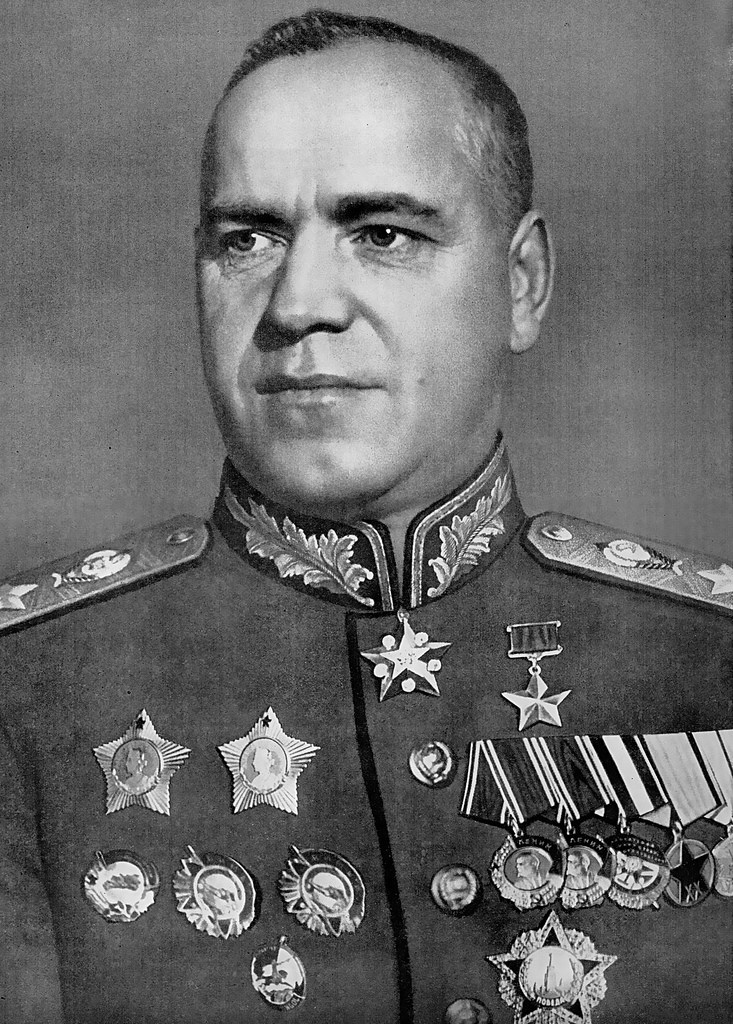


Early life and pre‑war career
Zhukov enlisted in the Imperial Russian Army during World War I and remained in the Red Army after the revolution. In the 1930s he advanced through staff and field commands and won recognition for his role in border clashes with Japan. He was instrumental in Soviet success against a Japanese force at the engagement often called Khalkhin Gol; contemporary accounts link that action to preventing a larger Japanese incursion into Mongolia.
Defense and turning points, 1941–1943
When Nazi Germany launched Operation Barbarossa in 1941, Zhukov was among the officers reassigned to organize urgent defenses. He helped coordinate the relief of besieged areas and directed reserves that arrived just in time to protect key objectives around Moscow. As the Red Army shifted to counteroffensive operations, Zhukov became a central planner and front commander, supervising complex combined-arms operations and large troop movements.
Major campaigns and battlefield roles
- Stalingrad: Zhukov played a key part in planning the Soviet encirclement that turned the battle in late 1942 and early 1943 (Stalingrad).
- Kursk: In 1943 he was involved in preparations that blunted the last major German strategic offensive on the Eastern Front (Kursk).
- Leningrad and the North: He contributed to operations that lifted or eased sustained sieges and stabilized northern fronts.
- Operation Bagration and the advance into Germany: Soviet summer offensives in 1944 smashed the German Army Group Centre and set the scene for the final push into the Reich; Zhukov commanded forces during the final assault on Berlin and the advance that overran remaining German defenses (Germany).
Honors, postwar career and legacy
Zhukov received numerous awards, including being named Hero of the Soviet Union four times and earning widespread public recognition at home. After the war he held senior military and governmental positions; after Joseph Stalin's death he occupied high office and later served as Minister of Defense. For details of decorations and later appointments consult official records. He also wrote memoirs and his wartime decisions have been the subject of extensive historical study.
Notable facts and historical assessment
Zhukov is remembered both for effective operational command and for a direct, sometimes ruthless approach to wartime exigencies. Historians note his talent for rapid concentration of forces, logistics coordination on a mass scale, and willingness to accept heavy losses when pursuing strategic objectives. Monuments, street names and debates about his role in Soviet military culture make him a lasting, contested figure in twentieth‑century history.
Related articles
Author
AlegsaOnline.com Georgy Zhukov: Soviet Marshal and World War II Commander Leandro Alegsa
URL: https://en.alegsaonline.com/art/119686