
Geoffrey Gurrumul Yunupingu — Yolngu singer and internationally acclaimed musician
Profile of Geoffrey Gurrumul Yunupingu (1971–2017), an Indigenous Australian singer-songwriter from Arnhem Land, his music in Yolngu languages, instruments, career with Yothu Yindi and Saltwater Band, solo albums and legacy.
Geoffrey Gurrumul Yunupingu (22 January 1971 – 25 July 2017), commonly known simply as Gurrumul, was an Indigenous Australian musician celebrated for his expressive tenor voice and for bringing Yolngu song traditions to national and international audiences. He sang predominantly in Yolngu languages and performed music that blended traditional Aboriginal song with contemporary arrangements. Many sources describe him as one of Australia's most distinctive vocal talents; his career included work with established groups and a highly successful solo run that earned multiple industry awards and widespread critical praise. Indigenous Australian musician
Image gallery
3 Images
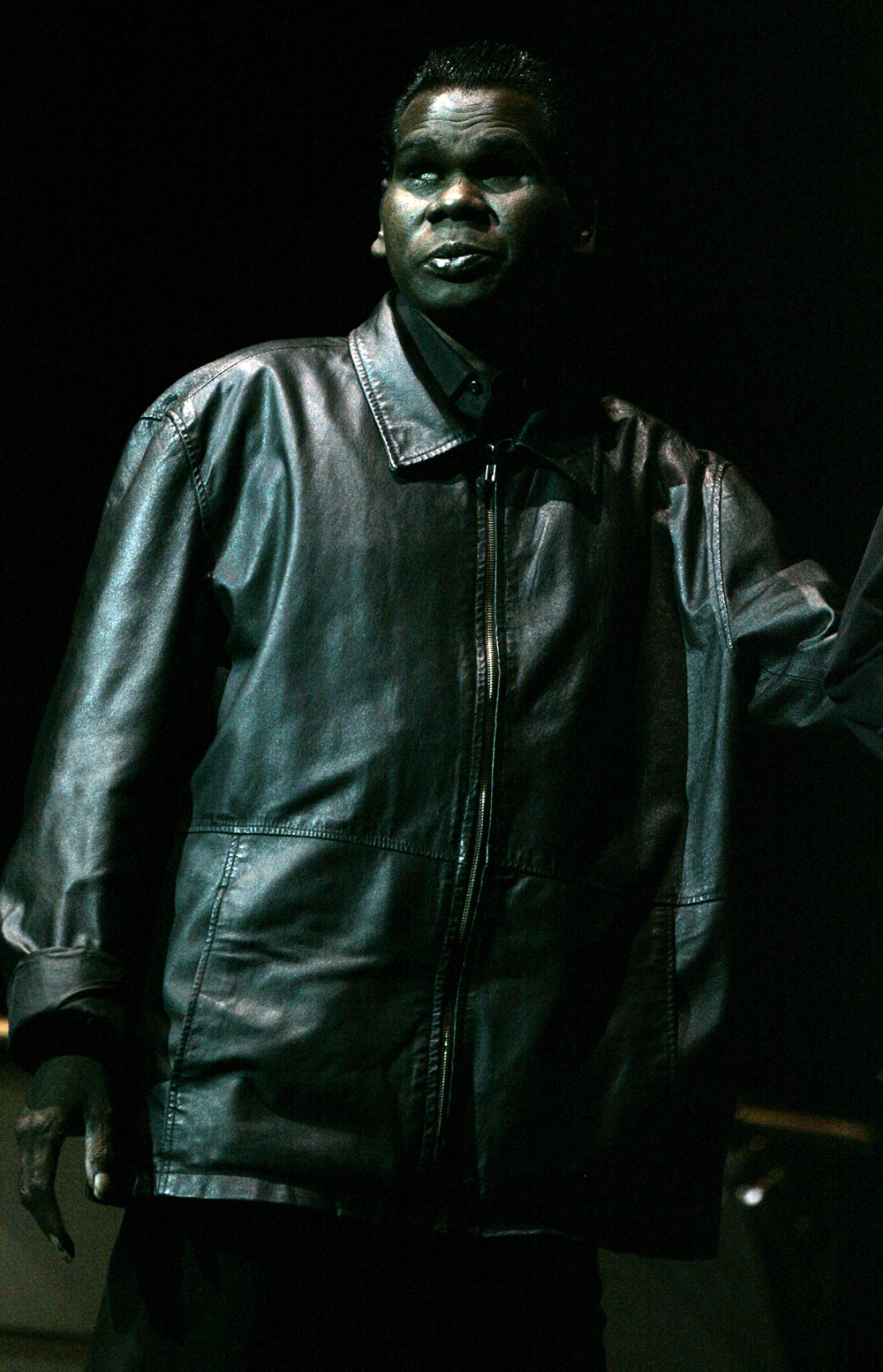

Voice, languages and instruments
Gurrumul's music is characterised by a translucent, pure vocal tone and simple, reverent accompaniment that allowed his melodies and the Yolngu words to take centre stage. Most of his repertoire is sung in Yolngu languages such as Galpu, Gumatj and Djambarrpuyngu; these are languages of the Yolngu people of north-eastern Arnhem Land. Although a handful of his recordings include some English lyrics, he is widely reported to have spoken little or no English in everyday life. Vocally and linguistically his work remained rooted in Yolngu culture, with songs often conveying family histories, creation themes and community narratives. Yolngu languages
As an instrumentalist Gurrumul accompanied himself on several instruments. He is most often pictured playing acoustic guitar and used open tunings to create sustained, harp-like textures. He also used keyboards and simple percussion in studio and stage arrangements. Traditional instruments occasionally featured in his performances, including the yidaki (commonly known as the didgeridoo). Lists of his principal instruments commonly include:
- Guitar
- Keyboards
- Drums and percussion
- Yidaki (didgeridoo)
Early life and career
Gurrumul was born at Galiwin'ku on Elcho Island (off the Arnhem Land coast) and belonged to the Gumatj clan; his mother was from the Galpu clan. He was born blind, a fact he and others described matter-of-factly while it influenced how he experienced and created music. Born blind
He first gained wider attention as a founding member of the influential Indigenous band Yothu Yindi, where he contributed as a musician and singer for nearly a decade. After leaving that group he was involved with the Saltwater Band, continuing to perform and to develop his approach that merged Yolngu song forms with accessible contemporary soundscapes.
Solo work, recognition and recordings
Gurrumul's solo debut, released in 2008 as the eponymous album Gurrumul, brought him international acclaim. The record charted strongly and won multiple awards, and his follow-up albums continued to attract critical praise. His recordings earned nominations and wins at the ARIA Awards and at Indigenous music award ceremonies, and he was recognised at independent music awards for both artistic achievement and production. His albums reached notable chart positions on the ARIA Charts.
In 2011 he released the album Rrakala, further consolidating his reputation. After his death a posthumous release, which presented more of his songs and orchestral arrangements, was widely celebrated and made a significant impact on the Australian charts, underlining his singular place in contemporary music.
Legacy, significance and later life
Gurrumul's music is often praised for its capacity to convey Yolngu cultural concerns and emotion to listeners unfamiliar with Indigenous languages. He was known for a quiet, reserved stage manner—rarely speaking between songs—and for maintaining strong cultural ties to his community in north-eastern Arnhem Land. His work prompted increased interest in Indigenous languages and in cross-cultural musical collaborations.
In July 2017 Gurrumul died in Darwin at the age of 46 after a period of ill health. Reports at the time stated that he had been treated for organ complications related to kidney and liver failure. His passing prompted tributes from across the music world and renewed attention to his recordings and the Yolngu material he helped bring to a broad audience.
Notable facts
- Although mostly sung in Yolngu languages, Gurrumul's music found international listeners who responded to his vocal clarity and emotional delivery.
- He maintained strong cultural connections to his homeland and family while achieving a global profile.
- His recorded work remains an entry point for people seeking to understand contemporary expressions of Indigenous Australian song.
For further reading and audio-visual resources, consult specialised music archives and Indigenous cultural centres, which hold contextual material about Yolngu songlines and Gurrumul’s recordings. Anchor links above point to general categories of reference on his life and work.
Questions and answers
Q: What was Geoffrey Gurrumul Yunupingu's stage name?
A: His stage name was Gurrumul.
Q: What languages did he sing in?
A: He sang in Galpu, Gumatj and Djambarrpuyngu, which are all languages of the Yolngu people of northeastern Arnhem Land.
Q: Where was he born?
A: He was born at Galiwin'ku, on Elcho Island, off the coast of Arnhem Land.
Q: Was he blind from birth?
A: Yes, he was born blind.
Q: Did he speak English?
A: Although a few of his songs were written and sung in English, he did not speak the language.
Q: What band did Gurrumul found and play with for almost ten years?
A: He founded Yothu Yindi and played with them for almost ten years until 1995.
Q: When did Gurrumul release his first solo album ? A: He released his first solo album "Gurrumul" in 2008.
Related articles
Author
AlegsaOnline.com Geoffrey Gurrumul Yunupingu — Yolngu singer and internationally acclaimed musician Leandro Alegsa
URL: https://en.alegsaonline.com/art/119504
Sources
- dbmagazine.com.au : "Geoffrey Gurrumul Yunipingu: Gurrumul (Skinnyfish)"
- theaustralian.com.au : "Second sight"
- music.guardian.co.uk : "Aboriginal singer beats poverty and prejudice to top Australian charts"
- theaustralian.com.au : "Geoffrey Gurrumul provides a vivid experience of life in Arnhem Land"
- nit.com.au : "Yunupingu's voice creates waves throughout the world"
- nit.com.au : "Gurrumul CDs to tap into UK"
- pandora.nla.gov.au : "Week Commencing 21 September 2009"
- ariaawards.com.au : "Winners By Year: 2008"
- ntnews.com.au : "Gurrumul Deadly at Awards"
- ausindies.com.au : "The Winners" · web.archive.org
- theaustralian.com.au : "Singer Dr G. Yunupingu dies aged 46"