
Gaspar Melchor de Jovellanos
Spanish Enlightenment statesman, jurist and writer who promoted agrarian and educational reform and left a lasting influence on 18th–19th century Spanish thought.
Gaspar Melchor de Jovellanos (born 5 January 1744 — died 27 November 1811) was a leading figure of the Spanish Enlightenment. Trained in law, he combined public service with literary and philosophical work and came to be identified with moderate reformist currents that sought economic modernization, better education and legal improvement in late 18th-century Spain. He is often described as a statesman, writer and philosopher.
Image gallery
2 Images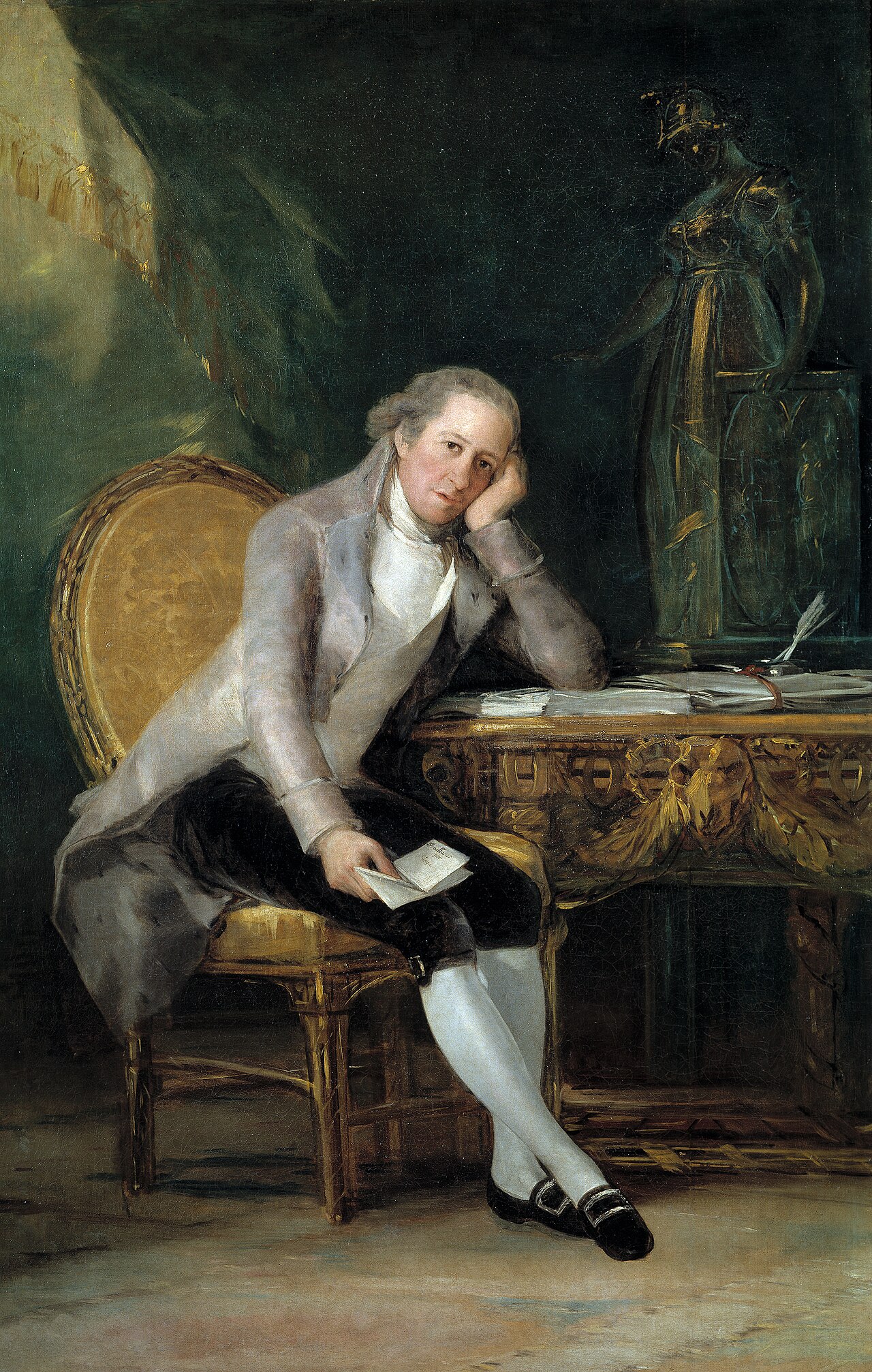

Life and public career
Jovellanos held several official posts in the Spanish administration and worked with provincial economic societies to promote improvement projects. His career combined judicial duties and administrative responsibilities. At various times he experienced political suspicion and was removed from office or placed under restricted residence; nevertheless he continued to write and advise on public matters until his death.
Major themes and writings
He is best known for practical, reform-minded essays and reports rather than abstract theory. His arguments emphasized agricultural improvement, clearer laws, and broader access to useful education. Some of his writings were organized reports intended for policymakers, while others were plays and literary pieces illustrating social questions.
- Economic and agrarian reform: reports proposing changes to land use and rural productivity.
- Education and civic improvement: proposals to expand practical schooling and technical instruction.
- Legal and administrative critique: calls for clarity in law and efficiency in government.
- Literary work: plays and essays that combine neoclassical aesthetics with moral concerns.
Jovellanos's style is typically neoclassical: clear, orderly and oriented toward public utility. His blend of practical proposals and literary skill secured a lasting influence on Spanish liberal and reformist thought in the 19th century. He is commemorated in Spain through editions of his works, biographies, and institutions that cite his role in the nation's reformist tradition.
Questions and answers
Q: Who was Gaspar Melchor de Jovellanos?
A: Gaspar Melchor de Jovellanos was a Spanish neoclassical statesman, writer, and philosopher born on January 5th, 1744.
Q: What were the fields in which Gaspar Melchor de Jovellanos excelled?
A: Gaspar Melchor de Jovellanos excelled in the fields of politics, literature, and philosophy.
Q: What is neoclassicism?
A: Neoclassicism is an art and cultural movement that emerged in the 18th century, characterized by a renewed interest in classical art, culture, and literature.
Q: Why is Gaspar Melchor de Jovellanos famous?
A: Gaspar Melchor de Jovellanos is famous for his influential works in literature and philosophy, as well as his contributions to Spanish politics, including his efforts to modernize the Spanish economy and promote constitutional reform.
Q: When was Gaspar Melchor de Jovellanos born and when did he die?
A: Gaspar Melchor de Jovellanos was born on January 5, 1744 and died on November 27, 1811.
Q: What was Gaspar Melchor de Jovellanos' role in Spanish politics?
A: Gaspar Melchor de Jovellanos played a significant role in Spanish politics, advocating for constitutional reform, promoting modernization of the economy, and serving as a member of the Royal Council.
Q: What is the significance of Gaspar Melchor de Jovellanos' contributions to literature?
A: Gaspar Melchor de Jovellanos' contributions to literature helped to revive and promote the neoclassical style in Spain, which had a lasting impact on Spanish literature and culture.
Related articles
Author
AlegsaOnline.com Gaspar Melchor de Jovellanos Leandro Alegsa
URL: https://en.alegsaonline.com/art/119450