
Black-footed cat (Felis nigripes): smallest African wildcat
Compact encyclopedia entry on the black-footed cat (Felis nigripes): appearance, behavior, habitat, conservation status, and notable facts about this vulnerable, largely nocturnal African species.
Overview
The black-footed cat (Felis nigripes) is the smallest wild cat in Africa and is native to the arid and semi-arid regions of the continent's southwest. It is adapted to dry landscapes and is primarily known for its tiny size, secretive habits and fierce hunting ability despite its diminutive stature. The species is listed as vulnerable by conservation authorities; see its assessment here. It is also referenced in taxonomic and natural history sources under the name Felis nigripes.
Image gallery
7 Images



Description and adaptations
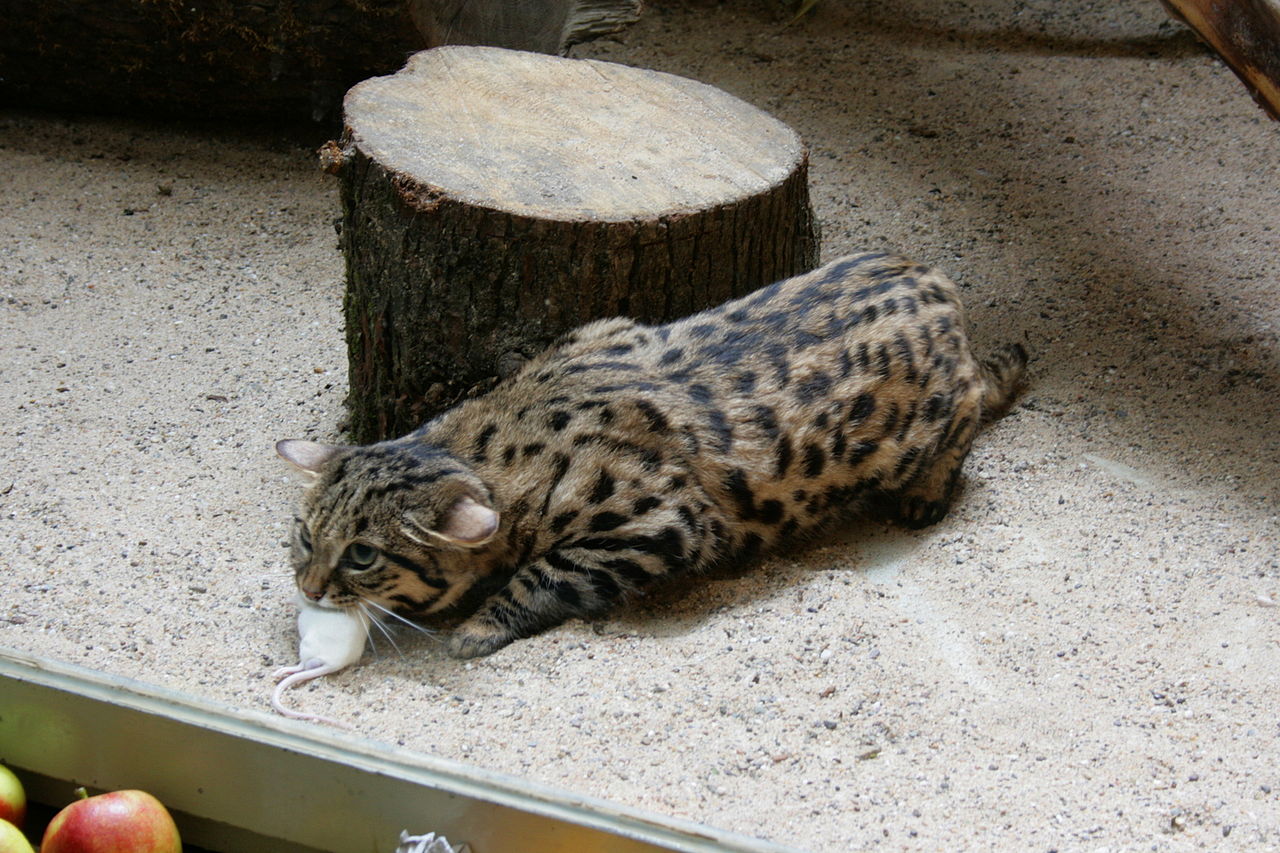
Black-footed cats have a compact build, with a sandy to yellowish coat patterned with dark spots and stripes that provide camouflage in sparse vegetation. As the common name suggests, their feet are dark, which may help conceal tracks. They possess large eyes and ears for detecting prey at night and strong jaws and claws relative to body size, enabling them to subdue animals larger than themselves.
Habitat and distribution
This species occupies dry savannas, grasslands and scrublands in southern Africa. Populations are scattered and associated with open terrain where small mammals and birds are accessible. Their range includes parts of Namibia, Botswana and South Africa, where they use dens and burrows for shelter and daytime rest.
Behavior and diet
Primarily nocturnal and solitary, black-footed cats are highly effective hunters. Their diet consists largely of small rodents, birds, insects and occasionally reptiles. They use stealth and short bursts of speed, and studies note a high hunting success rate compared with many other small felids. Breeding and territorial behaviors are typical of small solitary cats, with males ranging over larger areas than individual females.
Conservation status and threats
Listed as vulnerable, the black-footed cat faces threats from habitat loss, fragmentation, persecution associated with livestock and pest control, incidental trapping, and road mortality. Conservation actions include habitat protection, reducing conflict with farmers, research into population size and trends, and some captive-breeding and reintroduction initiatives intended to support wild populations.
Notable facts and distinctions
- It is the smallest African wildcat species, smaller than the more familiar serval and caracal.
- Despite its size, it is an accomplished predator with an unusually high capture rate for small mammals.
- Its secretive nature and low population density make it difficult to study, so aspects of its ecology remain incompletely known.
Related articles
Author
AlegsaOnline.com Black-footed cat (Felis nigripes): smallest African wildcat Leandro Alegsa
URL: https://en.alegsaonline.com/art/11914
Sources
- dx.doi.org : "The Mammals of the Southern African Subregion H.N. Reay Smithers University of Pretoria, Republic of South Africa 1983, R100"
- doi.org : 10.1017/s0030605300019888
- worldcat.org : 0030-6053