
Black mamba (Dendroaspis polylepis)
Large African elapid snake noted for its speed, potent neurotoxic venom and the black coloring inside its mouth. Overview of appearance, behavior, habitat, venom, and interactions with people.
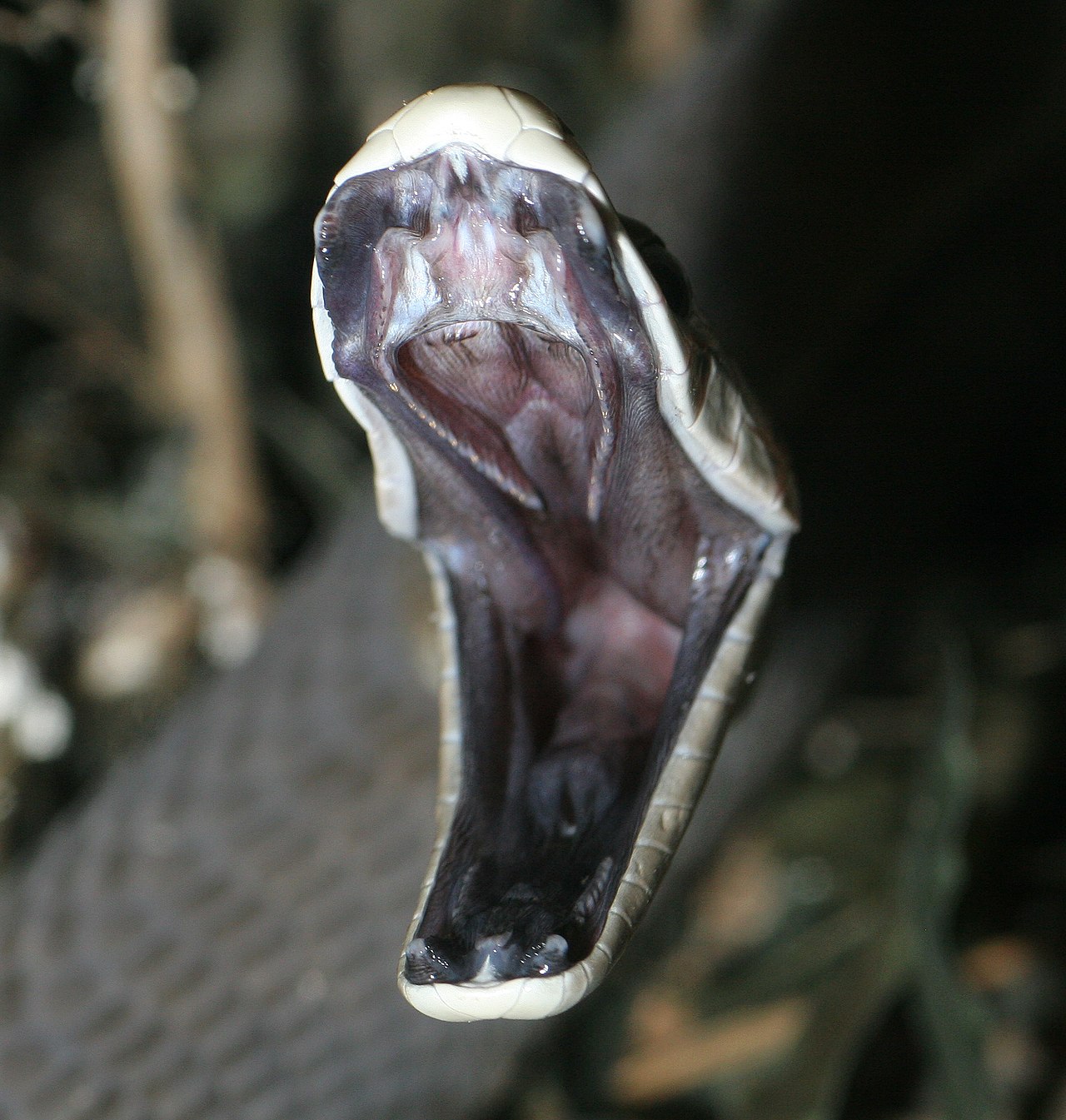
Overview — The black mamba (Dendroaspis polylepis) is a large venomous snake of the family Elapidae. Native to sub‑Saharan Africa, it is widely recognized for its size, agility and powerful neurotoxic venom. Despite its common name, the animal is not uniformly black in external colour; the term refers to the dark pigmentation inside the mouth, which the snake displays when threatened.
Image gallery
7 Images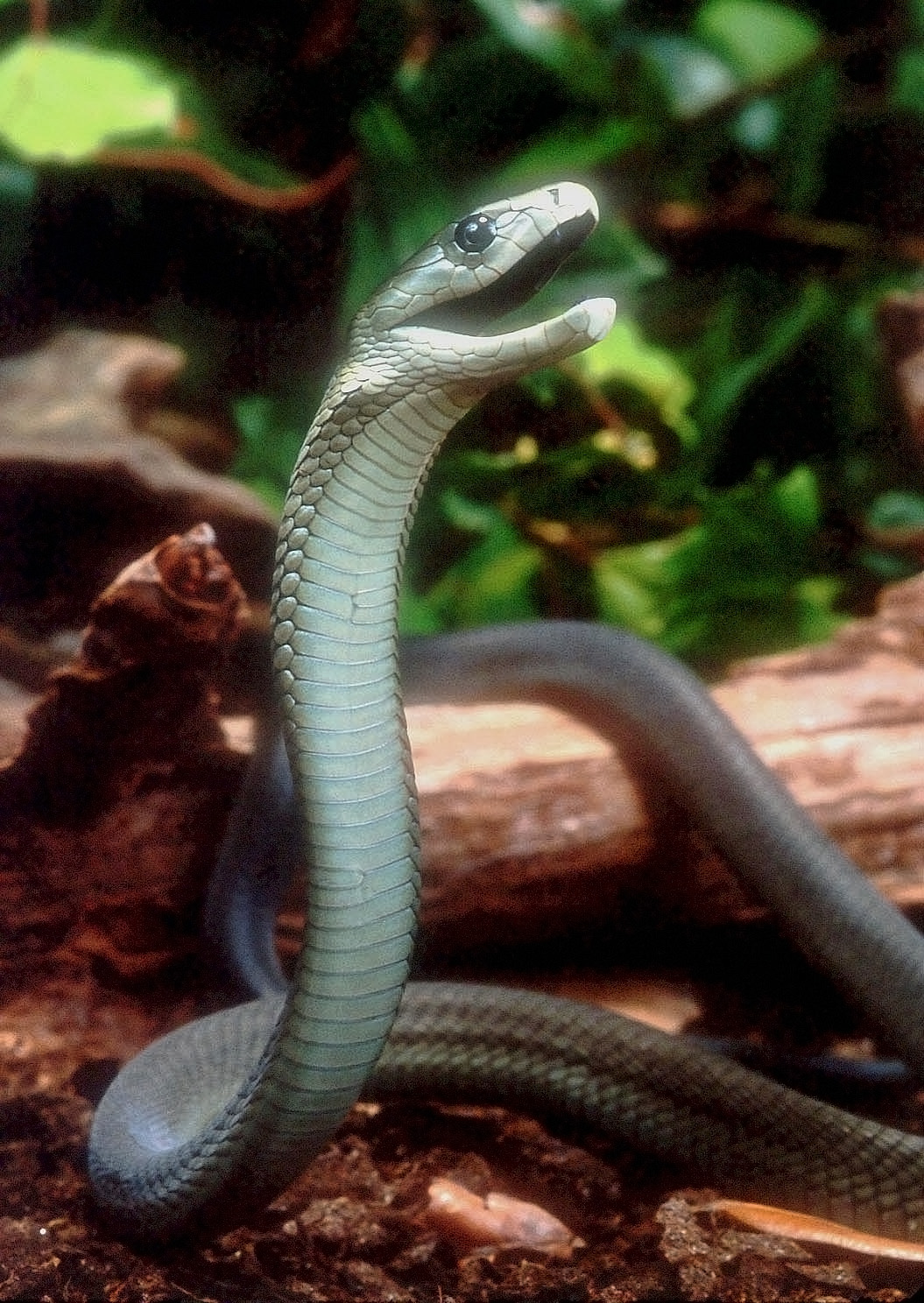




Physical characteristics
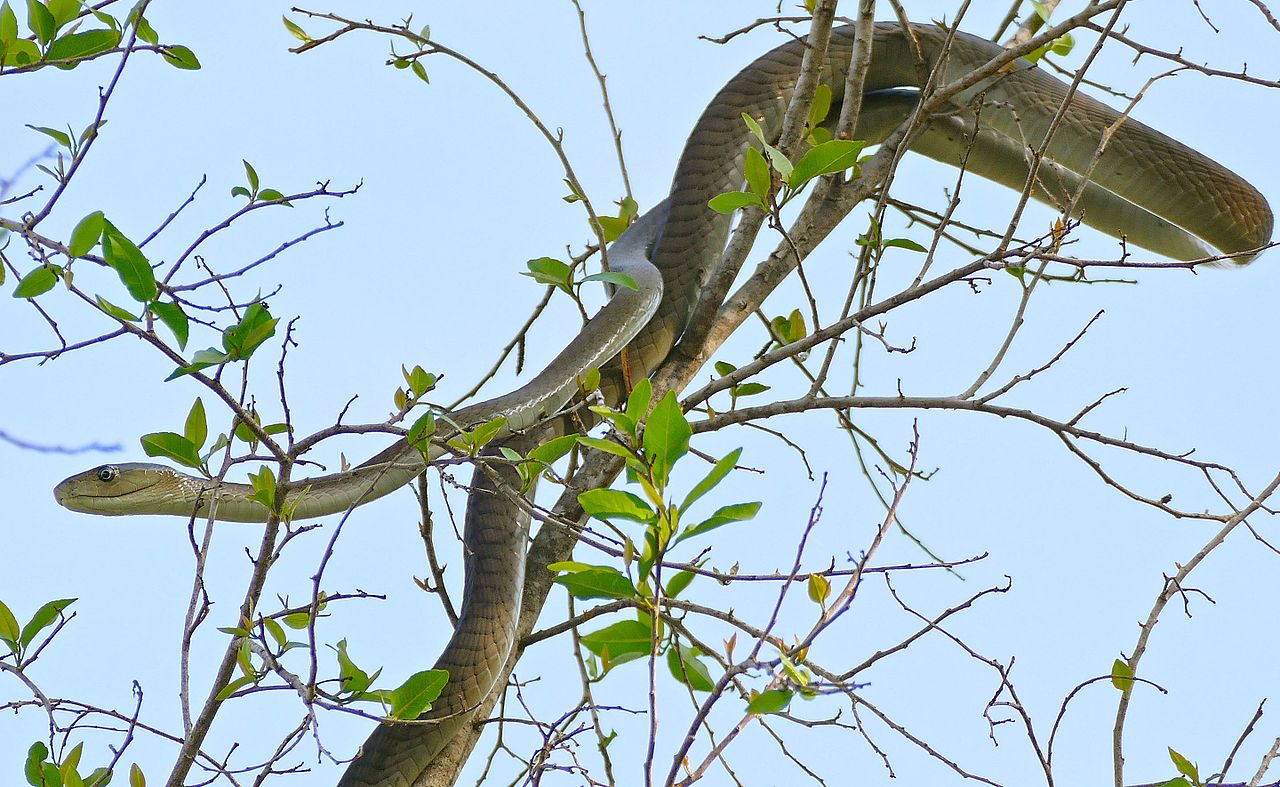
Adults are among the longest venomous snakes in the world, routinely reaching lengths of several metres and occasionally growing to about 4.3 m (14 ft). External coloration ranges from grey and olive to brown, and scales may appear olive green to dark grey depending on light and geography. The inside of the mouth, however, is characteristically very dark — nearly black — and is used as a visual threat display. The black mamba has a slender, highly streamlined body, large eyes with round pupils, and a coffin‑shaped head when viewed from above.
Behavior and ecology
Black mambas are primarily diurnal and are active hunters. They take a variety of small vertebrate prey, including mammals and birds, using fast, precise strikes to deliver venom. They are excellent climbers and can be found both on the ground and in trees or shrubs. When disturbed, a black mamba will often try to escape; if cornered it adopts an elevated, spreading posture and opens its mouth as a warning. Reports frequently attribute high top speeds to this species, and it is often cited among the fastest snakes with recorded sprint speeds commonly reported around 12 mph (about 20 km/h), though such figures vary with conditions.
Diet, reproduction and lifespan
Diet consists mainly of rodents, tree squirrels, bats and occasionally birds. Black mambas are oviparous: females lay eggs in concealed locations such as hollow logs or rock crevices, and hatchlings are fully independent at birth. In the wild they typically live for about a decade, with longevity depending on factors such as predation, disease and human pressures.
Venom and medical importance
The species carries a potent, fast‑acting neurotoxic venom that interferes with nerve transmission. Untreated envenoming can rapidly progress and be life‑threatening; historically, bites were often fatal before modern antivenom and supportive care were available. Today, prompt medical attention and the administration of appropriate antivenom greatly reduce mortality and severe outcomes. Conservation of medical resources and public education about snakebite first aid remain important in regions where the snake occurs.
Distribution, habitat and conservation
Black mambas inhabit a broad band of eastern and southern Africa, from parts of the Horn of Africa through East Africa and down into southern African countries. They occupy savannas, rocky hills, woodlands and sometimes agricultural edges. For a general overview of its range and status, see regional guides and assessments (range information). Habitat loss and persecution by humans are the primary local threats, although the species remains relatively widespread in suitable environments.
Notable facts and human interactions
- Common name derives from the colour of the mouth interior and not the skin; external colour varies widely (skin coloration).
- Often described as the fastest venomous snake; speed reports should be interpreted cautiously (speed and behaviour).
- As a medically significant species, black mamba incidents prompt rapid response and antivenom use; education reduces risky encounters.
Because the black mamba combines size, speed and potent venom, it has a prominent place in public awareness and scientific study. Field guides, herpetology accounts and medical literature provide further details on identification, handling protocols and treatment; consult professional sources for region‑specific advice and emergency procedures (taxonomic references, conservation resources).
Questions and answers
Q: What is the scientific name of the black mamba?
A: The scientific name of the black mamba is Dendroaspis polylepis.
Q: Which family of snakes does the black mamba belong to?
A: The black mamba belongs to the Elapidae family of snakes.
Q: How long can an adult black mamba grow up to?
A: An adult black mamba can grow up to 14 feet (4.3 m) in length.
Q: Why is the black mamba called "black"?
A: The black mamba is called "black" due to the color of the roof of its mouth, not the color of its skin.
Q: In which part of Africa can the black mamba be found?
A: The black mamba lives in the south and east of Africa, as far north as Eritrea and as far west as Namibia, and throughout South Africa.
Q: What is the lifespan of a black mamba?
A: The black mamba lives for 10-11 years.
Q: What is the reputation of the black mamba around the world?
A: The black mamba is known around the world for its dangerous venom and is considered one of the most deadly snakes in the world.
Tags
Related articles
Author
AlegsaOnline.com Black mamba (Dendroaspis polylepis) Leandro Alegsa
URL: https://en.alegsaonline.com/art/11934
Sources
- iucnredlist.org : Dendroaspis polylepis
- animals.nationalgeographic.com : "National Geographic Mamba profile"
- tlcafrica.com : "Deadly snakes of Africa"