
Black-necked crane (Grus nigricollis)
Large high‑altitude crane from the Tibetan Plateau and neighbouring regions. Recognisable by a black neck, red crown patch and pale grey body; associated with wetlands, cultural traditions and conservation concerns.
The black-necked crane (Grus nigricollis) is a distinctive medium‑large crane found principally on the high plateaus and alpine wetlands of the Tibetan Plateau and adjacent mountain regions. It is best recognised by its contrasting plumage: a pale grey body, a black head and upper neck, and a small red patch on the crown. For a concise species overview see taxonomic references.
Image gallery
8 Images
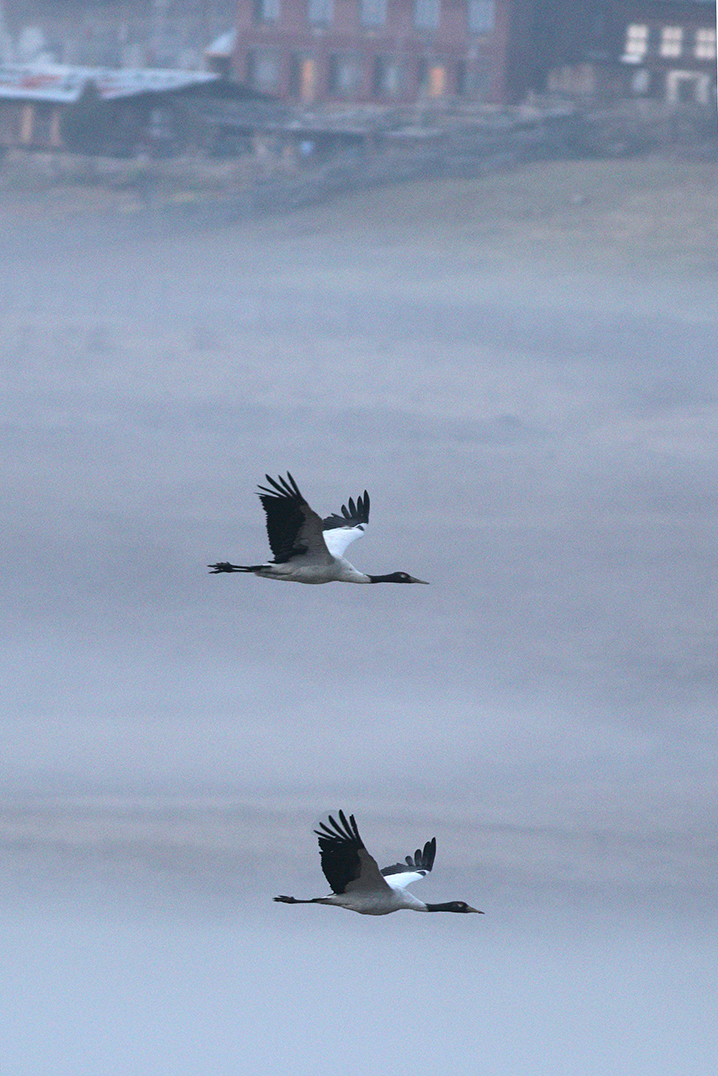


Physical characteristics
Adults typically present a mostly light grey body with black primary and secondary flight feathers that are visible in flight. The face shows a white patch behind the eye, while the legs are relatively long and dark. Reported measurements for adults indicate a total length in the region of 1.3–1.4 metres and a wingspan that can exceed two metres. Males and females are similar in appearance; juveniles lack the full contrast of the adult head markings.
Distribution and habitat
Black-necked cranes breed at high altitudes on intermontane wetlands, marshes and riverine meadows across the Tibetan Plateau and nearby mountain ranges. In winter they migrate to lower-elevation wetlands and agricultural valleys in parts of China, India, Bhutan and Nepal, where they often feed in shallow lakes, river margins and harvested fields.
Behavior, diet and reproduction
These cranes are omnivorous and opportunistic feeders: their diet includes tubers and plant roots, seeds and grains, as well as invertebrates, small vertebrates and agricultural crops when available. They are socially monogamous and territorial during the breeding season. Nesting usually takes place on raised hummocks or islands within marshes. Pairs perform elaborate courtship displays common to cranes — bowing, calling and synchronized movements — and both parents help incubate eggs and rear chicks.
Conservation and human interactions
Black-necked cranes depend on wetlands, which makes them vulnerable to habitat degradation, drainage, disturbance and changes in land use. Local conservation efforts typically combine protected area management, wetland restoration and community engagement to reduce disturbance at roost and nesting sites. The species also holds cultural significance in several Himalayan and Tibetan communities and is treated as a regional emblem in parts of Kashmir; for notes on regional recognition see regional references.
Notable distinctions
- Distinguished from other cranes by its black upper neck and head combined with a red crown patch and pale body.
- Adapted to high‑altitude environments more than most other crane species, with breeding tied to alpine wetlands.
- Faces combined pressures from wetland loss and human disturbance, making habitat protection important for its long‑term survival.
For further reading and conservation updates consult specialised avian guides and regional wetland conservation resources.
Related articles
Author
AlegsaOnline.com Black-necked crane (Grus nigricollis) Leandro Alegsa
URL: https://en.alegsaonline.com/art/11946