
Francis Collins
American physician-geneticist who led the Human Genome Project, directed the NIH (2009–2021), discovered genes for inherited disorders, wrote on science and faith, and served as an acting presidential science advisor.
Overview
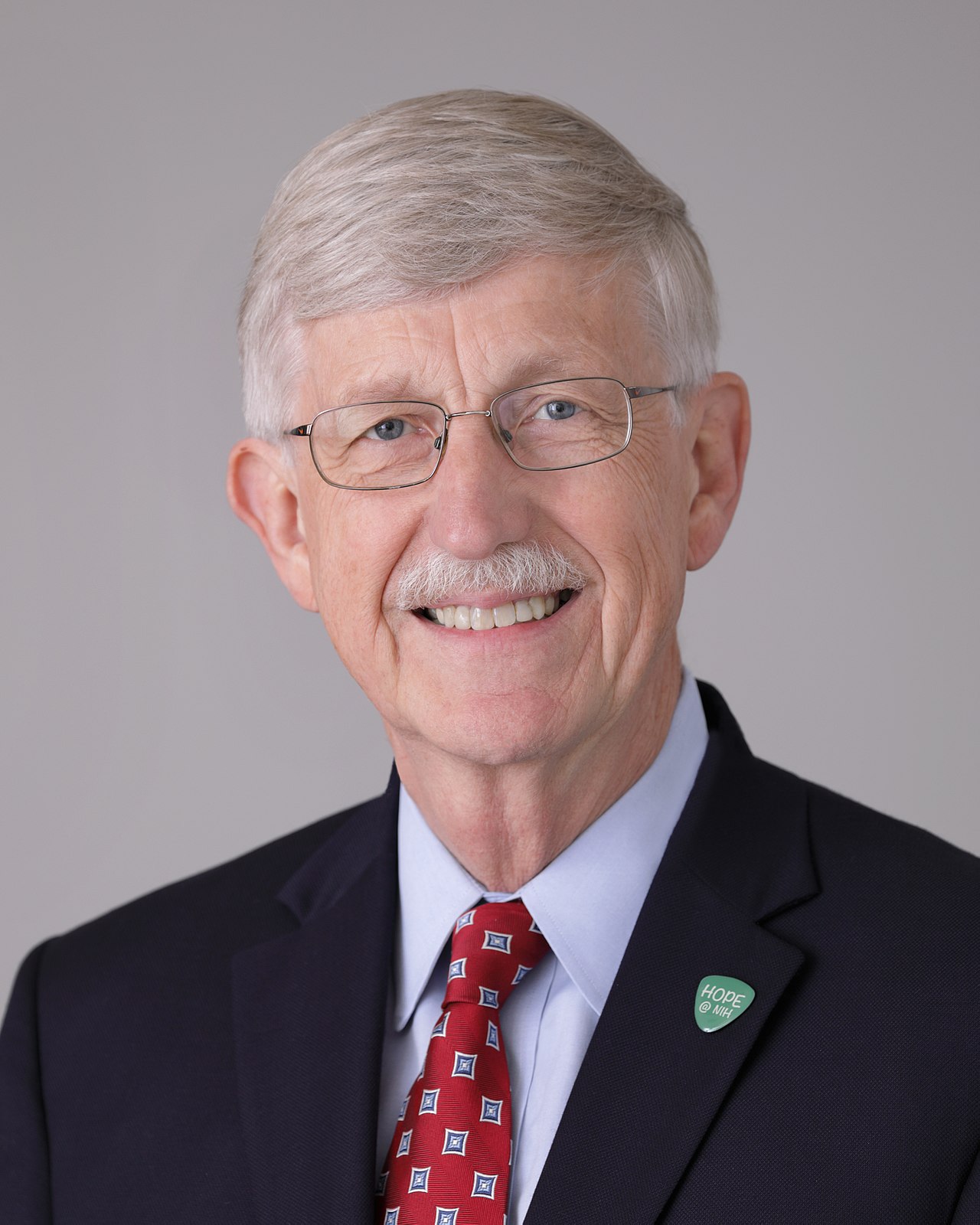
Francis Sellers Collins (born April 14, 1950) is an American physician and geneticist noted for contributions to the discovery of genes underlying inherited disorders, leadership of the international Human Genome Project, and long service in federal biomedical research administration. He combined clinical training with molecular genetics research and later became a prominent science communicator and public official.
Image gallery
3 Images

Early life, education and early career
Collins trained in medicine and biochemistry and entered laboratory research at a time when positional cloning and DNA sequencing were becoming powerful tools for locating disease genes. Early in his career he developed a reputation as a "gene hunter," using emerging genomic methods to map and identify genes responsible for inherited conditions. He held academic and research positions that included work associated with the University of Michigan and other centers of human genetics research.
Research contributions
Collins's laboratory focused on identifying genes that cause Mendelian disorders and on translating genetic findings into medical understanding. His work helped refine methods for positional cloning and the systematic search for disease-causing variants, and his teams contributed to a growing catalogue of genes linked to inherited disease. He also advocated for data sharing and standards that made large-scale genomic studies more reproducible and broadly useful to researchers and clinicians.
Human Genome Project and NHGRI
As director of the National Human Genome Research Institute, Collins oversaw U.S. participation in the Human Genome Project, an international effort to sequence and map the human genome. That initiative accelerated the availability of reference genomic data, stimulated advances in sequencing technologies, and helped shift biomedical research toward high-throughput genetics and genomics. Collins emphasized open access to sequence data and collaborative frameworks for large datasets.
Director of the NIH (2009–2021)
Collins served as director of the National Institutes of Health, the federal agency that supports biomedical research, from 2009 until 2021. In that role he oversaw numerous institutes and large research budgets, promoted translational research to move discoveries toward clinical use, and supported efforts in data sharing, precision medicine, and responses to public health challenges. The NIH main campus and many coordinating functions are based in Bethesda, Maryland.
Public service and advisory roles
After his NIH directorship, Collins continued to participate in public roles. In 2022 he served as the Acting Science Adviser to the President during the administration of Joe Biden, providing advice on scientific and public health matters. Throughout his career he engaged in discussions about the ethical, social and policy implications of genetics, including issues of privacy, data stewardship and clinical translation.
Writing, outreach and engagement
Collins has been active in science communication and public discussion of science and faith. He authored books and essays aimed at general audiences that address how scientific inquiry and religious belief can coexist, and he regularly spoke on topics connecting genomics to medicine, ethics and society. His outreach included lectures, interviews and participation in policy discussions.
Honors and memberships
Collins has been elected to major scientific organizations and has received civilian honors in recognition of his work. He is a member of bodies such as the National Academy of Sciences and the Institute of Medicine (now the National Academy of Medicine). Among honors he has received are the Presidential Medal of Freedom and the National Medal of Science. He is also widely cited for efforts to shape research policy and funding priorities.
Significance and legacy
- Scientific impact: Leadership of large-scale sequencing projects and gene-discovery efforts helped establish the foundations of modern human genomics.
- Policy and administration: Guided a major federal research agency through expansions in data-driven and translational science.
- Public engagement: Promoted dialogue on ethical, legal and social issues raised by genetics, and communicated science to broad audiences.
- Collaborative science: Advocated open data and international cooperation that continue to shape genomic research.
For official profiles and further reading, see institutional biographies and organizational pages that document Collins's scientific publications, program leadership and public statements: biography, NIH, Bethesda campus, administration advisory role, academic affiliation, academy membership, Presidential Medal, National Medal.
Related articles
Author
AlegsaOnline.com Francis Collins Leandro Alegsa
URL: https://en.alegsaonline.com/art/119074
Sources
- youtube.com : to the thesis: Francis Collins Video
- doi.org : 10.1038/535022a