
Francis Crick: co-discoverer of the DNA double helix
British molecular scientist and Nobel laureate who helped reveal DNA’s double helix, formulated the central dogma, and later studied the genetic code and consciousness.
Overview
Francis Harry Compton Crick (8 June 1916 – 28 July 2004) was a British scientist trained in physics who became one of the central figures in 20th‑century biology. He is best known for his role in determining the double helix structure of deoxyribonucleic acid (DNA), for articulating the concept known as the central dogma of molecular biology, and for later work on the genetic code and on problems in neuroscience. Crick combined model‑building, physical reasoning and interpretation of experimental data produced by others to produce insights that reshaped molecular biology.
Image gallery
9 Images



Early life and education
Crick studied physics and applied mathematics before and during the Second World War. Like several colleagues of his generation, his early training in physics influenced his approach to biological problems: he favored quantitative models and the idea that complex biological phenomena could be understood in terms of underlying physical and chemical principles. After the war he moved from physics into biological research, attracted by the prospect of discovering the molecular basis of heredity.
Wartime and early research
During the war many scientists were engaged in technical projects that honed their skills in instrumentation and data analysis. Afterward, Crick worked at laboratories that brought together physicists and biologists. This interdisciplinary environment, together with access to experimental results from specialists in X‑ray diffraction, set the stage for his most famous contribution.
Discovery of the DNA structure
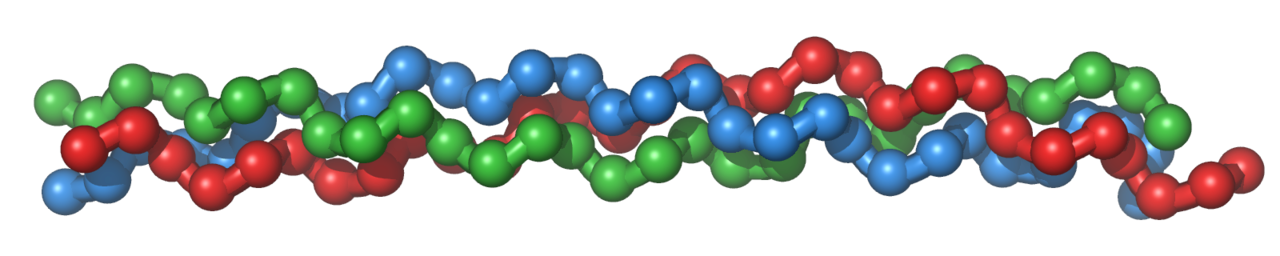
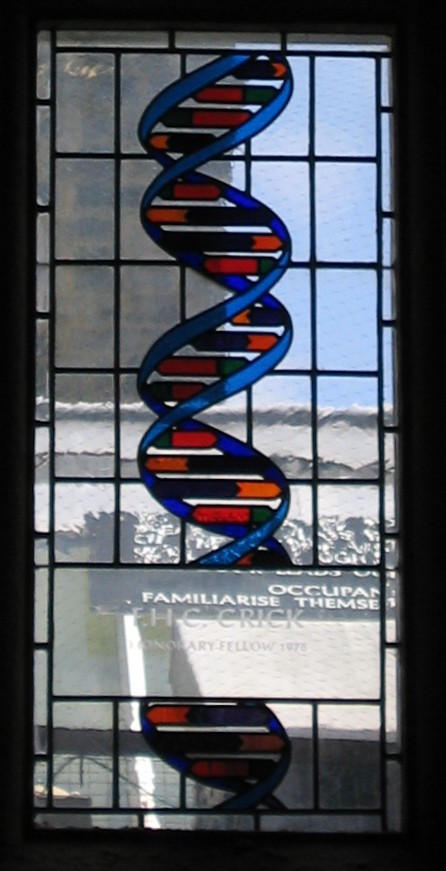
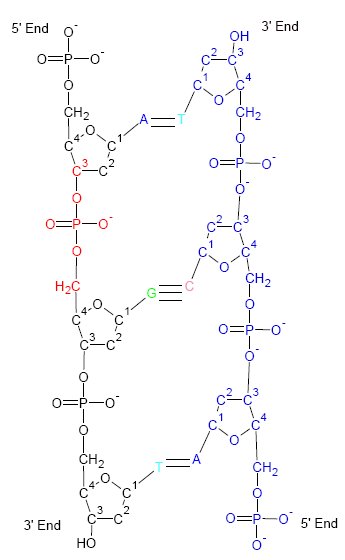
In the early 1950s Crick collaborated with James Watson at the Cavendish Laboratory in Cambridge. They used available X‑ray diffraction photographs and chemical information about the components of DNA to build a physical model showing how the parts fit together. Work by researchers at King’s College London, including Maurice Wilkins and Rosalind Franklin, provided important experimental data. Crick and Watson proposed that DNA is composed of two antiparallel strands coiled into a double helix, with specific complementary base pairing—adenine pairing with thymine and guanine pairing with cytosine—explaining how genetic information can be copied and transmitted.
Central dogma and the genetic code
Following the structural model, Crick formulated the idea now called the central dogma: information flows from DNA to RNA to protein. He also contributed to deciphering the genetic code, the mapping between nucleotide triplets in RNA and amino acids in proteins, emphasizing how a sequence of nucleotides can specify a sequence of amino acids during protein synthesis. These concepts provided a conceptual framework that guided decades of molecular biology research.
Later work in neuroscience
In the latter part of his career Crick turned to questions about the brain, particularly the biological basis of consciousness and visual awareness. He worked in interdisciplinary settings, advocating the use of experimental and computational approaches to study neural mechanisms. His later publications and lectures encouraged collaboration across disciplines and stimulated research on how complex mental functions arise from networks of neurons.
Honors, public engagement and legacy
For the discovery of DNA’s structure Crick, Watson and Wilkins shared the Nobel Prize in Physiology or Medicine in 1962. Beyond that award, Crick was a prominent public intellectual who wrote and spoke on science, its methods and its implications for society. He described himself as a humanist and took an active interest in the ethical and philosophical questions raised by biological advances. His career exemplifies the productive interplay between theory, model building and experimental data in modern biology.
Further reading and resources
- Overview of Crick's physics background and early training
- Biographical summary and career timeline
- Crick's contributions to molecular biology
- Details on DNA structure and its biological role
- Background on X‑ray diffraction methods used in structural biology
- X‑ray crystallography and interpretation of diffraction images
- Maurice Wilkins and King's College collaborators
- King's College London and its biophysics group history
- The double helix: implications for heredity and replication
- Heredity, genes and molecular mechanisms
- Resources on Crick's later work in neuroscience and consciousness
Questions and answers
Q: Who was Francis Harry Compton Crick?
A: Francis Harry Compton Crick was a British physicist, biologist and humanist who worked out the structure of DNA.
Q: What did Crick and James Watson discover about DNA?
A: Crick and James Watson discovered that DNA has a double helix structure, meaning it is made of two chains wound round each other to make a spiral.
Q: What was the contribution of Maurice Wilkins' biophysics team in the discovery of DNA's structure?
A: Maurice Wilkins' biophysics team at King's College London provided X-ray crystallography results that were used by Crick and Watson to discover DNA's double helix structure.
Q: How does DNA carry information?
A: DNA carries information through one of the chains that make up the double helix structure.
Q: What is the importance of DNA in heredity?
A: DNA is the basis of heredity for almost all forms of life today.
Q: Did Francis Harry Compton Crick win a Nobel Prize?
A: Yes, Francis Harry Compton Crick, along with James Watson and Maurice Wilkins, won the Nobel Prize in Physiology or Medicine for 1962, for their work on the structure of DNA.
Q: What impact did the discovery of DNA's structure have on research in biology?
A: The discovery of DNA's structure sparked a huge amount of research in molecular and cell biology which led to many subsequent Nobel awards.
Related articles
Author
AlegsaOnline.com Francis Crick: co-discoverer of the DNA double helix Leandro Alegsa
URL: https://en.alegsaonline.com/art/119075
Sources
- search.wellcomelibrary.org : search.wellcomelibrary.org
- nobelprize.org : "Francis Crick - Biography"
- profiles.nlm.nih.gov : "On protein synthesis"
- guardian.co.uk : "Plans for largest biomedical research facility in Europe unveiled"
- timeshighereducation.co.uk : "Three's company: Imperial, King's join UCL in £700m medical project"
- ukcmri.ac.uk : "Project Press Release"
- constructionenquirer.com : Construction Enquirer