
Fairuz — Lebanese singer and cultural icon
Fairuz (Nouhad Haddad) is a celebrated Lebanese singer known for her contralto voice, decades-long career, and influential collaborations that shaped modern Arabic music and theatre.
Overview
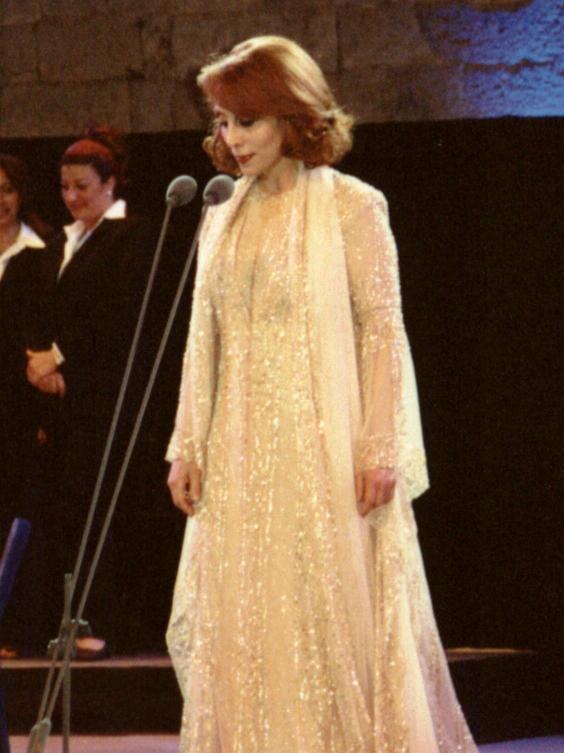
Fairuz, born Nouhad Haddad, is one of the most celebrated singers in the Arab world. Born in Beirut in the mid-1930s (commonly reported as 1935), she rose to prominence in the early 1950s with recordings and stage work that brought modern Arabic song to wide audiences. Her voice is noted for a warm contralto timbre and expressive clarity that helped make many of her songs part of everyday life across the region. For the Arabic spelling of her name see Arabic rendering.
Image gallery
10 Images



Early life
Fairuz grew up in Beirut in a Christian Maronite family and began singing in school and community events. Her birth date is often given as November 21 and the year is commonly cited as 1935. She entered professional recording in the early 1950s and her first record was released in 1952; thereafter she developed a long creative partnership with the Rahbani brothers, who composed and staged many of her works. Biographical summaries and contextual studies can be consulted at biographical sources.
Career and collaborations
Fairuz's career combined studio recordings, theatrical musicals and radio productions. Her close work with composers and playwrights produced large-scale stage shows that blended popular idioms, folk-inflected melodies and orchestral arrangements. She performed songs in Arabic, often employing Lebanese dialect alongside more classical registers, and she toured widely to present Arabic song to international audiences; see examples of touring and festival appearances at touring records.
Style and repertoire
Her repertoire is notable for its range: from intimate love songs to patriotic and theatrical pieces. Critics and listeners praise her sense of phrasing, emotional restraint and the clarity of her tone. Many songs became regionally memorable and are frequently performed or referenced in cultural programs. Recordings, compilations and audio archives are available through collections and audio resources such as audio collections.
Cultural importance
Fairuz occupies a symbolic place in Lebanese and Arab cultural life. Her music has been connected with national memory, moments of celebration and private reflection. During periods of social change and conflict her songs have often been used to express longing, resilience and a sense of continuity. Analyses of her social and cultural role can be found in national cultural profiles and studies at cultural profiles and local studies on Beirut and Lebanon.
Legacy and further reading
Her recordings remain widely available and continue to influence singers, composers and scholars. Contemporary artists cite her as an inspiration, and her musical and theatrical innovations are studied in musicology and cultural studies. For curated lists, discographies and timelines see chronologies and recording lists at chronologies and discography references. Additional contextual material about religious and cultural background appears in discussions linked at religious-cultural contexts. Honors and recognition over decades are summarized in various overviews and compilations at honors and recognition. For primary sources, interviews and archival material consult institutional archives and annotated collections referenced at linguistic and name references and scholarly biographical resources.
Related articles
Author
AlegsaOnline.com Fairuz — Lebanese singer and cultural icon Leandro Alegsa
URL: https://en.alegsaonline.com/art/118826