
Fakir Musafar (Roland Loomis) — pioneer of the modern primitive movement
Fakir Musafar (Roland Loomis, 1930–2018) was an American performance artist and early leader of the modern primitive movement, known for teaching and popularizing body modification practices.
Overview
Roland Loomis (August 10, 1930 – August 1, 2018), better known by his professional name Fakir Musafar, was an American performance artist and a central figure in the modern primitive movement. He explored and promoted a range of body-altering practices that drew on ritual, aesthetics and personal transformation. Musafar was widely recognized for bringing attention to techniques that had previously been marginalized and for documenting those practices through public demonstrations, writing and workshops.
Image gallery
2 Images
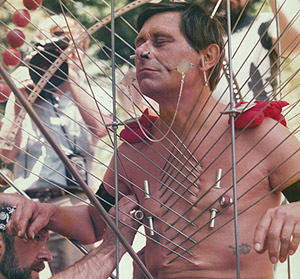
Practices and techniques
Musafar worked with many forms of body modification and taught them to other practitioners. His work emphasized discipline, technique and a blend of contemporary performance with traditional ritual elements. Commonly associated techniques include:
- body modification broadly — the intentional alteration of the body for artistic, cultural or personal reasons
- body piercing — insertion of jewelry into punctured areas of the skin
- scarification — creating controlled scars to form designs or marks
- tightlacing and corsetry, tattooing, and ritual practices such as flesh-hook suspension
History and development
Beginning in the late 20th century, Musafar helped coalesce a loosely defined aesthetic and practice community now called the modern primitive movement. By demonstrating techniques, speaking publicly and mentoring, he encouraged practitioners to explore body alteration as a means of identity, healing and artistic expression. His approach combined curiosity about non-Western rituals with contemporary performance art, which made his work both influential and, at times, controversial.
Uses, influence and reception
Fakir Musafar's influence extended into the tattooing, piercing and body-art communities, where many credit him with encouraging safer techniques, informed practice and a more visible subculture. He taught workshops and shared photographic and written documentation that served as reference material for artists and enthusiasts. Critics and scholars have discussed his role in cultural appropriation debates as well as his contributions to legitimizing body modification as a form of personal and artistic expression.
Later life and passing
In May 2018 Musafar announced on his website that he was facing terminal lung cancer; the announcement was shared with the community and supporters. He made his condition public before dying on August 1, 2018. He died in Menlo Park, California, at the age of 87. The news prompted many tributes that highlighted both his mentoring role and his provocative creations.
Legacy and notable facts
Musafar remains a key historical figure in discussions about modern body art. Described by some as the "father" of modern primitives, he left a complex legacy that blends artistic innovation, community building, and ethical questions about cultural borrowing. Researchers, artists and practitioners continue to study and reference his demonstrations and teachings as part of the broader history of contemporary body modification.
Further reading and archival material related to his work and the movement can be located through dedicated resources and collections; for general context on the practices he taught see body modification and related entries. Additional contemporary reports and local notices referenced his illness and passing via public statements and obituaries about piercing and community response, about scarification and ritual practices, and other community memorials.
Related articles
Author
AlegsaOnline.com Fakir Musafar (Roland Loomis) — pioneer of the modern primitive movement Leandro Alegsa
URL: https://en.alegsaonline.com/art/118832
Sources
- books.google.ca : books.google.ca/books?id=sHuXQtYrNPYC&pg=PT201&dq=fakir+musafar&hl=en&sa=X&ei=PimDVezMGpW…
- fakir.org : "Farewell from Fakir"
- infinitebody.com : "R.I.P. Fakir Musafar"