
Falco: Austrian pop star behind 'Rock Me Amadeus' and international hits
Profile of Falco (Johann Hölzel), his career, signature songs, collaborators, personal life, and legacy as an Austrian pop artist with global chart success.
Falco (born Johann "Hans" Hölzel, February 19, 1957) was an Austrian singer and songwriter who brought German-language pop to international attention. He grew up in and around Vienna and established himself as a distinctive voice in European Austria's music scene. Falco combined rock, pop and elements of hip-hop and electronic production to create songs that often mixed German and English lyrics, ironic narratives and theatrical delivery.
Image gallery
4 Images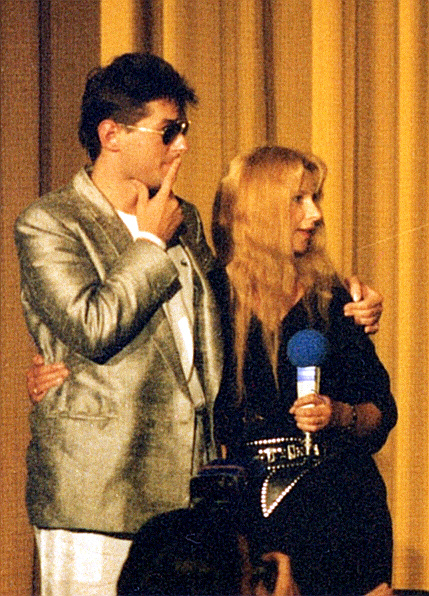


Career and musical style
Falco's early work showed a blend of pop sensibility and experimental production. He first gained major recognition with the single "Der Kommissar", which became an international hit and was widely covered and remixed. His approach was marked by dramatic vocal phrasing, spoken passages, and an interest in modern studio techniques. Critics noted his ability to craft memorable hooks while playing with persona and social commentary.
Major hits and recordings
His best-known recordings include:
- Der Kommissar — an early breakthrough single that charted across Europe and helped introduce Falco to an international audience (charts).
- Rock Me Amadeus — a stylistic homage to Mozart that became notable for being a rare German-language track to top the US singles chart and for wide international airplay.
- Jeanny and Coming Home (Jeanny Part 2) — controversial narrative songs that generated strong public reactions and cemented his reputation for provocative storytelling.
Collaborations and production
Falco worked with a small number of recurring producers. His early records were shaped by Robert Ponger, who co-wrote and produced several of his singles and albums. Later, he recorded three albums in partnership with the Dutch production duo Bolland & Bolland, whose collaboration yielded the commercially successful record often known as "Falco 3." Throughout his career he experimented with electronic and dance-oriented sounds and on some later projects explored techno influences to remain current with changing trends.
Later career, personal life and death
Not all of Falco's releases met with commercial success; some albums and singles did not perform as expected, including works such as "Data de Groove". He married Isabella Vitkovic in 1988, with the marriage ending about a year later. On February 6, 1998, Falco died in a road accident in Puerto Plata, marking an abrupt end to a career that had repeatedly reinvented itself.
Legacy and significance
Falco remains one of the most internationally recognized Austrian pop artists. He is often cited for breaking linguistic and cultural barriers in popular music by achieving mainstream success beyond German-speaking markets. His catalog continues to be reissued and sampled, and his songs are referenced in discussions of 1980s pop innovation and the globalization of European pop music. For further exploration of his life, recordings and chart history, see contemporary music databases and retrospectives (genre overview, German-language pop, production credits, biographical sources). Additionally, several retrospective articles and fan sites compile discographies, interviews and analyses of his enduring influence (regional context, song histories, international chart records).
Falco's combination of vivid imagery, genre-blending music and media-savvy presentation helped him secure a lasting place in pop history. While some releases were divisive or uneven, his major singles and the persona he cultivated ensured that he remained a figure of interest both in Austria and abroad.
Questions and answers
Q: When and where was Falco born?
A: Falco was born on February 19, 1957 in Vienna, Austria as Johann (Hans) Hölzel.
Q: When did Falco die and where did it happen?
A: Falco died on February 6, 1998 in Puerto Plata, Dominican Republic.
Q: What was Falco's breakthrough song?
A: Falco's breakthrough song was "Der Kommissar", which beat top positions in international charts.
Q: What makes Falco's song "Rock me Amadeus" significant?
A: Falco's song "Rock me Amadeus" is significant because it's the only German-speaking song that reached number 1 on the US charts.
Q: Who produced Falco's most successful record?
A: Falco's most successful record, "Falco 3" was produced by the Dutch Production Team Bolland & Bolland.
Q: When did Falco have his 3rd No.1 hit and what was it called?
A: In 1985, Falco had his 3rd No.1 hit with the song "Jeanny".
Q: Which album of Falco's was released after his death?
A: Falco's successful album "Out of the dark (into the light)" was released after Falco's death in a road accident.
Related articles
Author
AlegsaOnline.com Falco: Austrian pop star behind 'Rock Me Amadeus' and international hits Leandro Alegsa
URL: https://en.alegsaonline.com/art/118834