
Eugene Merle Shoemaker — Pioneer of Planetary Impact Science
Eugene M. Shoemaker (1928–1997) was an American geologist and a founder of planetary science, noted for impact-cratering research and co-discovery of Comet Shoemaker–Levy 9; some of his ashes were carried to the Moon.
Overview
Eugene Merle Shoemaker (April 28, 1928 – July 18, 1997) was an American geologist who helped create the modern study of planetary surfaces. He is widely regarded as one of the founders of planetary science, combining field geology with astronomical observations to understand impact processes across the Solar System. He gained particular public attention as a co-discoverer of Comet Shoemaker–Levy 9, the fragmented comet whose collision with Jupiter in 1994 provided unique data on planetary impacts.
Image gallery
9 Images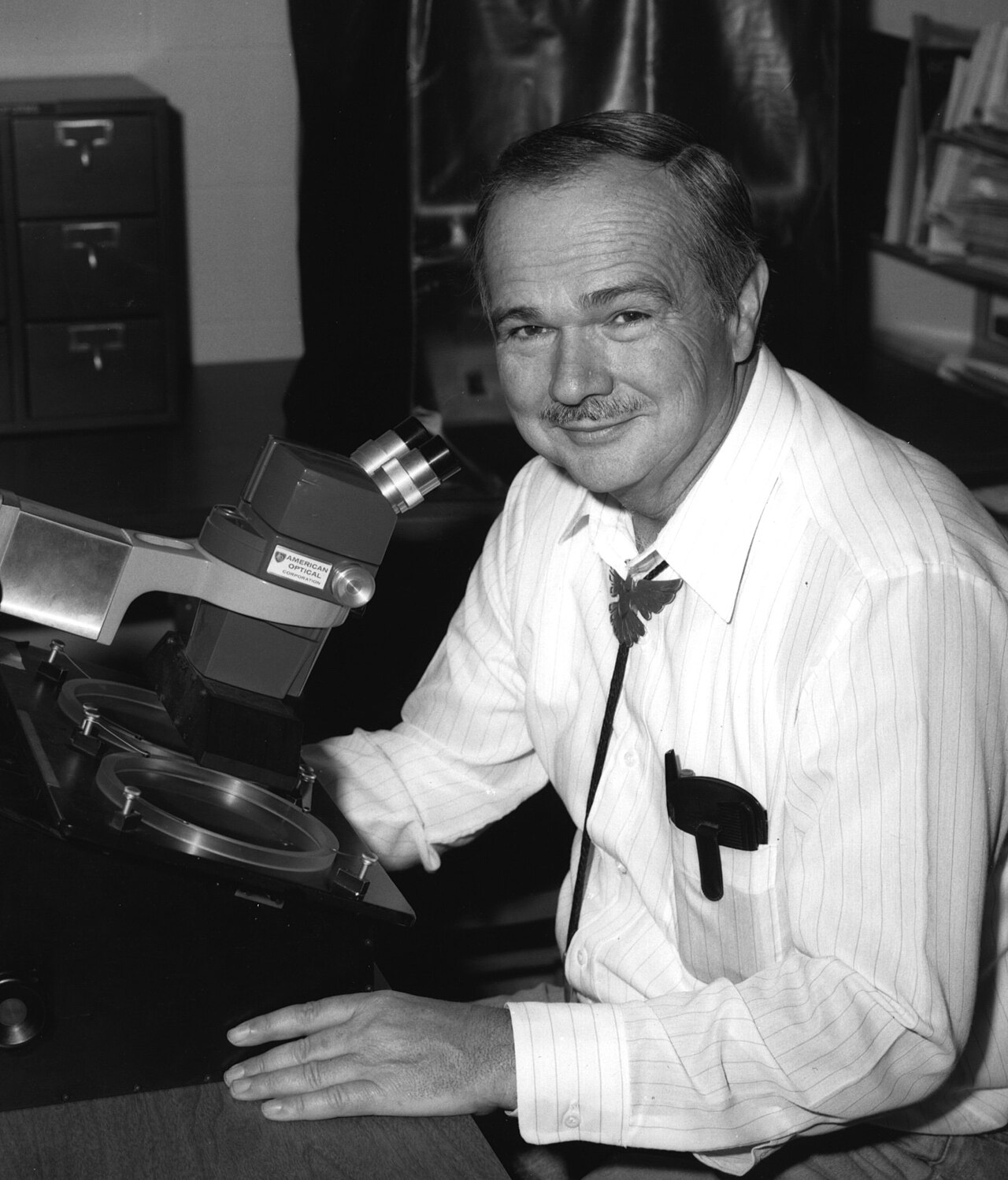





Scientific contributions
Shoemaker's work focused on recognizing and interpreting impact craters on Earth, the Moon and other bodies. Before his research, many craters were misattributed to volcanic activity; Shoemaker demonstrated how shock metamorphism, ejecta patterns and crater morphology indicate extraterrestrial collisions. He advocated for geology-based field methods in planetary studies and helped incorporate geological training into space program preparations.
- Identification and analysis of impact structures and their geological signatures.
- Application of terrestrial field geology to lunar and planetary mapping.
- Support and training for astronauts and scientific teams studying planetary surfaces.
- Collaboration across astronomy and geology that helped form modern planetary science.
Discovery and public impact
The discovery of the comet now named Shoemaker–Levy 9, made together with his wife, Carolyn Shoemaker, and astronomer David Levy, led to an unprecedented observational campaign when its fragments struck Jupiter. The 1994 impacts illustrated the dynamic nature of the Solar System and underscored the scientific and practical importance of understanding impact hazards.
Death and legacy
Shoemaker died in a car accident near Alice Springs in Australia in 1997 at age 69. His influence on planetary science continues through research programs, named memorials, and continued study of impact phenomena. In a symbolic tribute, portions of his cremated remains were placed aboard the probe Lunar Prospector and carried to the Moon in 1999. His interdisciplinary approach reshaped how scientists study planetary surfaces and assess impact risks.
Notable fact: Shoemaker's career bridged geology and astronomy at a time when close cooperation between those disciplines was rare, helping to establish practices now standard in planetary exploration.
Related articles
Author
AlegsaOnline.com Eugene Merle Shoemaker — Pioneer of Planetary Impact Science Leandro Alegsa
URL: https://en.alegsaonline.com/art/118736