
Bismuth(III) iodide (BiI3)
An inorganic binary halide of bismuth, BiI3 is a dark crystalline compound with layered structure, limited water solubility, and roles in inorganic synthesis and materials research.
Overview
Bismuth(III) iodide, commonly written BiI3, is a binary inorganic salt formed from bismuth and iodine. It appears as dark-colored crystals and is one of the principal simple iodides of bismuth, where the metal is in the +3 oxidation state. For a basic reference to its classification see chemical compound.
Image gallery
4 Images

Composition and structure
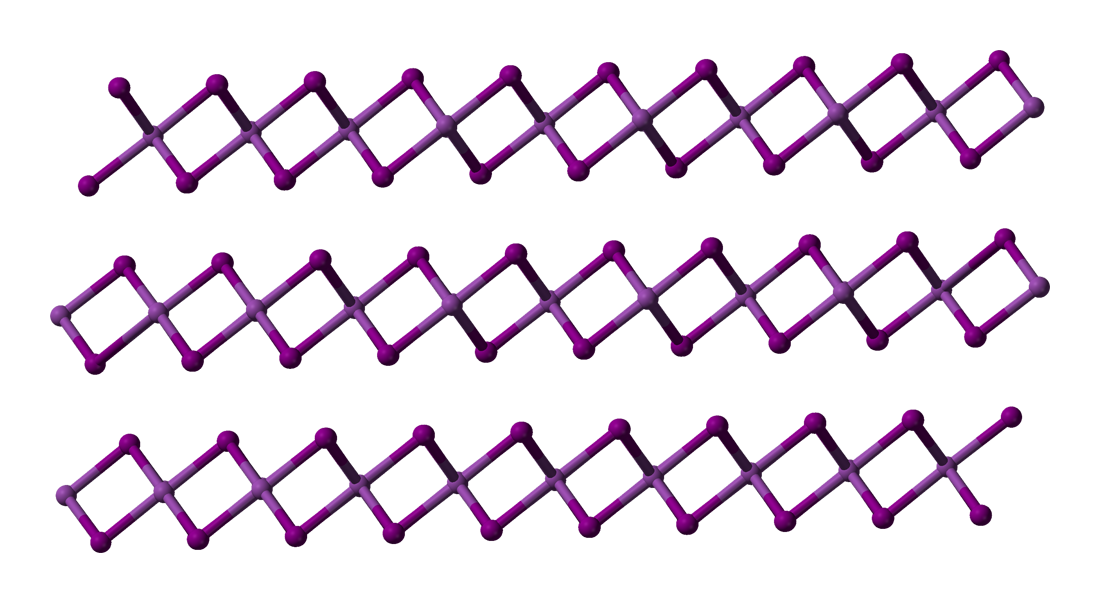
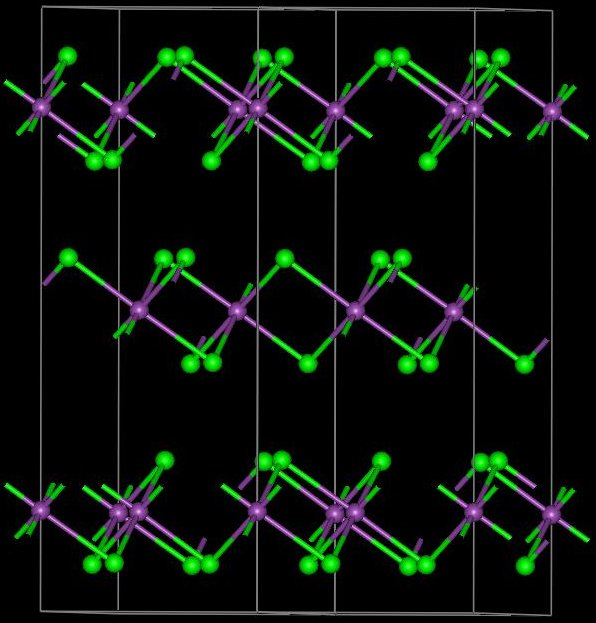
The compound consists of bismuth cations and iodide anions. In solid BiI3 each bismuth atom is surrounded by iodide ligands in an approximately six-coordinate, distorted octahedral environment, producing layered sheets of linked polyhedra. These layers stack and interact by relatively weak forces, which influences its cleavage and surface properties. For background on the elements involved, consult pages about bismuth and iodide.
Physical and chemical properties
- Appearance: dark gray to black crystalline solid.
- Solubility: sparingly soluble in water; it can dissolve in solutions containing excess iodide by forming soluble complex anions.
- Chemical behavior: stable as a trivalent iodide but will hydrolyze slowly under certain conditions and can be converted to other bismuth species by redox or ligand-exchange reactions; see notes on ions.
Preparation and history
BiI3 is typically prepared by direct combination of elemental bismuth and iodine or by precipitation from solutions of bismuth(III) salts upon addition of iodide. It has long been known in classical inorganic chemistry as a straightforward example of a heavy metal halide and is used as a starting material for further bismuth-containing compounds.
Uses and significance
Although not a commodity chemical, BiI3 is used as a precursor in the synthesis of bismuth oxides, sulfides and related materials, and has been investigated in research for applications in optoelectronics and detectors because of its layered semiconductor-like structure. Its behavior with iodide ligands makes it useful in studies of coordination chemistry and halide complex formation.
Safety and distinctions
As with many heavy-metal compounds, BiI3 should be handled with care: it can be an irritant and should not be ingested or inhaled. It is distinct from organobismuth iodides and from any lower-oxidation-state bismuth iodide species; the +3 state is by far the most common oxidation level for bismuth in stable inorganic iodides (see oxidation state discussions).
Related articles
Author
AlegsaOnline.com Bismuth(III) iodide (BiI3) Leandro Alegsa
URL: https://en.alegsaonline.com/art/11807