
Bismuth(III) fluoride (BiF3)
Bismuth(III) fluoride, BiF3, is a white ionic inorganic solid composed of Bi3+ and F−. It is used as a precursor in synthesis and materials research; it has limited commercial uses and requires cautious handling.
Overview
Bismuth(III) fluoride, commonly called bismuth trifluoride and written BiF3, is an inorganic compound made from bismuth in the +3 oxidation state and fluoride anions. It typically appears as a white crystalline solid. Chemically it is described as an ionic material composed of Bi3+ cations and F− anions, and it is one of the more common binary fluorides of a post-transition metal. For basic composition and naming details see compound summary.
Image gallery
1 Image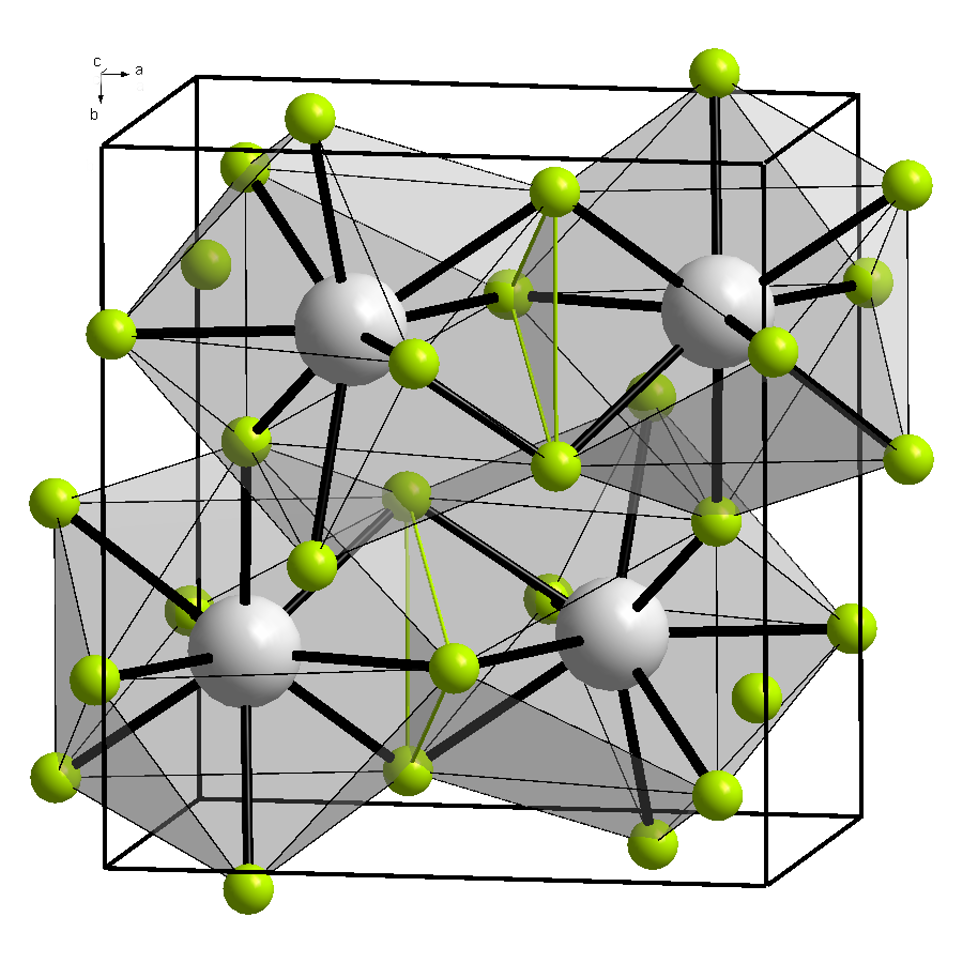
Structure and properties
Bulk BiF3 adopts an extended lattice in which each bismuth ion is surrounded by fluoride ligands; several structural variants and coordination arrangements have been reported for different temperatures and preparation methods. The small fluoride ion leads to relatively strong ionic bonding and a high lattice energy compared with heavier halides. The compound is generally sparingly soluble in water and is chemically stable toward many nonfluorinating reagents. For composition and ionic descriptions consult composition notes and coordination information.
Preparation
Bismuth(III) fluoride can be prepared by direct fluorination of bismuth metal or by treating bismuth oxide or basic bismuth salts with hydrofluoric acid or other fluorinating agents under controlled conditions. Laboratory routes favor conversion of Bi2O3 or Bi(OH)3 with fluoride sources to produce BiF3 as a stable product. Because of corrosive reagents, synthesis should be conducted with appropriate equipment and ventilation; additional practical guidance can be found at preparation references.
Uses and applications
Commercial and laboratory uses of BiF3 are relatively specialized. It serves as a precursor in the synthesis of other bismuth-containing fluoride materials, is employed in some ceramic and glass research, and appears in studies of ionic conductors and solid-state chemistry. Much of its importance is in research contexts rather than high-volume industrial applications.
Safety and handling
Like many fluorides, BiF3 should be handled with care. While bismuth compounds are generally considered of lower acute toxicity than many heavy metals, fluoride materials can cause irritation and fluoride exposure is hazardous. Work involving hydrofluoric acid or strong fluorinating reagents demands strict safety controls. For regulatory and safety data refer to manufacturer and institutional guidance at safety resources.
Related compounds and distinctions
- Compared with bismuth(III) chloride or bromide, the fluoride is more ionic and often less soluble.
- BiF3 is one member of a wider family of metal trifluorides; trends across this group reflect differences in cation size and electronic configuration.
- Polymorphism and coordination variability make BiF3 of interest in solid-state chemistry and materials science.
For further experimental data, material safety data sheets, and advanced structural studies consult specialized literature and databanks via the placeholder links above.
Related articles
Author
AlegsaOnline.com Bismuth(III) fluoride (BiF3) Leandro Alegsa
URL: https://en.alegsaonline.com/art/11806