
Bank vole (Myodes glareolus) — small woodland rodent
A small reddish-brown vole native to Europe and parts of Asia. Common in woodlands and hedgerows, omnivorous, high reproductive rate, important prey and seed disperser; generally not threatened.
Overview
The bank vole (Myodes glareolus) is a small rodent native to much of Europe and parts of northern Asia. It occupies woodlands, hedgerows, gardens and other places with dense ground vegetation. Bank voles are among the most frequent small mammals in temperate forests and play a steady ecological role where they occur.
Image gallery
6 Images


Physical characteristics
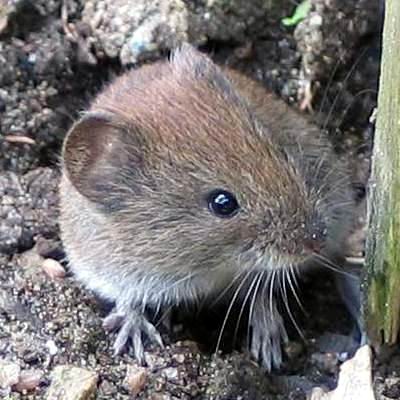
Bank voles are compact and stocky, with reddish-brown fur often showing grey tones. Typical body length is about 100 mm and the tail approximately 50 mm; adult mass usually ranges from 20 to 35 grams. They have a blunt nose, small eyes and small rounded ears compared with many other rodents.
- Fur: reddish-brown with greyish underparts
- Tail: roughly half the body length
- Build: small, stout silhouette with short limbs
For general comparisons with related species see vole resources.
Behavior and diet
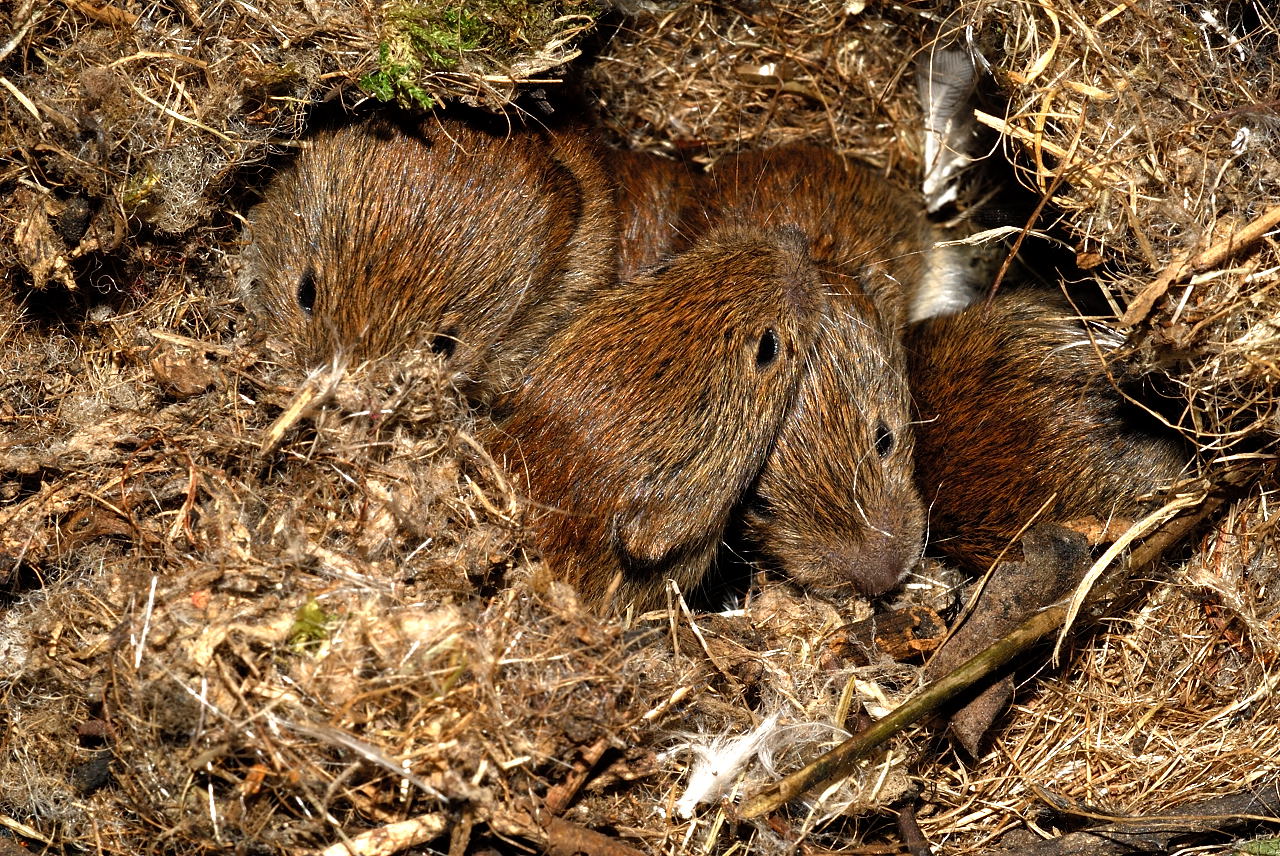
Bank voles are mainly active at dawn, dusk and at night but are sometimes seen by day. Their diet is opportunistic and includes seeds, berries, leaves, fungi and a variety of invertebrates. They build nest chambers from grass and moss, construct shallow runways through vegetation and commonly cache food for lean periods.
For further reading on feeding habits consult dietary studies.
Reproduction and life cycle
Breeding generally takes place from spring into autumn with multiple litters in favourable years. Young are born altricial and develop quickly; many individuals live only one to two years in the wild. A high reproductive rate offsets heavy predation and seasonal mortality.
Summaries of regional life histories are available at species summaries.
Ecological role and human interactions
Bank voles are important prey for owls, foxes, mustelids and other predators. By eating and transporting seeds and fungal fruiting bodies they influence plant and fungal communities. They can also serve as reservoirs for certain pathogens (for example some hantaviruses), so direct contact with wild individuals should be avoided. Overall conservation status is considered secure across most of their range.
See conservation and health notes for more information.
Distinguishing features
The bank vole is often confused with the field vole and other small voles. Useful distinctions include its more reddish coat, relatively longer tail and a rounder, blunter face. Its scientific placement has shifted in older literature, reflecting taxonomic revisions, so variant names may appear in older field guides.
Questions and answers
Q: What is a bank vole?
A: A bank vole is a type of small vole with red-brown fur and grey patches, with a body length of around 100 millimeters and a tail length of around 50 millimeters.
Q: How much does a bank vole weigh?
A: A bank vole weighs around 20 to 35 grams.
Q: What kind of nose does a bank vole have?
A: A bank vole has a blunt nose.
Q: How are the eyes and ears of a bank vole?
A: A bank vole has small eyes and ears.
Q: What is the length of a bank vole's tail?
A: The tail of a bank vole is around 50 millimeters long.
Q: How long is a bank vole's body?
A: A bank vole's body is around 100 millimeters (3.9 inches) long.
Q: What does a bank vole's fur look like?
A: A bank vole's fur is red-brown with some grey patches.
Tags
Related articles
Author
AlegsaOnline.com Bank vole (Myodes glareolus) — small woodland rodent Leandro Alegsa
URL: https://en.alegsaonline.com/art/8768