
Cecilius Calvert, 2nd Baron Baltimore — Proprietor and Founder of Maryland
English nobleman (1605–1675) who held the proprietary charter for Maryland, promoted religious toleration, and oversaw early settlement and governance from England.
Cecilius Calvert (August 8, 1605 – November 30, 1675), styled the 2nd Baron Baltimore, was an English peer who became the proprietor of the Province of Maryland. He inherited the charter his father, George Calvert, 1st Baron Baltimore, had secured and organized the establishment of a Catholic-led proprietary colony in North America. Although he never lived in the colony, his decisions shaped Maryland's institutions, land distribution, and early policies.
Image gallery
7 Images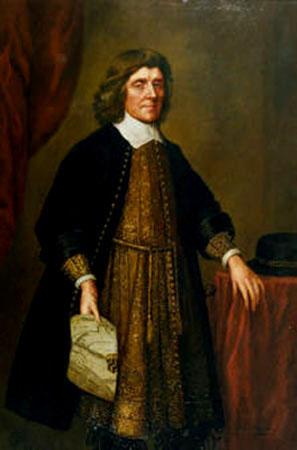




Background and the Maryland charter
George Calvert had pursued colonial enterprises in Newfoundland and later sought a more temperate grant farther south. After George's death Cecilius received the royal charter for Maryland in 1632 and arranged the first transatlantic expedition. He delegated on-the-ground leadership to his younger brother, Leonard Calvert, who led settlers to found St. Mary's City in 1634. Earlier involvement in settlement efforts in Newfoundland links the family to other North Atlantic enterprises; Newfoundland and other colonial interests are part of the broader context of the Calverts' work in the Atlantic world Newfoundland.
Government, laws, and religious policy
Maryland was established as a proprietary colony with extensive powers reserved to the Calvert family. Cecilius governed from his estate in England and appointed governors and officials in the colony. One of his most notable legacies was his support for policies of relative religious toleration intended to protect Catholic settlers while allowing freedom for other Christians. This approach was formalized in legislation such as the 1649 Act Concerning Religion, often called the Maryland Toleration Act, a significant early statute on Christian coexistence in the English colonies religious toleration. The policy also responded to conditions of anti-Catholic sentiment and persecution in England and the British Isles religious persecution and contemporary pressures that drove migration.
Settlement, economy, and relations
The colony's economy became centered on tobacco cultivation and transatlantic commerce. Settlement patterns, land grants, and a manorial-style approach in some areas reflected the Calverts' proprietary prerogatives. Cecilius's administration tried to balance the interests of Catholic proprietors and a growing number of Protestant settlers; the resulting tensions periodically produced political conflict, especially during the upheavals associated with the English Civil War and its aftermath. Relations with Indigenous nations varied by locality and time: initial treaties and trade were followed by episodes of dispute as English settlement expanded.
Legacy and notable facts
Cecilius Calvert remained the colony's proprietor for decades, administering Maryland from England and never traveling to the province himself England. Maryland attracted many Catholics seeking greater freedom to practice their faith, and the colony's character as a refuge for Catholic settlers is a central part of its founding story Catholics fled. His long proprietorship helped establish institutions that later evolved under royal and state authority.
- Full name and title: Cecilius Calvert, 2nd Baron Baltimore.
- Born / Died: August 8, 1605 – November 30, 1675.
- Founded: Oversaw founding of the Maryland colony and the 1634 settlement at St. Mary's City.
- Religious policy: Promoted laws of tolerance for Christians in the colony.
- Legacy: The family name survives in place names such as the city of Baltimore, named for the Barony of Baltimore Baltimore.
Cecilius Calvert's role is often discussed in studies of early colonial governance, religious liberty, and the complexities of proprietary rule. For further reading on Maryland's founding and the Calvert family, consult specialized historical sources and archives which explore charter documents, colonial records, and contemporary correspondence Maryland.
Questions and answers
Q: Who was Cecilius Calvert?
A: Cecilius Calvert, 2nd Baron Baltimore, was a member of the English nobility who started the colony of Maryland in the British colonies.
Q: What position did Cecilius Calvert hold in Newfoundland?
A: Cecilius Calvert was the ninth Proprietary Governor of the Colony of Newfoundland.
Q: Who was George Calvert?
A: George Calvert was Cecilius Calvert's father and the 1st Baron Baltimore. He was chosen to be the proprietary governor of both Maryland and Newfoundland, but he died before he could take the position.
Q: What religion was Cecilius Calvert?
A: Cecilius Calvert was a Roman Catholic.
Q: What was Maryland known for during Cecilius Calvert's time as governor?
A: Maryland was known for its religious toleration during Cecilius Calvert's time as governor.
Q: How long was Cecilius Calvert governor of Maryland?
A: Cecilius Calvert was governor of Maryland for forty-two years.
Q: What is the significance of the city of Baltimore?
A: The city of Baltimore is named after Cecilius Calvert, 2nd Baron Baltimore, who started the colony of Maryland.
Related articles
Author
AlegsaOnline.com Cecilius Calvert, 2nd Baron Baltimore — Proprietor and Founder of Maryland Leandro Alegsa
URL: https://en.alegsaonline.com/art/116127
Sources
- msa.md.gov : Archives of Maryland (Biographical Series) Cecilius Calvert, 2nd Lord Baltimore (1605-1675)
- americanhistory.about.com : American History Website