
Cemal Gürsel — Turkish army officer and president (1960–1966)
Cemal Gürsel (1895–1966) was a Turkish army officer who led the 1960 coup and served as the country’s fourth president, overseeing a transition to a new constitution and a return to civilian rule.
Overview
Cemal Gürsel was a senior Turkish army officer who became a central political figure after the 1960 military intervention in Turkey. Born on 13 October 1895 during the late Ottoman era, he rose through the military ranks and, following the events of May 1960, assumed the highest offices of state. He served as the fourth President of Turkey from 1960 until shortly before his death in 1966. His period in power is remembered for navigating the transition from military rule back toward constitutional civilian government.
Image gallery
5 Images


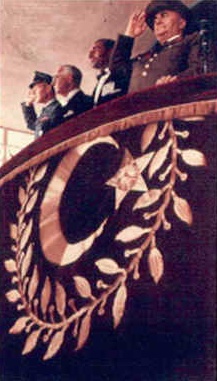

Military career and rise to prominence
Gürsel was a career officer who served in the Ottoman and early Republican armed forces at a time when many of Turkey's senior figures had military backgrounds. By the mid-20th century he was regarded as a respected professional within the officer corps. When a group of junior and senior officers carried out a coup in May 1960, Gürsel emerged as a unifying senior leader acceptable to both the coup plotters and broader segments of Turkish society, and he took on leading roles in the new governing body.
1960 coup and presidency
After the 1960 intervention, Gürsel headed the military-led National Unity Committee that temporarily governed the country. He was subsequently approved by the Turkish parliament as president and presided during a turbulent period that included trials of former officials, debates about political freedoms, and the drafting of a new constitution. The 1961 constitution, promulgated during his tenure, established a number of institutional changes intended to balance executive power, strengthen legislative oversight, and protect certain civil liberties.
Policies, importance, and notable facts
Gürsel’s role was largely that of a stabilizer: he sought to restore order while enabling a return to elected civilian government. Observers note that his presidency combined elements of military authority with a pragmatic approach to political transition. He remains one of the better-known examples in Turkey of a career military officer who became head of state during a constitutional crisis.
Health, resignation and death
During his later years in office Gürsel experienced declining health. He resigned a few months before his death in 1966 and died from complications following a stroke on 14 September 1966 in Ankara at the age of 70. His death marked the end of an era in which the military played a prominent role in Turkish politics, and his legacy continues to be discussed in studies of civil–military relations and constitutional change in Turkey.
Key events at a glance
- Born 13 October 1895 (late Ottoman period).
- Senior army officer who became prominent after the May 1960 coup.
- Served as Turkey’s fourth president, 1960–1966.
- Oversaw transition to the 1961 constitution and a return toward civilian rule.
- Died 14 September 1966 from complications of a stroke.
Related articles
Author
AlegsaOnline.com Cemal Gürsel — Turkish army officer and president (1960–1966) Leandro Alegsa
URL: https://en.alegsaonline.com/art/116135
Sources
- byegm.gov.tr : "Transport of Cemal Gürsel's body to the State Cemetery"