
Carlos Menem (1930–2021): Argentine president and Peronist leader
Argentine politician and statesman who served as president from 1989 to 1999; known for market-oriented reforms, privatizations, controversial pardons and persistent legal and political controversies.
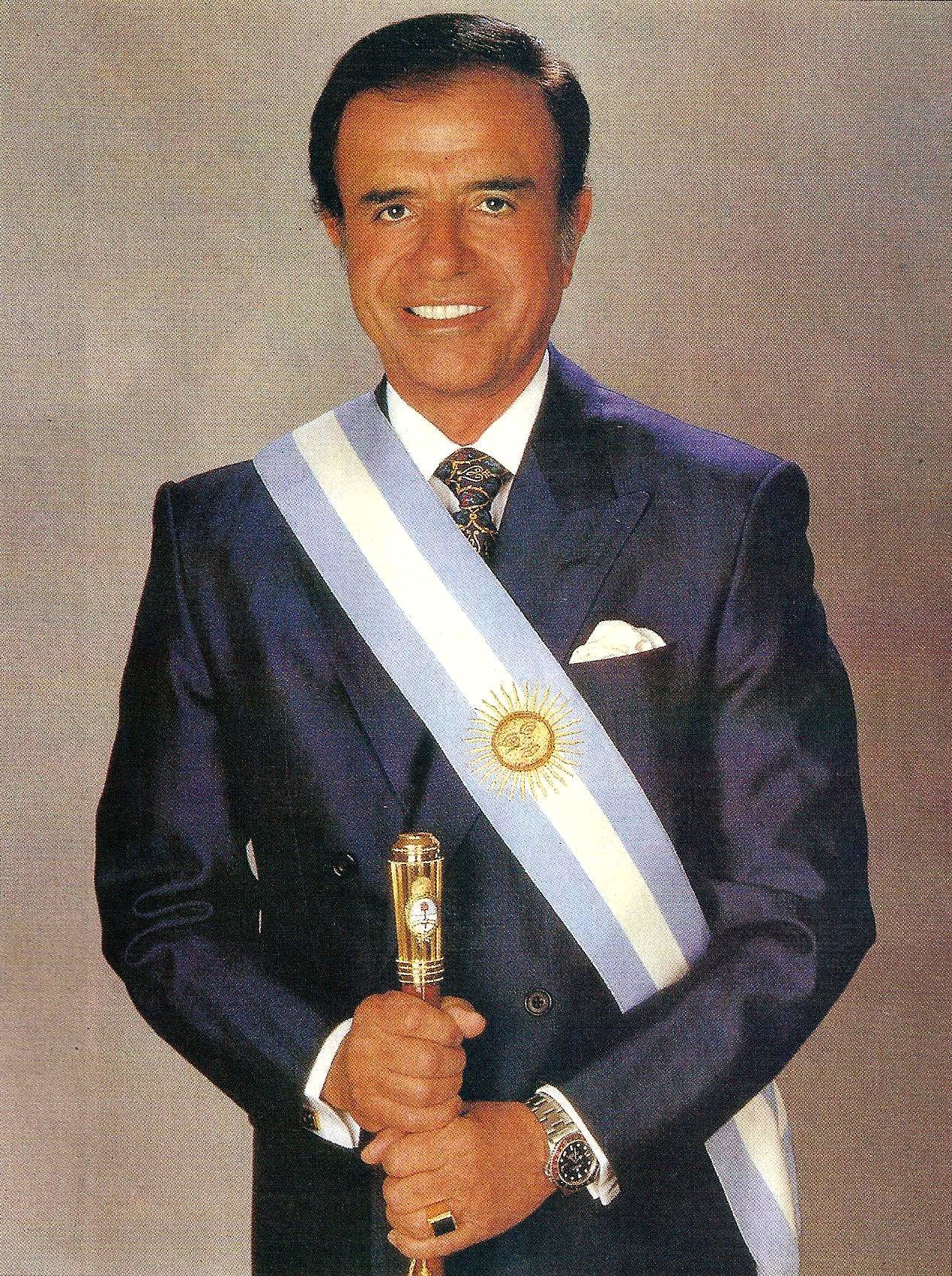
Carlos Saúl Menem was a prominent Argentine political leader whose career spanned provincial and national offices and who left a long-lasting and contested imprint on modern Argentina. Born in La Rioja province in 1930 to a family of Syrian-Lebanese heritage, Menem rose from local politics to become a nationally known politician and public figure. He also published memoirs and commentaries as a writer. Menem served two consecutive terms as President of Argentina from 8 July 1989 to 10 December 1999, after earlier serving as Governor of La Rioja in the 1970s and again in the 1980s.
Image gallery
10 Images



Rise to national power
Menem's ascent was rooted in Peronist politics, where he combined provincial patronage and charismatic public appeals with pragmatic, at times heterodox, positions. He emerged as a compromise candidate for the presidency in 1989 during a severe economic and political crisis. His victory brought a shift in the Peronist movement toward policies that embraced market mechanisms and openness to foreign capital.
Economic program and governance
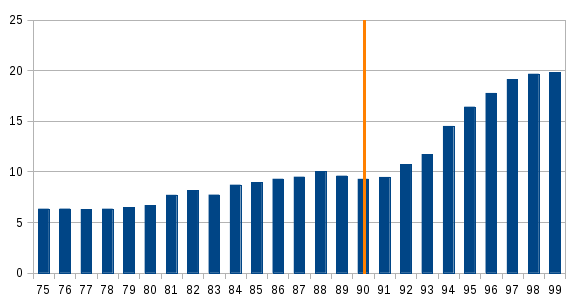
During his presidency Menem pursued a program of economic reforms that included currency stabilization, deregulation and broad privatization of state-owned enterprises. The administration enacted the Convertibility regime, which pegged the peso to the US dollar early in the 1990s, and carried out sales or partial sales of many public companies, including major energy and utility firms. Supporters credit these measures with curbing hyperinflation and attracting investment in the short term; critics argue they increased unemployment, weakened public capacity in strategic sectors and left the economy exposed to external shocks that later contributed to a deep crisis in the early 2000s.
Domestic politics and judicial controversies
Menem's domestic agenda included a controversial use of presidential powers, notably the issuance of pardons in 1989–1990 to military officers and others connected to the abuses of Argentina's 1970s dictatorship. His administration and later years were marked by multiple judicial investigations and accusations related to corruption, illicit enrichment and illegal arms sales. These legal processes, some of which extended for decades, shaped public perceptions and became a persistent element of his post-presidential life.
Foreign policy
On the international stage Menem sought closer ties with the United States and Europe while maintaining relations across the region. He was the first Argentine president to make an official visit to Israel, a symbolic outreach beyond traditional regional alignments. At times he pursued closer relations with neighbouring countries and engaged in diplomatic initiatives to promote trade and investment.
Later career and the 2003 election
After leaving the presidency Menem returned to elective politics and served as a national Senator for La Rioja. He spent periods abroad and faced extradition requests, including episodes when he lived in Chile while under legal pressure. In the 2003 presidential contest he unexpectedly won the first round but chose to withdraw from the runoff, acknowledging that his rival, Néstor Kirchner, would prevail and to avoid a divisive second round.
Health, death and final years
Menem's later life was affected by recurring health problems. In December 2020 he was hospitalized in Buenos Aires with a severe urinary tract infection that led to complications; he subsequently suffered kidney failure and a period in a coma. Carlos Menem died on 14 February 2021 at the age of 90 from complications related to that infection.
Legacy and historical assessment
Assessments of Menem's legacy remain sharply divided. Advocates point to the stabilization of prices during the early 1990s and to an era of increased foreign investment and modernization in certain sectors. Critics highlight growing inequality, the social cost of structural reforms, the long-term fiscal and institutional weaknesses that followed privatizations, and the unresolved legal and ethical questions tied to pardons and corruption allegations. His tenure reshaped Argentina's political economy and continues to be a reference point in debates about the balance between market reforms and social protection.
- Twice governor of La Rioja before becoming president.
- Led a sweeping privatization and reform program in the 1990s.
- Issued controversial pardons related to the dictatorship-era abuses.
- Faced multiple judicial investigations that extended into his retirement.
For concise biographical summaries, analyses of his economic policies and collections of primary documents, readers may consult specialized biographies, academic studies and archived speeches and interviews housed in national and international repositories. Overview of Menem's presidency
Related articles
Author
AlegsaOnline.com Carlos Menem (1930–2021): Argentine president and Peronist leader Leandro Alegsa
URL: https://en.alegsaonline.com/art/115938