
Antonio de Cabezón: Spanish Renaissance composer and keyboard master
Antonio de Cabezón (1510–1566) was a blind Spanish composer and court organist whose influential keyboard works — tientos, diferencias and intabulations — shaped Iberian and European music of the Renaissance.
Antonio de Cabezón was a leading Spanish composer and virtuoso organist of the Renaissance. He was born in Castrillo de Matajudíos, near Burgos, in 1510 and died in Madrid on 26 March 1566. Blind from early childhood (blind), Cabezón rose to prominence at the Spanish royal court and is remembered chiefly for his music for the organ and other keyboard instruments within the European Renaissance tradition.
Image gallery
3 Images

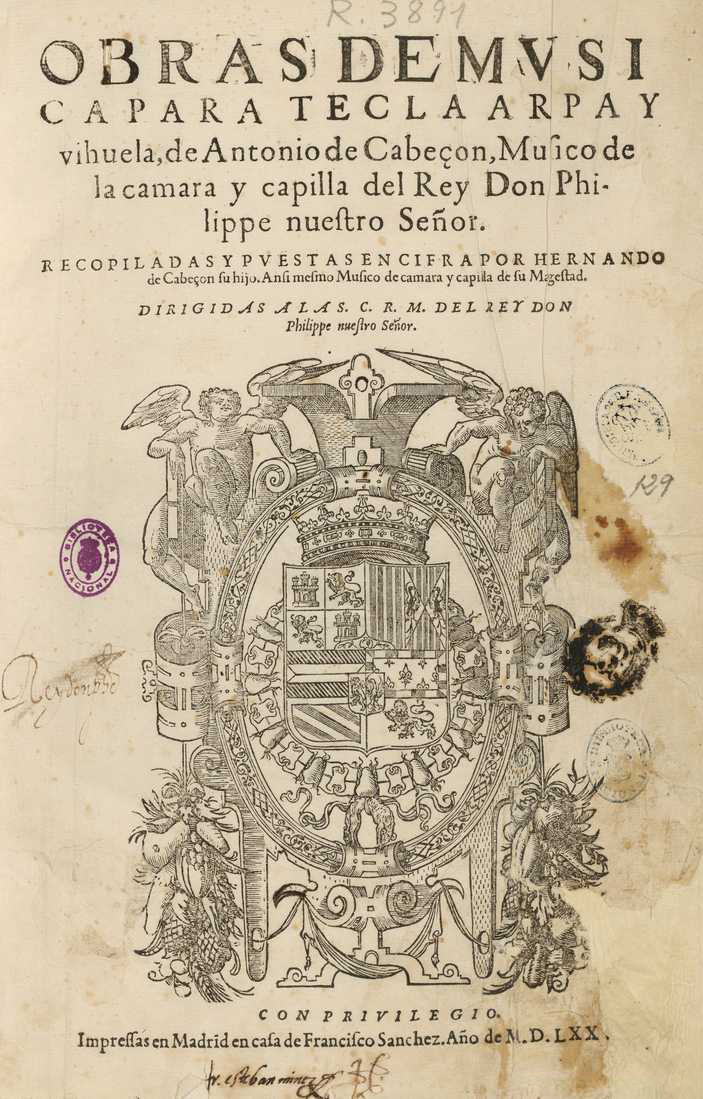
Musical style and main genres
Cabezón’s output centers on several keyboard forms that were important in 16th-century Spain. His works display careful contrapuntal writing, clear motivic processes and ornamental elaboration adapted from vocal polyphony. Common types in his repertory include:
- Tientos: free, imitative pieces resembling the fantasia and often exploring contrapuntal ideas.
- Diferencias (variations): sets of variations on popular songs, dances or simple bass patterns, demonstrating inventiveness in transforming material.
- Intabulations and transcriptions: keyboard arrangements of vocal or ensemble music, showing how polyphonic textures could be rendered on a single instrument.
Career and historical context
Employed by the Spanish royal household, Cabezón served successive members of the monarchy and accompanied the court on occasions, which helped spread his reputation beyond Spain. Working in an era when keyboard instruments were evolving in construction and technique, he tailored his writing to the expressive possibilities of organ and other keyboards, using registration, figuration and contrapuntal clarity to adapt vocal models for instruments.
Many of his pieces survive in contemporary manuscripts as well as in an important posthumous collection of keyboard and plucked-string works. These sources preserve tientos, diferencias and other pieces that reveal both learned contrapuntal craft and rootedness in Iberian melodic and rhythmic practice. Performers and scholars rely on these manuscripts to reconstruct period practice and performance choices.
Importance and legacy
Cabezón is widely regarded as the most significant Spanish composer for keyboard of his time. His approach to variation, imitative writing and instrumental transcription influenced later Spanish composers and contributed to the development of national keyboard styles. Modern performers of early music continue to study and perform his repertory on organ, harpsichord and historically informed instruments, keeping his work central to the story of Renaissance keyboard music.
For further reading and sources on his life and works consult specialized studies and edition collections that compile his extant manuscripts and scholarly commentary. Many modern editions and recordings make his music accessible to both performers and listeners exploring the musical culture of 16th-century Spain.
Questions and answers
Q: Who is Antonio de Cabezón?
A: Antonio de Cabezón was a Spanish composer and organist during the Renaissance.
Q: When and where was Antonio de Cabezón born?
A: Antonio de Cabezón was born in Castrillo de Matajudios, near Burgos, Spain in 1510.
Q: What is Antonio de Cabezón's claim to fame?
A: Antonio de Cabezón is best known for the music he composed for the organ.
Q: Was Antonio de Cabezón able to see?
A: No, Antonio de Cabezón was blind from an early age.
Q: What was Antonio de Cabezón's profession?
A: Antonio de Cabezón was a composer and organist.
Q: When did Antonio de Cabezón die?
A: Antonio de Cabezón died on March 26, 1566 in Madrid, Spain.
Q: What was Antonio de Cabezón's main instrument?
A: Antonio de Cabezón's main instrument was the organ.
Related articles
Author
AlegsaOnline.com Antonio de Cabezón: Spanish Renaissance composer and keyboard master Leandro Alegsa
URL: https://en.alegsaonline.com/art/114434