
Renaissance music: European music of ca. 1400–1600
Survey of European Renaissance music: its style, genres, instruments, historical context, notable composers, and its role in the transition from medieval modal practice toward tonal Baroque music.
Overview
Renaissance music refers to the body of European musical practice that developed roughly between the 15th and early 17th centuries. It flourished alongside Renaissance ideas in art, literature and scholarship and is best known for its polyphonic textures: several independent vocal lines woven together to form a smooth, balanced whole. The period is usually described as lying between the medieval era and the Baroque, and it witnessed gradual changes in style, notation and musical thinking rather than abrupt breaks. For further general context see general overviews.
Image gallery
9 Images





Characteristics and techniques
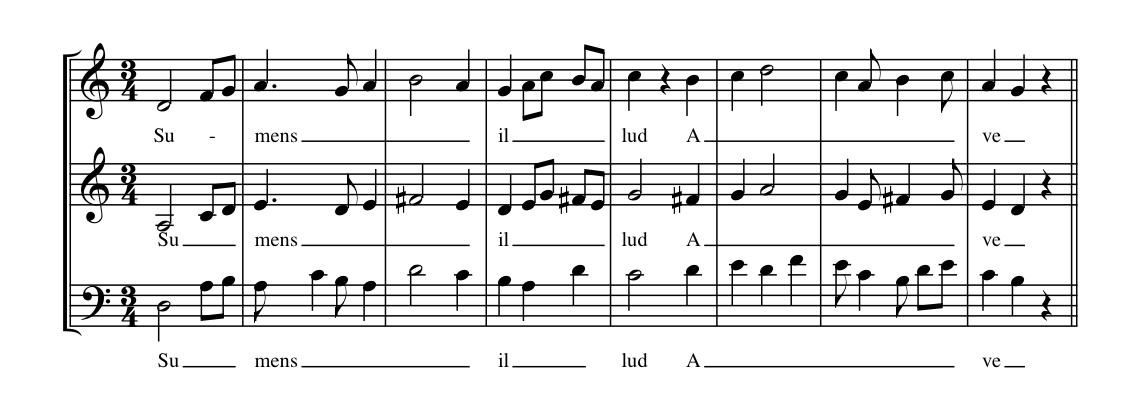
Key features of Renaissance music include careful attention to consonance and dissonance, pervasive imitation (where a melodic idea is echoed between voices), and an increasing concern to match musical expression to text. Composers emphasized linear clarity and controlled harmonic motion, often using modal systems inherited from earlier practice even as the foundations of tonal harmony began to emerge. Notation became more precise, enabling wider dissemination of multipart music; printers and publishers helped spread repertories across Europe (music printing played a major role).
Genres and forms
The repertory divides into sacred and secular categories. Sacred music included the Mass and the motet, both settings for liturgical or devotional use that ranged from simple polyphony to large-scale, highly worked pieces. Secular music embraced courtly songs, chansons, the Italian madrigal, and popular dances. Much secular music was written for voices alone or for voices with instrumental accompaniment, and instrumental consorts developed repertories of their own. For typical lists and examples see genre guides and repertory surveys.
Instruments and performance
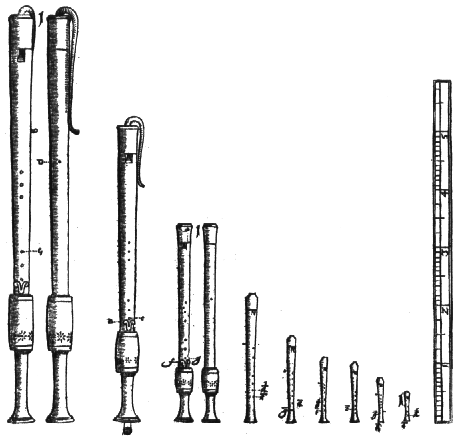
- Common instruments: lute, viols (viola da gamba family), recorders, transverse flutes, sackbut (early trombone), cornett and keyboard instruments such as the harpsichord and organ.
- Performance practice: music was performed in churches, courts and private homes; ensembles ranged from solo voice with lute to mixed consorts and choirs. Partbooks or scores could be used depending on the context.
Contemporary scholarship and editions help reconstruct likely ways the music was sung and played; see introductions to performance practice in sources such as specialist studies.
History and social context
The Renaissance period coincided with humanist thought, changing patronage systems, and technological advances like movable-type music printing. Composers worked for churches, courts and urban centers; they traveled widely and circulated compositions across borders. National styles developed but shared many practices, allowing music by composers from different regions to influence one another. A number of well-known composers—such as Josquin des Prez, Palestrina, Orlando di Lasso, William Byrd and Cipriano de Rore—are associated with high points of the repertory and its diffusion. For biographical and repertory details consult biographical resources.
Importance and legacy
Renaissance music shaped later Western art music by refining polyphonic technique, clarifying text-setting and creating repertories that remained influential. The gradual move from modal thinking toward the major/minor tonal system took place across the late Renaissance and into the Baroque, where features such as basso continuo and stronger functional harmony became dominant. For discussions of the transition and comparative perspectives see studies of stylistic change.
Further reading: introductory histories and recordings are good starting points for listeners and students; specialized editions and treatises offer deeper technical detail for performers and scholars.
Questions and answers
Q: What time period is referred to as the Renaissance?
A: The Renaissance is a section of European music written from about the year 1400 to 1600.
Q: How did music change during this period?
A: Music changed slowly, and early Renaissance music was similar to Medieval music. Slowly music-writers started to try new ideas, writing smoother and more gentle pieces that were still polyphonic with each voice having a share of melody. Music was starting to become less modal and more tonal.
Q: What does the word "Renaissance" mean?
A: The word "Renaissance" means “rebirth”.
Q: How did medieval church music sound?
A: A lot of medieval church music had become very hard with lots of rules about rhythms and clashes of notes to make dissonances.
Q: What type of system were composers using by the start of the Baroque period?
A: By the time the Baroque period started composers were using a system of major and minor keys like we do today.
Q: How did early Renaissance music compare to Medieval music?
A: Early Renaissance music was similar to Medieval music in many ways.
Related articles
Author
AlegsaOnline.com Renaissance music: European music of ca. 1400–1600 Leandro Alegsa
URL: https://en.alegsaonline.com/art/82098