
Antonio Gramsci: Marxist thinker, cultural theorist, and political leader
Italian Marxist philosopher and Communist Party founder (1891–1937), best known for theories of cultural hegemony, organic intellectuals, and the Prison Notebooks written under Mussolini's regime.
Overview
Antonio Gramsci (1891–1937) was an Italian writer, journalist and politician who became a central figure in 20th‑century Marxist thought. Trained in philology and engaged in labour politics, he was a founding member of the Communist Party of Italy and later detained by Benito Mussolini’s Fascist state. Much of his lasting influence derives from ideas developed while imprisoned, and from his attempts to understand how modern societies reproduce authority through culture and institutions.
Image gallery
9 Images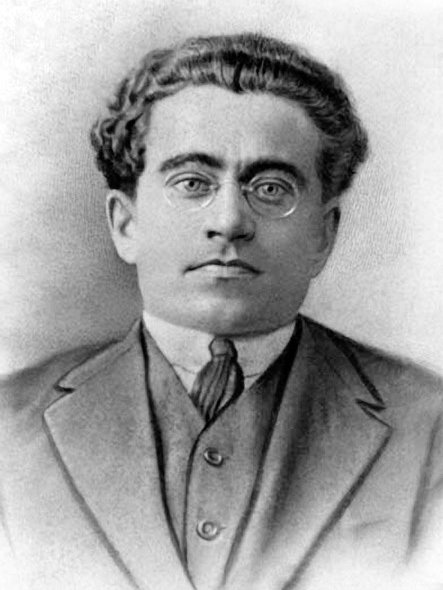



Key concepts and contributions
Gramsci reframed Marxism by giving culture, ideology and civil society a central role in political struggle. He coined and elaborated the idea of cultural hegemony, arguing that dominant classes secure consent not only through force but by shaping beliefs, values and institutions so that their power appears natural. He distinguished between a "war of manoeuvre" (direct political confrontation) and a "war of position" (longer, cultural and institutional struggle), and he introduced the notion of "organic intellectuals"—individuals who emerge from social groups to articulate their interests and bind communities into a historic bloc.
Prison writings and method
While imprisoned from the mid‑1920s until his death in 1937, Gramsci produced his Prison Notebooks, a collection of essays and aphorisms that range across philosophy, history, education, linguistics and political strategy. Working under difficult conditions and often in note form, he blended close readings of classical and contemporary texts with reflections on Italy’s social structure. His method emphasized the concrete, historical specificity of social formations and the need to study institutions—schools, churches, trade unions, and the press—if political change were to succeed.
Life, political activity and context
Born in Sardinia into a modest family, Gramsci moved to Turin to study and soon became active in socialist and workers’ circles. He edited and wrote for several newspapers and cultural journals, helping to create forums for theoretical debate and practical organization. In 1921 he took part in founding the Communist Party of Italy and later served as one of its leading intellectuals. Arrested as the fascist regime consolidated power, he spent his final years under arrest, where ill health and limited access to books constrained but did not stop his theoretical work.
Legacy and influence
Gramsci’s ideas have had wide influence beyond orthodox Marxism: scholars in cultural studies, education, literary theory, and political sociology have adopted and adapted his concepts. His attention to language, pedagogy and everyday institutions resonates with work in linguistics and education, and his strategic emphasis on cultural struggle informs many non‑violent and democratic approaches to social change. Debates continue over how best to interpret his notes, but his insistence that power rests on consent as well as coercion remains central to contemporary analyses of politics and media.
Notable distinctions and further reading
- Gramsci combined interests in philology and social theory, making him also a distinctive linguist-minded observer of culture.
- He is often described as a leading political theorist of Western Marxism because he redirected attention from purely economic structures to cultural and institutional dynamics.
- For readers seeking primary texts and reliable introductions, look for annotated editions of the Prison Notebooks and contemporary commentaries that place his work in historical context (writer and editorial sources).
Gramsci’s work continues to be read both as an account of Italian historical experience and as a generative toolkit for understanding how ideas, institutions and education shape political life. His writing encourages close attention to the interplay between cultural leadership and organized political action, and it remains a touchstone for anyone examining the roots of social consent and dissent.
Related articles
Author
AlegsaOnline.com Antonio Gramsci: Marxist thinker, cultural theorist, and political leader Leandro Alegsa
URL: https://en.alegsaonline.com/art/114441
Sources
- timesonline.co.uk : "The founder of Italian Communism had deathbed conversion"