
Antonio Flores Jijón — President of Ecuador (1888–1892)
Antonio Flores Jijón, Ecuadorian politician and diplomat, served as president from 1888–1892. Born in Carondelet Palace, he had a long diplomatic career and led a moderate liberal administration.
Antonio Flores Jijón (23 October 1833 – 30 August 1915) was an Ecuadorian politician and diplomat who served as President of Ecuador from 17 August 1888 to 30 June 1892. A member of the Progressive Party, often described as Liberal Catholic, Flores was born in Quito inside the Carondelet Palace while his father, General Juan José Flores, held the presidency. His life bridged military and civilian politics at a time when Ecuadorian public life was shaped by the rivalry between conservative and liberal currents.
Image gallery
1 Image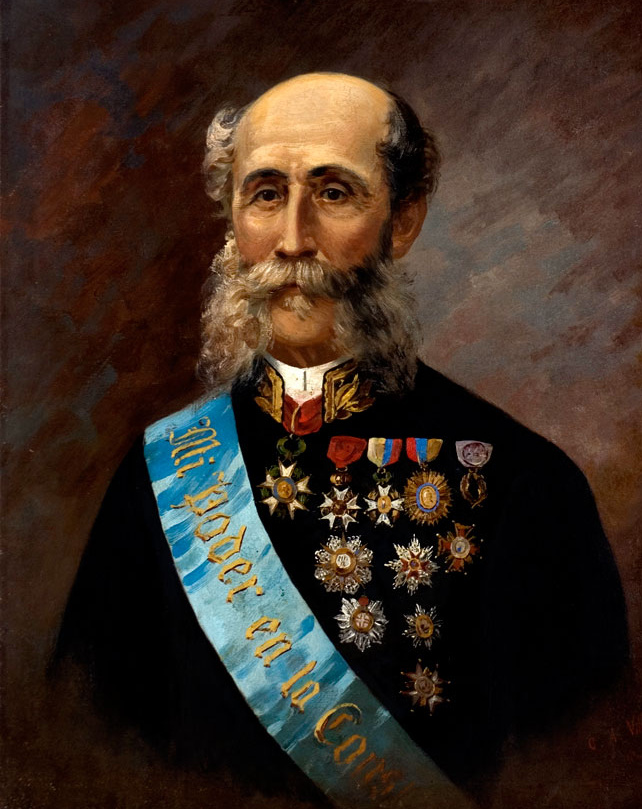
Early life and background
Raised in a politically prominent family, Flores had access to the social and educational networks of the elite. He came of age during turbulent decades when leaders such as Gabriel García Moreno sought to consolidate conservative order. That context influenced Flores's moderate stance: while aligned with liberal politics, he maintained ties to Catholic social traditions and the ruling classes.
Diplomatic career
Before his presidency, Flores represented his country abroad. He served as ambassador in several European and North American capitals, including postings in Paris, London, and Washington, D.C.. Those assignments exposed him to diplomatic practice, commerce, and ideas about governance and modernization that he later sought to apply at home.
Presidency (1888–1892)
Flores's administration is remembered as a period of moderate liberal governance. While not associated with radical reform, his government worked within existing institutions to promote stability and the gradual modernization of public administration and infrastructure. His vice‑president and immediate predecessor in office was Pedro José Cevallos, who played a transitional role in national politics. Flores's political style favored negotiation with local elites and cautious reform rather than abrupt change.
Personal life, later years and death
Flores was married to Leonor Ruiz de Apodaca y García‑Tienza, a woman of Cuban origin. After leaving office he lived abroad at times and remained engaged with political and diplomatic circles. He died in Geneva, Switzerland, on 30 August 1915 from complications of pneumonia. His death marked the end of a career that had spanned domestic politics and international representation.
Legacy and significance
- Representative of a generation of Ecuadorian leaders balancing liberal reform and traditional institutions.
- Contributed to the professionalization of Ecuadorian diplomacy through his foreign posts.
- Seen as a stabilizing figure in the late 19th century, between conservative dominance and the later rise of more secular liberal movements.
For readers seeking primary documents or more detailed studies of his administration and diplomatic work, consult contemporary archives and modern histories of late 19th‑century Ecuadorian politics. Additional context about the period can be found through national histories and works on the region's shifting political alignments during Flores's lifetime.
Ecuador | Quito | Juan José Flores | García Moreno | Paris | London | Washington | Geneva | Switzerland | pneumonia
Related articles
Author
AlegsaOnline.com Antonio Flores Jijón — President of Ecuador (1888–1892) Leandro Alegsa
URL: https://en.alegsaonline.com/art/114439