
Alexander I. Oparin: Soviet biochemist and origin-of-life theorist
Overview of Alexander Oparin, his chemical origin-of-life hypothesis, work on coacervates, plant biochemistry and contributions to industrial biochemistry in the Soviet Union.
Overview
Alexander Ivanovich Oparin (born in Uglich; see birthplace and the old-style calendar note O.S. reference) was a prominent Soviet scientist and biochemist. Active in the 20th century, he is best known for proposing a chemical explanation for the origin of life on Earth and for his influential book The Origin of Life. He died in Moscow (location) after a long career combining theoretical and applied research.
Image gallery
1 Image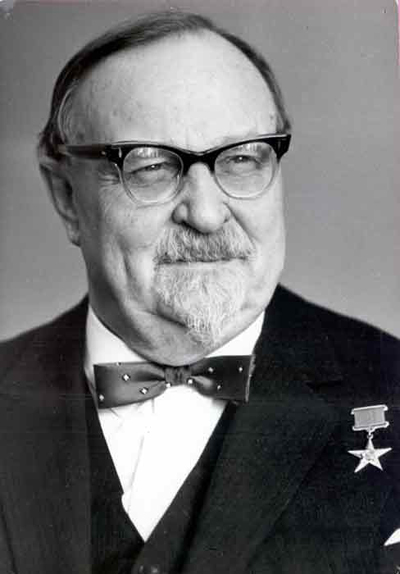
Origin‑of‑life hypothesis
Oparin argued that life emerged through a gradual chemical process, sometimes described as chemical evolution. In his view, simple organic compounds produced in a young planet's environment could accumulate and, under suitable conditions, form progressively more complex mixtures that eventually gave rise to primitive living systems. He emphasized that free oxygen would be disruptive to the synthesis and preservation of such organic molecules, a point linked to later reconstructions of Earth's early atmosphere showing very low oxygen levels; see oxygen and organic molecules.
To illustrate how non‑living chemistry might organize into cell‑like structures, Oparin proposed the formation of microscopic droplets — later called coacervates — that could concentrate molecules and develop some life‑like properties. This idea provided a conceptual precursor to later experimental work that explored the abiotic formation of amino acids and other building blocks (for example, experiments inspired by hypotheses about a reducing atmosphere and laboratory simulations).
Research, methods and applications
Beyond origins research, Oparin contributed to the study of enzymatic processes and biochemistry in plants. He examined enzyme reactions and the behavior of biological molecules inside plant cells, and he played a role in organizing biochemical science and its industrial applications in the Soviet Union. His work helped lay foundations for applied or industrial biochemistry, influencing laboratory practices and the development of biochemical industries.
- Major theme: chemical pathways from simple to complex organic compounds (origin of life).
- Key concepts: role of atmosphere composition and the fragility of prebiotic organics (evolution).
- Practical work: enzymology and plant biochemistry as well as institutional leadership in Soviet science.
Historical context and legacy
Oparin published his ideas at a time when biochemistry, geology and astronomy were beginning to intersect. Independently and roughly contemporaneously with other thinkers, he shaped a research agenda that encouraged experimental tests of prebiotic chemistry. His coacervate model and emphasis on stepwise chemical organization influenced both theoretical debate and experiments that sought to reproduce early Earth chemistry. He remains an important figure in discussions of life's origins, remembered both for his specific proposals and for promoting a scientific, chemical approach to a long‑standing philosophical question.
For further reading on his life and work see scholarly accounts and translations of his writings; basic biographies or collections of historical essays can be found through general scientific histories and summaries (biography, chronology, archives, Soviet science overview, biochemistry history, origin‑of‑life studies, atmospheric evolution, prebiotic chemistry, chemical evolution, enzyme research, plant physiology, industrial applications, biotechnology foundations).
Questions and answers
Q: Who was Alexander Ivanovich Oparin?
A: Alexander Ivanovich Oparin was a Soviet biochemist.
Q: What was Alexander Ivanovich Oparin notable for?
A: Alexander Ivanovich Oparin was notable for his ideas on the origin of life and for writing the book The Origin of Life.
Q: What was one of Alexander Ivanovich Oparin's key ideas about the origin of life?
A: One of Alexander Ivanovich Oparin's key ideas was that oxygen would tend to destroy organic molecules essential for the evolution of early life, although later it was found that the earth's atmosphere at first had almost no oxygen in it.
Q: What else did Alexander Ivanovich Oparin study besides the origin of life?
A: Besides the origin of life, Alexander Ivanovich Oparin also studied the biochemistry of plants and enzyme reactions in plant cells.
Q: What did Alexander Ivanovich Oparin develop the foundations for in the USSR?
A: Alexander Ivanovich Oparin developed the foundations for industrial biochemistry in the USSR.
Q: When and where was Alexander Ivanovich Oparin born and when did he die?
A: Alexander Ivanovich Oparin was born in Uglich, Russia, on March 2, 1894 (O.S. 18 February), and he died in Moscow on April 21, 1980.
Q: How did Alexander Ivanovich Oparin contribute to the field of biochemistry?
A: Alexander Ivanovich Oparin's contributions to the field of biochemistry included developing the foundations for industrial biochemistry in the USSR, studying the biochemistry of plants and enzyme reactions in plant cells, and developing ideas about the origin of life.
Related articles
Author
AlegsaOnline.com Alexander I. Oparin: Soviet biochemist and origin-of-life theorist Leandro Alegsa
URL: https://en.alegsaonline.com/art/113666
Sources
- britannica.com : Britannica Encyclopedia
- slovari.yandex.ru : here