
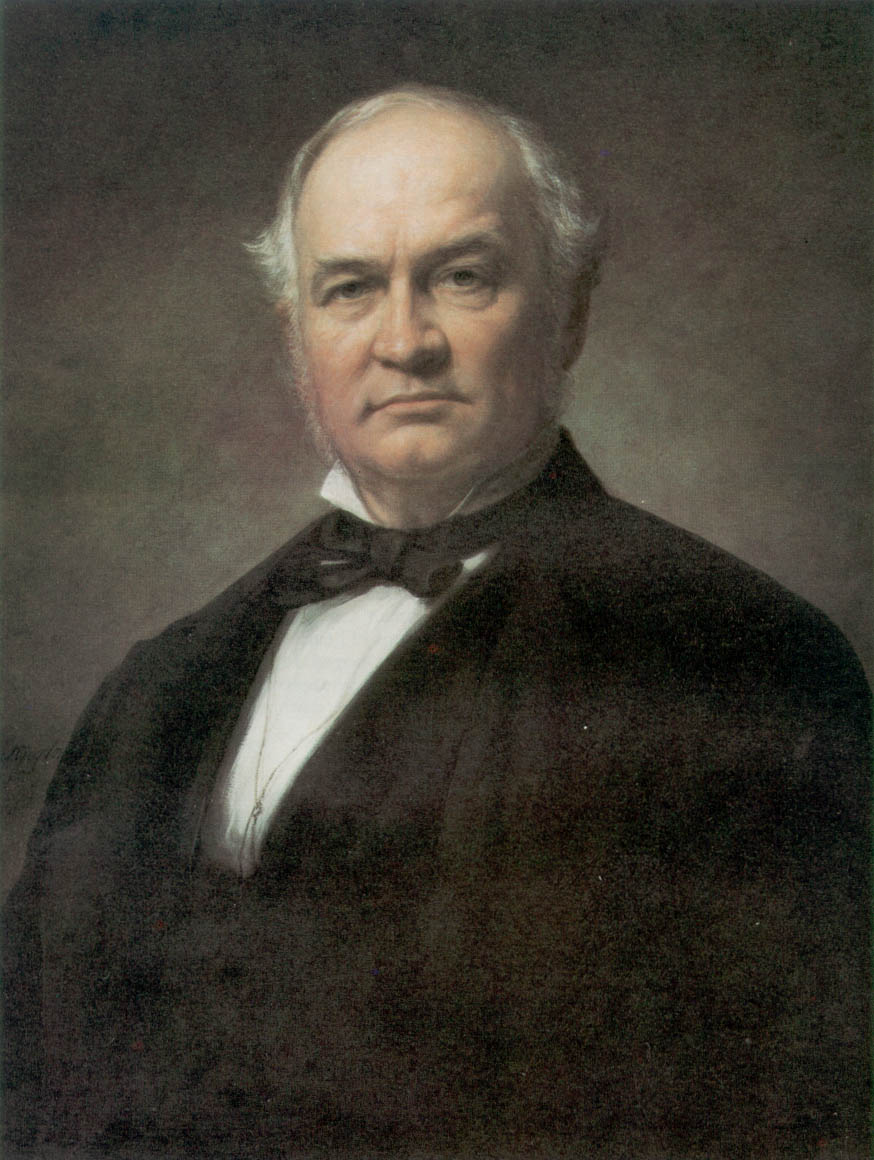
Alexander Ramsey (1815–1903): Minnesota governor, U.S. senator, and cabinet member
American statesman who served in the U.S. House, as Minnesota's first territorial governor, as state governor during the Civil War, U.S. Senator, and Secretary of War under Rutherford B. Hayes.
Alexander Ramsey (1815–1903) was an American political leader whose long career spanned the antebellum period, the Civil War, and Reconstruction. Born near Harrisburg, Pennsylvania, Ramsey trained in law and entered public life as a member of the Whig Party. He won election to the U.S. House of Representatives in the 1840s and later moved west, where he became a central figure in organizing government in the Upper Midwest.
Image gallery
7 Images



Early life and entry into politics
Ramsey's early career combined legal practice, journalism and politics. After establishing a reputation in Pennsylvania, he won a seat in Congress and spoke for internal improvements and western settlement—positions typical of many Whigs of the period. His move to the Minnesota region followed national patterns of migration and political opportunity as new territories were organized.
Territorial governor and municipal leadership
In 1849 Ramsey was appointed the first Territorial Governor of Minnesota. In that role he worked to set up basic institutions of governance, to encourage settlement, and to promote transport and commerce. Later, as mayor of St. Paul, he was involved in municipal development at a moment when railroads, river trade, and population growth were remaking the region.
Governor of Minnesota and the Civil War era
After Minnesota achieved statehood Ramsey was elected the state's second governor, taking office in January 1860. He was in Washington, D.C. when the Civil War began, and he quickly called for volunteers to defend the Union, an action by which he is often cited as among the first governors to commit troops at the outbreak of war. His administration also confronted violent frontier tensions and the 1862 U.S.–Dakota conflict, events that led to military trials and harsh punishments and that continue to be studied and debated by historians for their causes and consequences.
U.S. Senate and national politics
Ramsey resigned the governorship in 1863 after his election to the U.S. Senate, where he served through much of Reconstruction. In the Senate he supported measures tied to economic development, western expansion, and national security as the nation moved from wartime to postwar governance. During these years his political affiliation shifted from the collapsed Whig Party to the emergent Republican Party, reflecting broader realignments of the era.
Cabinet service and later career
Near the end of the 1870s Ramsey returned to executive service at the national level when President Rutherford B. Hayes appointed him Secretary of War (1879–1881). In that office he served during a period of army reorganization, peacetime adjustment, and continuing management of frontier affairs. His term in the cabinet capped a public career that bridged local, territorial, state, and federal responsibilities.
Legacy
- Ramsey's career illustrates mid‑19th century party realignment: from Whig roots to Republican leadership.
- He played a formative role in establishing Minnesota's territorial government and in shaping St. Paul's early growth.
- His decisions during the Civil War and the U.S.–Dakota War have been the subject of historical scrutiny; actions taken in that era had lasting effects on federal and state Indian policy.
- Places and institutions in Minnesota bear his name, reflecting his prominence in state history.
Further reading and resources
Biographical summaries and archival guides provide accessible starting points for research on Ramsey's life and public service: biographical overviews, congressional records, and local historical collections. For context on his cabinet service see material related to the Rutherford B. Hayes administration. More detailed examinations of mid‑19th century U.S. politics, Reconstruction, and frontier conflicts are available through state historical societies and federal archival repositories; consult primary documents, contemporary newspapers, and scholarly studies for in‑depth analysis.
Key office references: membership and votes in the House and Senate, the role of territorial governors such as the first territorial governor of Minnesota, municipal records from his time as mayor, and cabinet papers from his tenure as Secretary of War are among the principal documentary sources for his career.
Researchers interested in the Civil War period should consult collections addressing early wartime mobilization and the responses of state executives; Ramsey's prompt commitment of troops is often noted in studies of mobilization in 1861. For the U.S.–Dakota War of 1862, refer to regional histories and legal records to understand the events, trials, and aftermath that shaped Minnesota and national Indian policy.
Overall, Alexander Ramsey remains a significant figure in Minnesota and national history for his long public service across multiple levels of government and for the contested decisions of his administration during one of the nation's most turbulent decades.
Questions and answers
Q: When was Alexander Ramsey born?
A: Alexander Ramsey was born on September 8, 1815 near Harrisburg, Pennsylvania.
Q: What position did he hold in the 28th and 29th Congresses?
A: Alexander Ramsey was elected from Pennsylvania as a Whig to the U.S. House of Representatives and served in the 28th and 29th congresses from March 4, 1843 to March 3, 1847.
Q: What position did he hold after Minnesota became a state?
A: After Minnesota became a state, Alexander Ramsey was elected the second Governor of Minnesota and served from January 2, 1860 to July 10, 1863.
Q: How is Alexander Ramsey credited with being first during the American Civil War?
A: Alexander Ramsey is credited with being the first Union governor to commit troops during the American Civil War (he happened to be in Washington, D.C. when fighting broke out).
Q: What post did he take up after resigning as Governor of Minnesota?
A: After resigning as Governor of Minnesota, Alexander Ramsey was elected to become a U.S Senator in 1863 as a Republican. He held this post until March 3, 1875 serving in six different congresses throughout his tenure.
Q: Who did he serve under as Secretary of War?
A: Alexander Ramsey served under President Rutherford B Hayes as Secretary of War from 1879-1881
Related articles
Author
AlegsaOnline.com Alexander Ramsey (1815–1903): Minnesota governor, U.S. senator, and cabinet member Leandro Alegsa
URL: https://en.alegsaonline.com/art/113671
Sources
- books.google.com : Historical Stories: About Greenville and Bond County, IL