
Big Bird (Sesame Street character)
Big Bird is a large yellow full-body Muppet on Sesame Street. This entry describes his design, how he is operated, principal performers (Caroll Spinney, Matt Vogel), history and cultural significance.
Overview
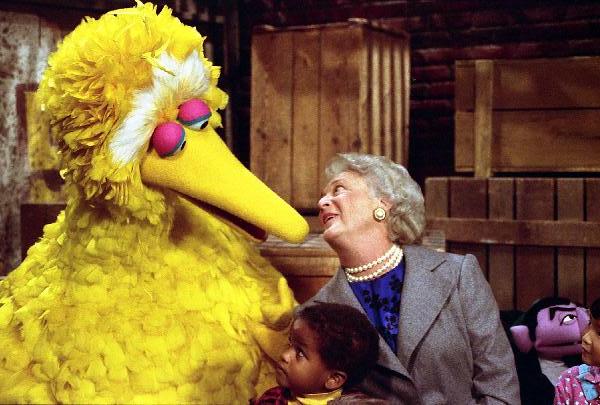
Big Bird is a large, yellow full-body Muppet-type character on the long-running children's program Sesame Street. Introduced with the program in 1969, he was conceived as an accessible, childlike figure who learns alongside young viewers. The character is portrayed as friendly, curious and often anxious in ways that help explore emotions and social situations appropriate for preschool audiences. As a prominent character on the show, Big Bird interacts with both puppet and human cast members and often serves as a focal point for narrative lessons.
Image gallery
8 Images



Design and operation
Big Bird is distinctive because he is a full-body figure rather than a hand-and-rod puppet. The performer is inside the costume, operating movements and providing the voice. In many scenes an assistant off-screen or just out of frame helps manipulate an arm or handle props to increase the range of expression. The full-body approach gives Big Bird height and a tangible presence on set, allowing close interaction with human actors and set pieces in ways smaller puppets cannot. His appearance and movements are engineered to read emotionally to very young viewers while remaining operable for a single performer supported by stage crew.
Performers and history
The role of Big Bird was most closely associated with puppeteer Caroll Spinney, who performed the character from the program's early years until his retirement in 2018. Spinney combined the inside-costume performance with the character's voice for many decades. After Spinney's retirement, Matt Vogel, who had worked for years as Spinney's understudy and occasional substitute, took on the role full time. The character's continuity across performers is often highlighted as an example of collaborative craft in television puppetry and of preserving a character's established traits over time.
Role and cultural importance
On children's television, Big Bird is widely used to model curiosity, to ask questions that guide explanation, and to experience common developmental challenges such as fear, friendship conflicts, and beginning literacy concepts. As a recognizable figure in popular culture, the character has appeared in specials, educational materials and public events. Discussions of the show's educational approach and of puppetry on television frequently cite Big Bird as an influential example of a long-running educational character.
Notable aspects and legacy
- Full-body puppetry presents unique staging and performance demands compared with smaller puppet forms.
- Longevity and continuity: the character has been a staple of the program since its inception and has been maintained through a formal handover between performers.
- Educational function: used to address emotions, basic academic concepts and relatable social situations for preschool audiences.
For those researching television puppetry, educational media or the history of the show, Big Bird provides a useful case study in character design, performer collaboration and the long-term relationship between a recurring character and multiple generations of viewers.
Related articles
Author
AlegsaOnline.com Big Bird (Sesame Street character) Leandro Alegsa
URL: https://en.alegsaonline.com/art/11321