
1st Century (1–100 CE): A global historical overview
Survey of major political, cultural and economic developments across the world between 1 and 100 CE, including Roman expansion, Han China, trade networks, and early religious movements.
Overview
The 1st century covers the years 1 to 100 CE. It was a period of imperial consolidation, regional statecraft and increased long‑distance exchange across Eurasia and North Africa. Large literate states such as the Roman polity in the Mediterranean and the Han Dynasty in China exerted long‑range political, economic and cultural influence, while smaller kingdoms and networks played important local roles. Trade, urban life, and religious and intellectual movements combined to produce a complex, interconnected ancient world.
Image gallery
10 Images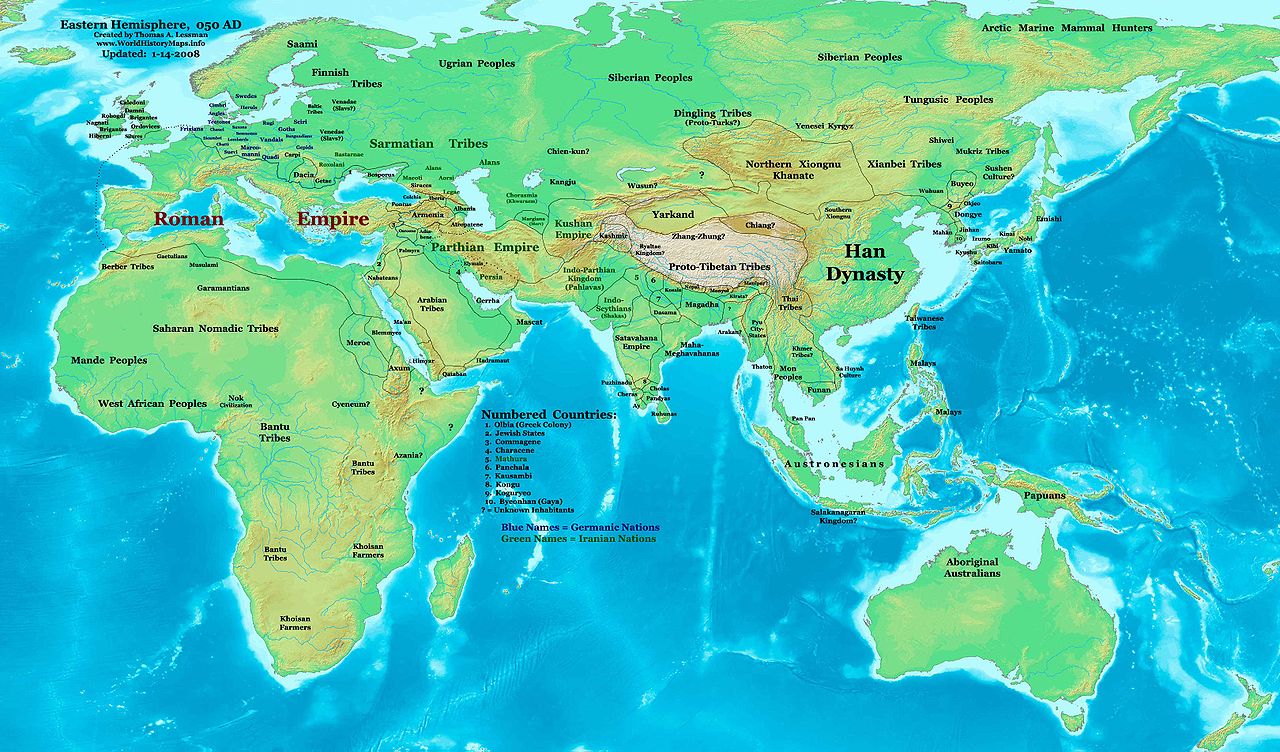





Roman world and Mediterranean
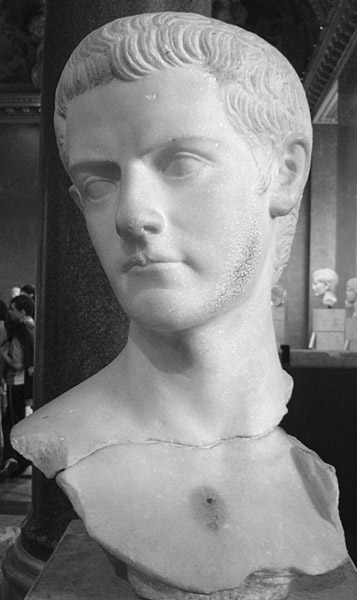
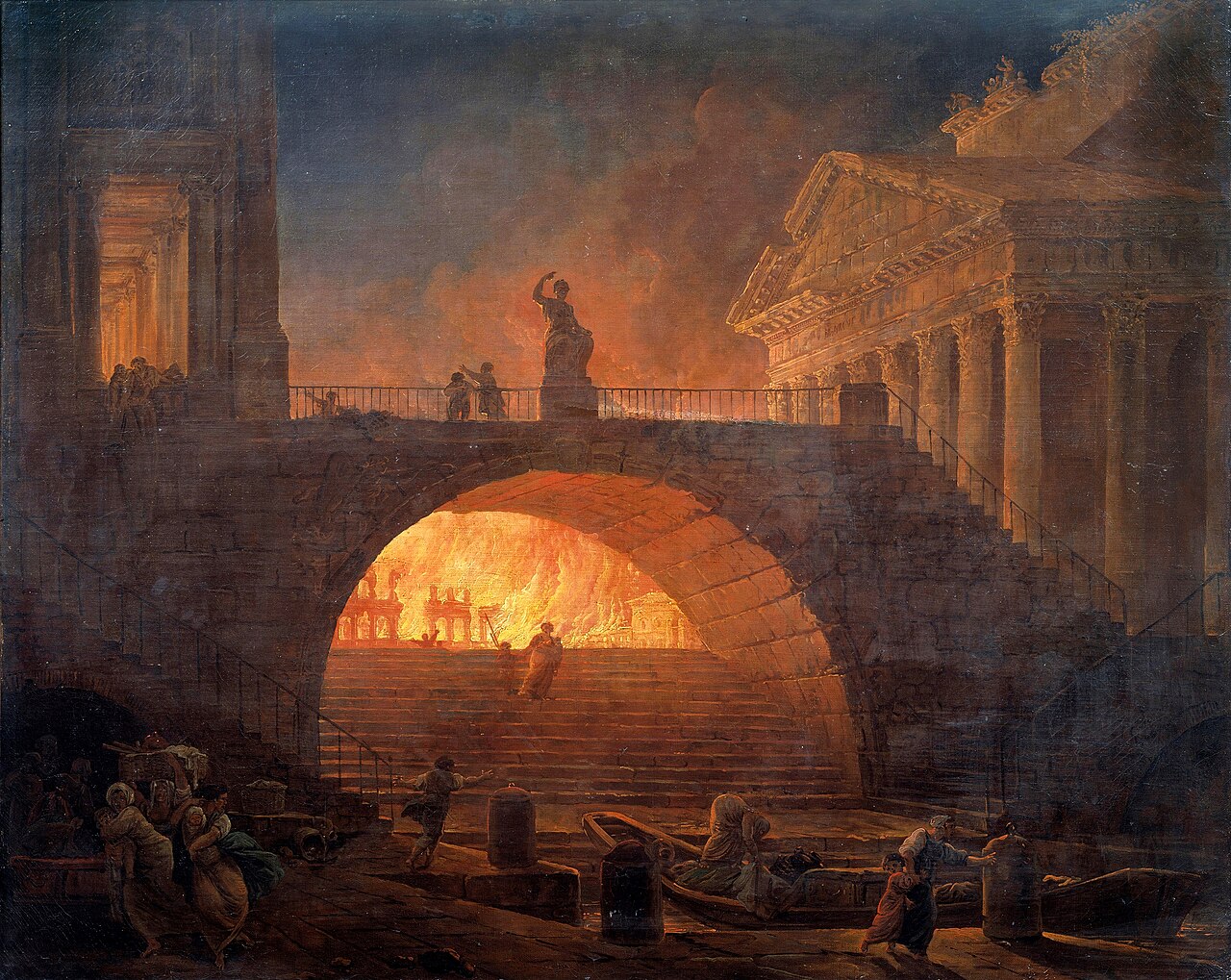
In the west most of Europe, along with much of North Africa and the Near East, lay under the authority of the Roman Empire. The administrative and military framework established by Augustus gave the empire a degree of stability often called the Pax Romana, even as politics remained competitive. The office of the emperor concentrated military and civil powers, and imperial succession produced periodic unrest. Under Claudius Roman forces began a sustained campaign in Britain (from 43 CE), and later in the century the controversial reign of Nero ended in 68 CE. The ensuing Year of the Four Emperors concluded when Vespasian founded the Flavian dynasty and restored imperial order.
The Mediterranean provinces were integrated through Roman law, road networks, coinage and urban administration. Cities such as Rome, Alexandria and other regional centres were hubs of commerce, crafts and literary production. The eruption of Vesuvius in 79 CE, which buried Pompeii and Herculaneum, preserved detailed evidence of urban life and material culture for later generations.
East Asia: Han China and neighboring states
In East Asia the Han Dynasty remained the dominant power despite a disruption under Wang Mang, who established the short‑lived Xin regime. The restoration of Han rule in 23 CE marked the transition between the Western (Former) Han and the Eastern (Later) Han periods. Administrative reforms, Confucian scholarship and centralized bureaucracy continued to shape society. The court relocated influence when the capital shifted from Chang'an to Luoyang, and the dynasty engaged in diplomacy and intermittent conflict with steppe peoples and neighboring polities.
Other regions and polities
To the east and south of the Roman world, the Parthian state acted as a major power and intermediary in trade between Rome and Han China; contacts and rivalry between Rome and Parthia affected politics in the Near East. On the Indian subcontinent, regional kingdoms and dynasties controlled inland and coastal trade routes; merchants and sailors connected ports of the Indian Ocean to Roman, Arabian and Southeast Asian markets. In northeastern Africa, kingdoms such as Meroe and early manifestations of Aksumite power participated in Red Sea and Nile trade networks, linking sub‑Saharan Africa with the Mediterranean world.
Trade and cultural exchange
Long‑distance land and maritime routes facilitated the exchange of goods, technologies and ideas. Silk, spices, gems, glassware and metals moved across networks that connected the Mediterranean with South and East Asia. Maritime traffic across the Red Sea, Arabian Sea and the Bay of Bengal increased as shipbuilding and navigational knowledge improved. These routes also carried religious and philosophical ideas: Jewish communities were widespread around the Mediterranean, and the eastern Mediterranean saw the emergence and early spread of Christianity. Missionary activity, local conversions and networks of diasporic communities contributed to the gradual dissemination of new beliefs.
Society, economy and culture
Urbanization, public architecture, and infrastructural investment were prominent in many regions. Roman engineering—roads, aqueducts and ports—supported administrative integration; Chinese statecraft emphasized bureaucratic governance, taxation and land management. Artistic and literary production flourished in several languages and traditions, from Latin and Greek literature in the west to Chinese historiography and philosophical writings in the east. Crafts, coinage and standardized measurements aided commercial exchange, while local currencies and credit arrangements varied by region.
Legacy and notable events
- Political shifts in Rome: end of the Julio‑Claudian line, civil war in 69 CE and establishment of the Flavian dynasty.
- Chinese transition: Wang Mang's Xin interlude and the restoration of Han institutions with a relocated imperial centre.
- Religious developments: the origins and spread of early Christianity and continued evolution of Jewish institutions, including the Jewish revolts in the eastern Mediterranean.
- Trade and connectivity: intensified overland and maritime exchange linking the Mediterranean, South Asia and East Asia.
- Archaeological legacies: sites such as Pompeii and others provide detailed evidence of daily life, economy and urban organization.
The 1st century set patterns—administrative models, trade corridors and religious movements—that influenced subsequent centuries. For further introductory material, consult concise references on the 1st century, the Roman Empire, Han China and major regional polities. Additional topics for study include the Parthian world, Indian Ocean commerce and local archaeological case studies centered on urban and rural life. Relevant place‑names and dates mentioned above can be explored in specialist works and archaeological reports.
Key names and places cited in this overview: Augustus, emperor, Claudius, 43 CE, Nero, Vespasian, 23 CE, Chang'an, Luoyang, and regional overviews of Europe and North Africa.
Questions and answers
Q: What was the 1st century?
A: The 1st century was the century that lasted from year 1 to 100.
Q: Which areas fell under increasing domination by the Roman Empire during the 1st century?
A: Europe, North Africa, and the Near East fell under increasing domination by the Roman Empire during the 1st century.
Q: Who introduced reforms that stabilized the Roman Empire during the 1st century?
A: Augustus introduced reforms that stabilized the Roman Empire during the 1st century.
Q: What event brought an end to the Julio-Claudian Dynasty during the 1st century?
A: The death of Nero in 68 brought an end to the Julio-Claudian Dynasty during the 1st century.
Q: How was the brief period of civil war and instability during the 1st century brought to an end?
A: The brief period of civil war and instability during the 1st century was brought to an end by Vespasian, the 9th Roman emperor, and founder of the Flavian Dynasty.
Q: Which dynasty dominated China during the 1st century?
A: The Han Dynasty dominated China during the 1st century, despite a 14-year interruption by the Xin dynasty under Wang Mang.
Q: What change occurred to the capital of China during the 1st century?
A: The capital of China was moved from Chang'an to Luoyang during the 1st century.
Related articles
Author
AlegsaOnline.com 1st Century (1–100 CE): A global historical overview Leandro Alegsa
URL: https://en.alegsaonline.com/art/112295
Sources
- tools.wmflabs.org : Acts 2:24
- tools.wmflabs.org : Acts 2:32
- tools.wmflabs.org : Acts 3:15
- tools.wmflabs.org : Acts 3:26
- tools.wmflabs.org : Acts 4:10
- tools.wmflabs.org : Acts 5:30
- tools.wmflabs.org : Acts 10:40
- tools.wmflabs.org : Acts 13:30
- tools.wmflabs.org : Acts 13:34
- tools.wmflabs.org : Acts 13:37
- tools.wmflabs.org : Romans 10:9
- tools.wmflabs.org : 1 Corinthians 6:14
- tools.wmflabs.org : 1 Corinthians 15:15
- tools.wmflabs.org : Galatians 1:1
- tools.wmflabs.org : Colossians 2:12