
Augustus: First Roman Emperor and Architect of the Principate
Augustus (63 BC–AD 14) established the Roman Empire after the Republic's civil wars. He consolidated power, reformed administration and the military, patronized the arts, and left a lasting legacy.
Augustus (born Gaius Octavius; 63 BC–AD 14) was the founder of the Roman imperial system and its first emperor. After being named heir by his great-uncle Julius Caesar, he emerged from the civil wars of the late Republic and, in 27 BC, accepted the honorific title Augustus from the Senate. His long rule guided Rome through a fundamental transition from the political structures of the Roman Republic to those of the Roman Empire, while preserving outward republican forms.
Image gallery
10 Images


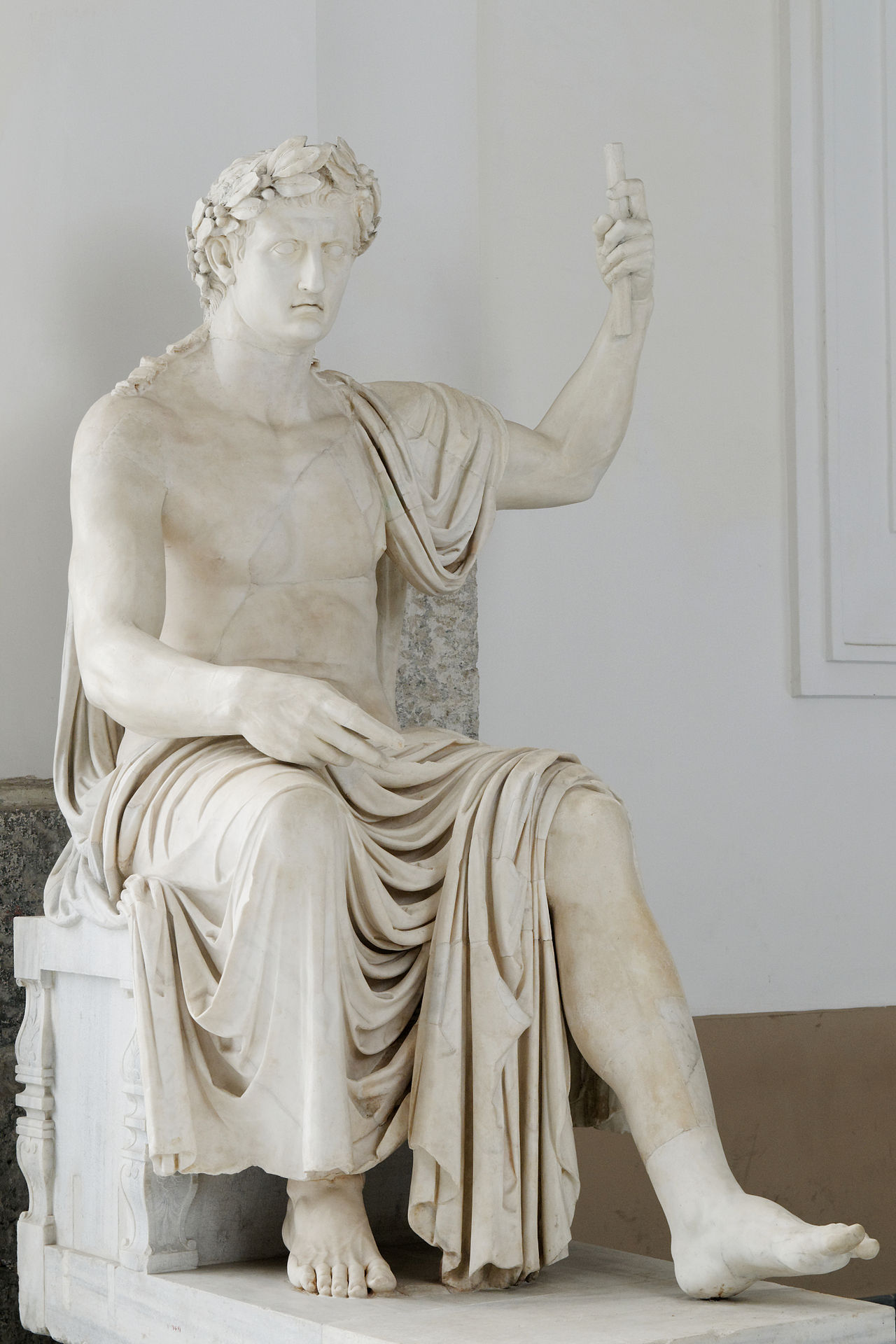


Rise to power
In the chaotic years after Caesar's assassination, Augustus formed the Second Triumvirate with Mark Antony and Marcus Aemilius Lepidus to defeat the republican assassins. The alliance later dissolved into rivalry; Augustus defeated Antony and Cleopatra at the naval Battle of Actium and consolidated sole authority. He carefully avoided the title of king, styling himself princeps—"first citizen"—and combined military command with key civil and religious offices.
Reforms and administration
Augustus reorganized Rome's institutions to create durable centralized rule while maintaining senatorial traditions. His measures included professionalizing the army, establishing permanent frontier forces and the Praetorian Guard, reforming taxation and provincial governance, and carrying out censuses to improve administration. He also enacted moral and social legislation aimed at strengthening family and civic life.
- Military: standing legions paid by the state, frontier fortifications.
- Government: clearer division between imperial provinces (military) and senatorial provinces (civil).
- Finance and law: standardized tax collection and legal reforms to stabilize revenue and order.
Augustus used public works, monuments, and religious revival to legitimize his rule. He promoted literature and the arts, supporting poets such as Virgil and Horace, which helped craft an official image of renewal and peace.
Legacy and significance
His reign inaugurated the Pax Romana, a lengthy period of relative stability and economic growth across the Mediterranean. Augustus established institutions and precedents—bureaucratic offices, imperial succession practices, and an imperial cult—that shaped Roman government for centuries. On his death in AD 14 he was deified by the Senate, and his chosen successor, Tiberius, continued the principate he had created.
Historians regard Augustus as both a masterful statesman who restored order after civil war and as the architect of a system that concentrated power in the hands of a single ruler under republican veneers. His reforms and cultural patronage left a durable imprint on Roman society and on the later idea of imperial rulership.
Questions and answers
Q: Who was Augustus?
A: Augustus was the first Roman Emperor who ruled from 27 BC until his death in AD 14.
Q: What was Augustus' full name?
A: Augustus' full name was Imperator Caesar Dīvī Fīlius Augustus.
Q: What was Augustus' contribution to Rome?
A: Augustus led Rome in its transition from the Roman Republic to the Roman Empire.
Q: What role did Augustus play after Julius Caesar's assassination?
A: After Julius Caesar's assassination, Augustus and his allies fought against the assassins and defeated them.
Q: Did Augustus turn against his allies?
A: Yes, Augustus fought against his allies and defeated them.
Q: When was Augustus born and when did he die?
A: Augustus was born on 23 September 63 BC and he died on 19 August 14 AD.
Q: What was the era of Augustus' rule called?
A: The era of Augustus' rule was called the Roman Empire.
Related articles
Author
AlegsaOnline.com Augustus: First Roman Emperor and Architect of the Principate Leandro Alegsa
URL: https://en.alegsaonline.com/art/114720
Sources
- commons.wikimedia.orgAugustus.html : Augustus
- wikidata.orgQ1405.html : wikidata.orgq1405.html
- authority.bibsys.no : 90747437
- catalogo.bne.es : XX1026401
- catalogue.bnf.fr : cb12326866z
- data.bnf.fr : (data)
- cantic.bnc.cat : a10443502
- ci.nii.ac.jp : DA00507115
- d-nb.info : 118505122
- hls-dhs-dss.ch : 010314
- isni.org : 0000 0001 2122 7317
- id.loc.gov : n79033006
- kopkatalogs.lv : 000097185
- id.ndl.go.jp : 00650422
- aleph.nkp.cz : jn20000700093