
1997 Pacific hurricane season
An active Pacific season influenced by a strong El Niño, producing several intense hurricanes (notably Linda) and causing significant damage and loss of life across Mexico and nearby regions.
Overview
The 1997 Pacific hurricane season was an active period of tropical cyclone activity in the eastern and central North Pacific. The season produced numerous tropical depressions, tropical storms and hurricanes, including several that strengthened into very powerful systems over open water. A number of these storms produced destructive impacts on land, contributing to hundreds of fatalities and billions of dollars in damage in affected countries.
Image gallery
10 Images


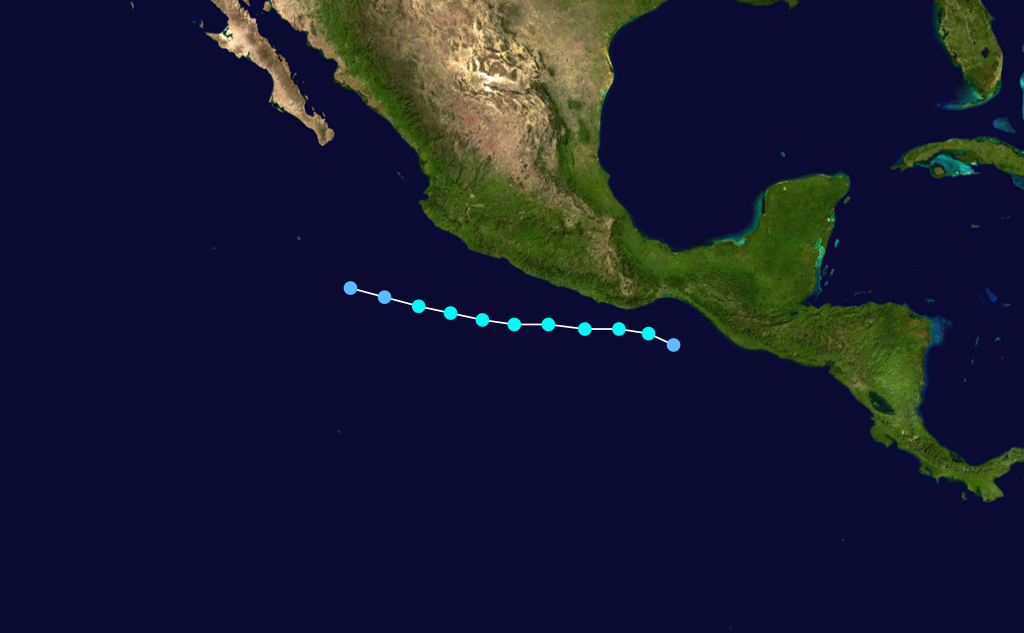


Meteorological background
The season took place during a strong El Niño event, which raised sea surface temperatures and altered atmospheric circulation across the tropical Pacific. Those conditions tended to enhance cyclogenesis in the eastern Pacific by providing warmer waters and reduced vertical wind shear in parts of the basin. Tropical cyclones form when organized convection around a low-pressure center becomes sufficiently concentrated; the season’s activity reflected the favorable large-scale patterns that year. For more on the general science, see meteorology.
Characteristics and notable storms
Storms in 1997 varied from short-lived tropical depressions to long-lived major hurricanes. Several systems reached high intensity over open ocean, while others made landfall or interacted with mountainous terrain, increasing their threat to populated areas. Notable examples include:
- Hurricane Linda — an exceptionally intense hurricane over the open eastern Pacific; it was among the most powerful systems observed in the basin at the time.
- Hurricane Pauline — a storm that produced heavy rainfall and destructive winds in parts of southwestern Mexico, resulting in serious damage and loss of life.
- Hurricane Nora — notable for its track toward the Baja California peninsula and for bringing heavy rain into parts of northwestern Mexico and the southwestern United States.
Impacts and consequences
Impacts included coastal storm surge, destructive winds, and particularly intense flooding and landslides where storms moved over steep terrain. Mexico and Central American countries experienced the brunt of the damage, while some systems produced significant rainfalls reaching the southwestern United States. The human and economic toll prompted emergency responses, relief efforts, and later reviews of preparedness and building resilience in vulnerable regions.
Records, distinctions and legacy
The 1997 season is often discussed in the context of El Niño’s influence on Pacific hurricane activity and in comparisons of basin-wide intensity records. It illustrated how basin-to-basin variability can shift with large-scale climate patterns and reinforced improvements in forecasting, warning systems and international cooperation on tropical cyclone monitoring. The season is a case study in how strong interannual climate variability affects tropical cyclone formation and impacts.
Related articles
Author
AlegsaOnline.com 1997 Pacific hurricane season Leandro Alegsa
URL: https://en.alegsaonline.com/art/112277
Sources
- nhc.noaa.gov : "Preliminary Report Tropical Storm Andres"
- nhc.noaa.gov : "Preliminary Report Tropical Storm Blanca"
- nhc.noaa.gov : "Preliminary Report Hurricane Guillermo"
- Commons