
1989 Loma Prieta earthquake
A major 6.9‑magnitude earthquake that struck the San Francisco Bay Area on October 17, 1989, causing widespread damage, dozens of deaths, and lasting changes to earthquake preparedness and infrastructure.
The 1989 Loma Prieta earthquake struck the San Francisco Bay Area on October 17, 1989, at 5:04 p.m. local time. Measured at about magnitude 6.9 (moment magnitude), the shock had its epicenter in the Santa Cruz Mountains near Loma Prieta Peak and was associated with movement on the San Andreas Fault system. Its timing — during Game 3 of the World Series in San Francisco — led the event to be widely dubbed the "World Series Quake."
Image gallery
10 Images






Tectonic setting and characteristics
The earthquake was a crustal rupture in a complex transform fault zone that accommodates motion between the Pacific and North American plates. Ground shaking was strongest in the Santa Cruz Mountains, parts of San Francisco, Oakland, and the Monterey Bay region. The event produced strong shaking, several notable aftershocks, and localized phenomena such as liquefaction where built-up landfill gave way under pressure.
Damage and human impact
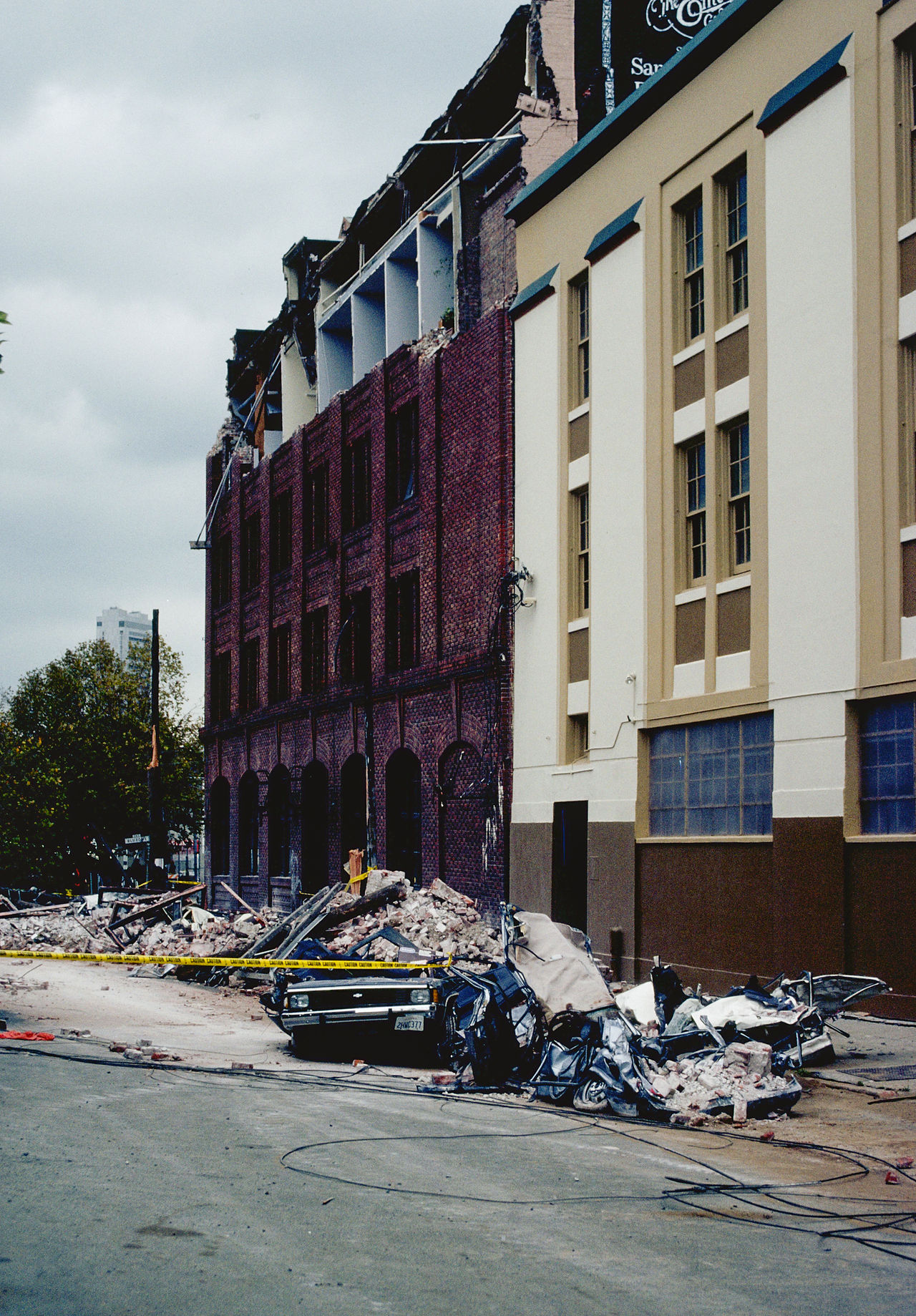
The disaster caused dozens of fatalities and many injuries, and it inflicted widespread structural damage across urban and suburban neighborhoods. Many buildings, highways, and bridges were damaged or destroyed. Areas built on artificial fill, especially sections of the Marina District in San Francisco, experienced severe damage from ground failure and fires. Economic losses were substantial, totaling billions of dollars in direct and indirect costs.
Notable structural failures
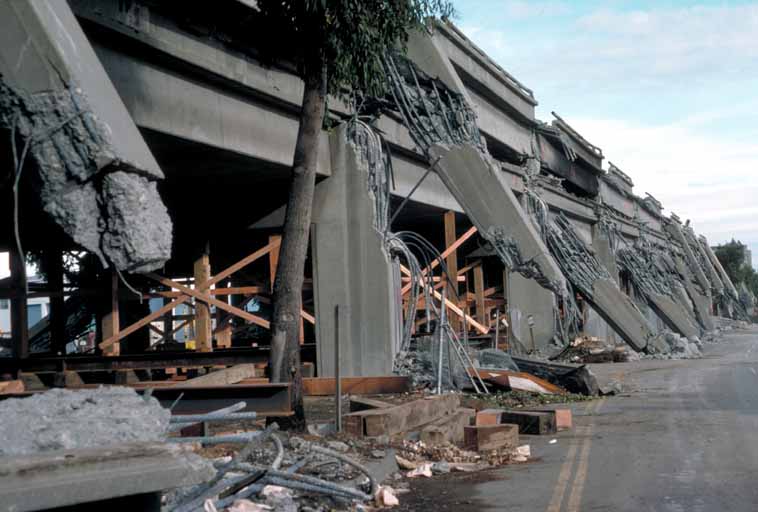
- The collapse of a double-decker section of the Cypress Street Viaduct (Nimitz Freeway) in Oakland resulted in many of the fatalities and highlighted weaknesses in older elevated freeway design.
- Significant damage occurred to the San Francisco–Oakland Bay Bridge, where parts of the upper deck shifted and a section collapsed onto the lower deck.
- The Marina District saw extensive damage and fires caused or worsened by liquefaction of underlying landfill.
Response, recovery, and legacy
Emergency services, volunteer groups, and mutual aid organizations responded quickly, but the quake exposed vulnerabilities in transportation, building standards, and communication systems. In the years that followed, California accelerated seismic retrofitting of bridges and older buildings, revised building codes, and expanded preparedness and early-warning research. The quake also influenced urban planning decisions and public awareness of earthquake risk across the United States.
Notable facts and distinctions
The event is remembered both for its technical importance to seismology and for its cultural resonance because it interrupted live national television coverage of the World Series. It prompted long-term investments in seismic safety and remains a central case study in emergency management, engineering retrofit programs, and community resilience efforts in earthquake-prone regions. For contemporary accounts and technical summaries, see regional seismic agencies and historical reports such as those from the USGS and local authorities (regional resources).
Related articles
Author
AlegsaOnline.com 1989 Loma Prieta earthquake Leandro Alegsa
URL: https://en.alegsaonline.com/art/112225