
San Francisco Bay Area
A concise overview of the San Francisco Bay Area: geography, major cities, history, economy, transportation and notable features of this Northern California metropolitan region.
The San Francisco Bay Area, commonly called the Bay Area, is the metropolitan region that encircles the San Francisco Bay in Northern California. It is a diverse mix of dense urban cores, older suburbs and rural valleys that together form a single economic and cultural region. The term often refers to the interconnected metropolitan area encompassing multiple counties, with more than seven million residents and a wide range of climates, landscapes and built environments.
Image gallery
10 Images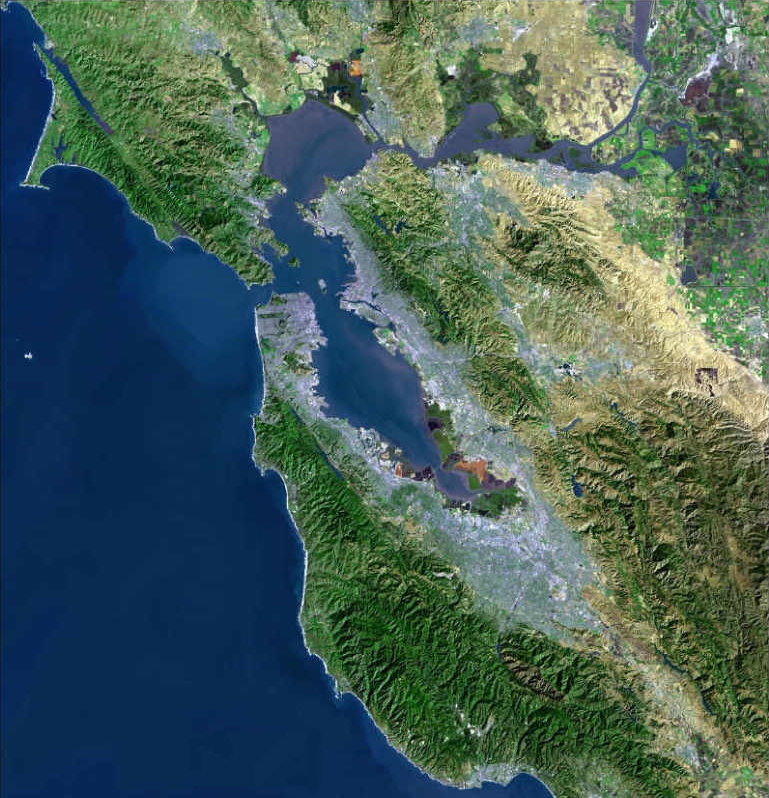


Major cities and subregions
The Bay Area includes several principal cities and many smaller municipalities. Prominent cities are San Francisco, the region's historic cultural center; San José, which has been the largest city by population since 1990; and Oakland, a major port and transportation hub. These urban centers are often described by subregions: the North Bay, the East Bay, the South Bay (including Silicon Valley), and the Peninsula. Each subregion has its own economy and identity while remaining integrated with the rest of the Bay Area.
Geography, parks and infrastructure
The landscape ranges from tidal marshes around the bay to redwood-covered ridges and agricultural valleys. A network of parks and protected lands — local, state and national — preserves much of this variety; regional recreation and conservation areas are often cited as major attractions and are linked to the area's environmental planning efforts (parks). The region also contains multiple airports and freight facilities that support global travel and trade (airports).
History and economic development
The Bay Area's growth accelerated during the mid-19th century Gold Rush and later with railroads, shipping and manufacturing. In the 20th and 21st centuries, it became a center for higher education, technology and innovation, with Silicon Valley emerging as a global technology cluster. The area's economy mixes finance, technology, education, tourism and manufacturing, producing a long-standing pattern of innovation alongside stark economic and housing challenges.
Transportation and institutions
Regional travel relies on an array of bridges, highways, ferries, commuter rail and rapid transit. The Bay Area Rapid Transit system (BART) is a backbone of regional public transit. Military facilities and related installations have historic and contemporary roles in the region (military bases), and multiple municipal and regional agencies coordinate land use, transit and environmental protection.
Demographics, ranking and notable facts
With a population of over seven million, the Bay Area ranks among the world’s larger metropolitan regions; it has been described in comparative lists and statistics (global ranking). San José is the largest city by population in the region, while San Francisco retains outsized cultural influence. The Bay Area remains notable for its ethnic and cultural diversity, entrepreneurship, research universities and the persistent interplay between urban growth and natural landscapes.
- Components: cities, suburbs, rural areas, metropolitan corridors.
- Services and facilities: airports, public transit, ports and highways.
- Connections: regional transit, higher education and private research centers.
Questions and answers
Q: What is the San Francisco Bay Area?
A: The San Francisco Bay Area is a metropolitan area that goes around the San Francisco Bay in Northern California. It includes the cities of San Francisco, San José, and Oakland, and their many suburbs as well as smaller urban and rural areas of the North Bay.
Q: How many people live in the San Francisco Bay Area?
A: Over seven million people live in the San Francisco Bay Area.
Q: What is the size of the metropolitan area in terms of population?
A: The San Francisco Bay Area is the 43rd largest metropolitan area in the world in population.
Q: Which city is currently the largest city in terms of population?
A: Since 1990, San José has been the largest city in terms of population.
Q: What was historically considered to be most populous city?
A: For most of its history, San Francisco was considered to be most populous city.
Q: Why does everyone pay attention to San Francisco?
A: Despite being no longer considered to be most populous city, it is still major cultural center and thus people pay attention to it more than other cities within region.
Q: How do different parts of this region connect with each other?
A: Different parts are connected by means of a public transport system called 'Bay Area Rapid Transit'.
Related articles
Author
AlegsaOnline.com San Francisco Bay Area Leandro Alegsa
URL: https://en.alegsaonline.com/art/86817
Sources
- bayareacensus.ca.gov : Bay Area Census: 2010 estimate
- insidebayarea.com : "Pleasanton tops county in median household income"