
1896 Summer Olympics (Games of the I Olympiad)
The first modern Olympic Games, held in Athens from April 6–15, 1896. A landmark international sporting festival that revived ancient traditions, introduced modern Olympic organization and produced notable athletic firsts.
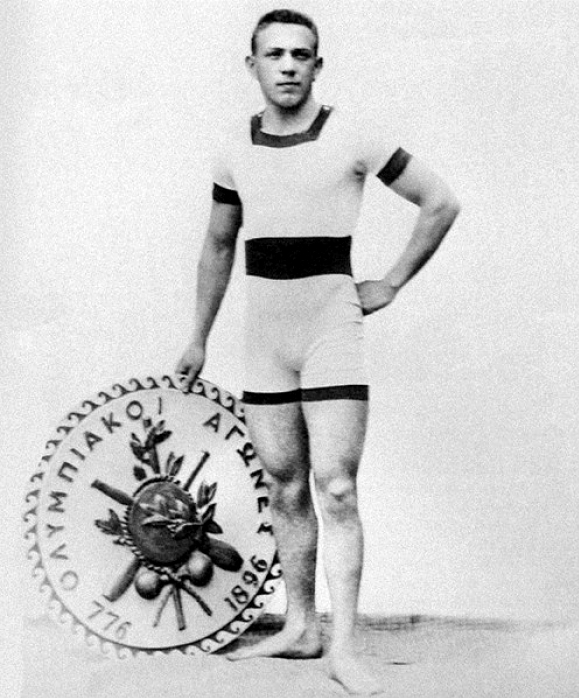
The 1896 Summer Olympics, officially called the Games of the I Olympiad, marked the revival of the Olympic movement in the modern era. Staged in Athens in April 1896, the event drew competitors and spectators from several countries and reintroduced an international multi-sport competition inspired by ancient Greek practice. The Games established organizational precedents, showcased a program of varied sports, and produced enduring moments that helped shape the Olympics as a recurring global festival.
Image gallery
10 Images





Overview
Held from April 6 to April 15, the Athens program combined athletics (track and field), gymnastics, wrestling, swimming, cycling, fencing, weightlifting, shooting and tennis among its contested sports. Some planned events, notably rowing, were affected by weather and did not take place. The competition was organized under the auspices of the International Olympic Committee, an institution created to promote regular international contests and revive the spirit of the classical Games.
Venues, participants and notable results
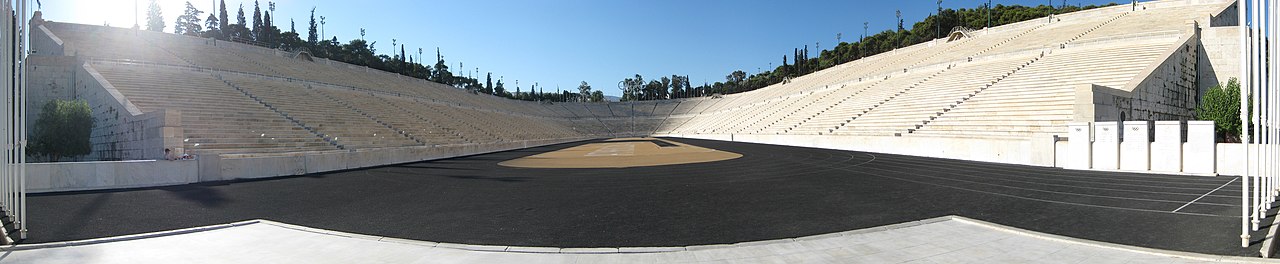
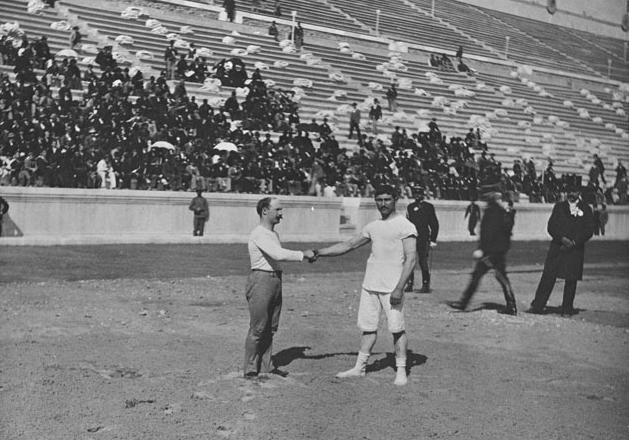
The centerpiece venue was the restored Panathinaic Stadium, a marble arena rebuilt for the occasion that drew large crowds and symbolically linked the modern event to its ancient antecedent. Competitors came from roughly a few dozen delegations, with several hundred athletes taking part; most entries were individual or club-based rather than strictly national teams by modern standards. Highlights included the marathon victory by Greek runner Spyridon Louis, an outcome that resonated strongly with the host public, and multiple titles won by German athlete Carl Schuhmann in wrestling and gymnastics.
Organization and historical context
Interest in reviving the Olympic Games emerged in the late 19th century as part of broader movements to promote international sport and cultural exchange. French educator Pierre de Coubertin played a central role in advocating a regular global competition and helped form the International Olympic Committee. Athens was chosen as the inaugural host in part because of its historical association with the ancient Games and the symbolic value of staging the revival in Greece.
Legacy and significance
The 1896 Games set many patterns followed by later Olympics: an opening program of diverse sports, public ceremonies, and the international gathering of competitors. They demonstrated that a modern, multinational athletic festival could draw public interest and organizational commitment despite logistical challenges. While debate followed about where future Games should be held—some Greek and foreign figures urged keeping the Olympics in Athens—the event became the first in what evolved into a continuing series of modern Olympiads, returning to Greece only many decades later for a fully planned host edition.
Further notes and resources
- Host city and country: Athens, Greece
- Recognized as the first modern Olympic Games
- Connection to ancient tradition: Ancient Greece
- Governing body involved: International Olympic Committee
- Main stadium: Panathinaic (Panathinaiko) Stadium
- Prominent athletes: Carl Schuhmann, Spyridon Louis
- Subsequent early Olympic events: 1900 Paris Games, 2004 Athens Games
- Cultural portrayals and media: NBC dramatizations and historical retrospectives like The First Olympics: Athens, 1896
- Biographical subjects in dramatizations: William Milligan Sloane, Pierre de Coubertin, other figures
The 1896 Summer Olympics remain a foundational episode in modern sports history: an experiment in international competition that succeeded well enough to encourage subsequent editions, and a symbolic bridge between ancient athletic traditions and the institutionalized global Olympics of the 20th and 21st centuries.
Questions and answers
Q: What were the 1896 Summer Olympics officially known as?
A: The 1896 Summer Olympics were officially known as the Games of the I Olympiad.
Q: When did the games take place?
A: The games took place from April 6 to 15, 1896.
Q: Where did the first international Olympic Games take place?
A: The first international Olympic Games took place in Athens, Greece.
Q: Who was regarded as a great success at the 1896 Olympics?
A: German wrestler and gymnast Carl Schuhmann was regarded as a great success at the 1896 Olympics, having won four events.
Q: What stadium was used for these Olympic Games?
A: The Panathinaiko Stadium was used for these Olympic Games; it was the only Olympic stadium used in the 19th Century.
Q: Who petitioned to hold all following Games in Athens after these Olympics?
A: After these Olympics, Rhys Coubertin and the IOC were petitioned by several prominent figures including Greece's King George and some of the American competitors in Athens to hold all following Games in Athens.
Q: When did they return to Greece after this event?
A: They returned to Greece 108 years later with 2004 Summer Olympics.
Related articles
Author
AlegsaOnline.com 1896 Summer Olympics (Games of the I Olympiad) Leandro Alegsa
URL: https://en.alegsaonline.com/art/111871
Sources
- books.google.com : The Guinness Book of Olympic Facts and Feats
- books.google.com : Olympische Sommerspiele: die Chronik I
- aafla.org : The 1896 Olympic Games. Results for All Competitors in All Events, with Commentary
- books.google.com : Olympics in Athens 1896. The Invention of the Modern Olympic Games
- books.google.com : The Complete Book of the Summer Olympics
- 1896olympics.com : 1896 The first Modern Olympics