
1908 Summer Olympics (Games of the IV Olympiad)
The 1908 Summer Olympics in London, relocated from Rome after the 1906 Vesuvius eruption, introduced the modern marathon distance, featured the White City Stadium and several memorable athletic moments.
The 1908 Summer Olympics, officially the Games of the IV Olympiad, were staged in London in the United Kingdom. These Games are remembered for a number of firsts and dramatic episodes that influenced the modern Olympic movement, from venue construction and event format to rules and traditions that persisted in later editions.
Image gallery
10 Images

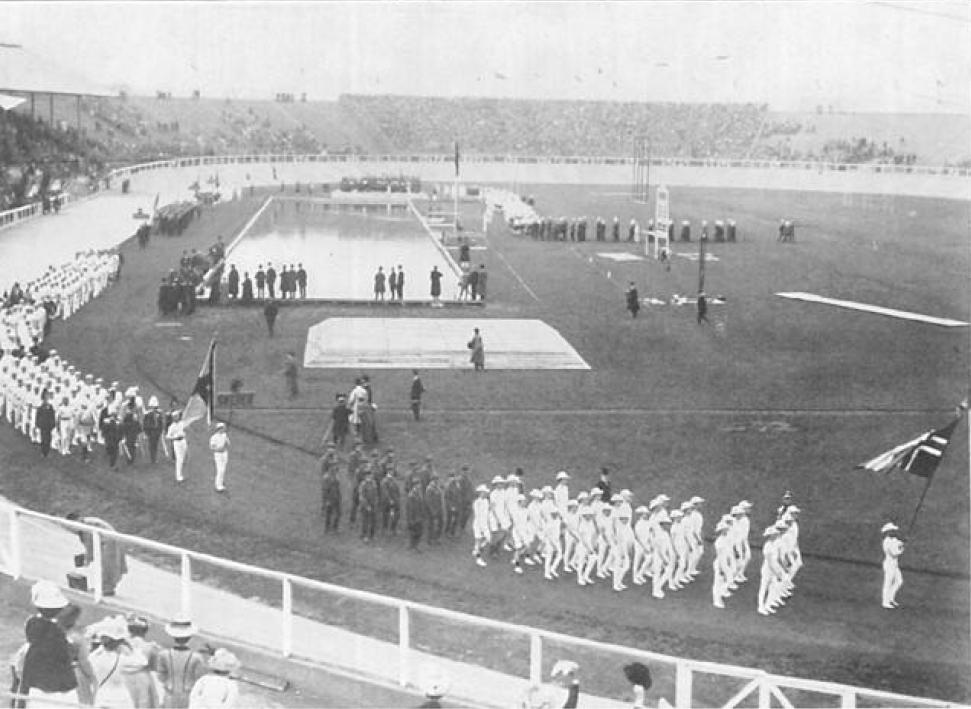



Origins and the change of host city
Originally awarded to Rome, the Games were transferred when financial and organizational priorities shifted following the 1906 eruption of Mount Vesuvius, which demanded Italian government resources for recovery. London accepted the responsibility on comparatively short notice and prepared new facilities to accommodate athletes and spectators. Funding for the staging of the events came largely from private donations, civic support and philanthropic contributions rather than a single national budget.
Venues and organization
To host the competition London built a purpose-designed arena, commonly known as the White City Stadium. The scale and layout of that venue allowed a broad programme of athletics, cycling, wrestling, and other sports and set a model for multi-use stadia in later Games. The schedule was extended over several months to fit events, exhibitions and demonstrations popular at the time, reflecting a more diffuse approach to Olympic programming than the compressed schedules used today.
Participation included many of the nations that had attended earlier Olympiads and featured both established events and experiments. The 1908 programme integrated indoor and outdoor contests, and it also marked one of the earliest appearances of winter sport—figure skating—within the Olympic programme, a precursor to later separation of the Summer and Winter Games.
Notable moments from the competition included several disputes over judging and race officiating that highlighted the need for clearer international standards. The marathon produced one of the most famous episodes: an exhausted runner was aided into the stadium and later disqualified, an incident that resonated with the public and press across Europe. The race from a more distant start point into the stadium also led to the establishment of a now-standard marathon distance in subsequent Games.
Legacy: The 1908 London Olympics consolidated organizational practices, inspired design for future Olympic stadia, and left enduring sporting legacies such as clarified event distances and public interest in international athletics. Their combination of architectural ambition, memorable competition and evolving rules helped shape the modern Olympic movement and informed how future hosts prepared for global sporting events.
Questions and answers
Q: When were the 1908 Summer Olympics held?
A: The 1908 Summer Olympics were held in London, United Kingdom.
Q: What is the official name of the 1908 Summer Olympics?
A: The official name of the 1908 Summer Olympics is the Games of the IV Olympiad.
Q: Where were the Olympics originally scheduled to be held?
A: The Olympics were originally scheduled to be held in Rome.
Q: What event caused the venue of the Olympics to be changed?
A: The eruption of Mount Vesuvius on 7 April 1906 caused the venue of the Olympics to be changed.
Q: What impact did the natural disaster have on the Italian government?
A: The natural disaster caused a financial strain on the Italian government.
Q: Who covered the costs of the 1908 Summer Olympics?
A: The costs of the 1908 Summer Olympics were covered by donations.
Q: Which city ultimately became the venue for the 1908 Summer Olympics?
A: London became the venue for the 1908 Summer Olympics after the eruption of Mount Vesuvius caused the venue to be changed from Rome.
Related articles
Author
AlegsaOnline.com 1908 Summer Olympics (Games of the IV Olympiad) Leandro Alegsa
URL: https://en.alegsaonline.com/art/111899
Sources
- sports-reference.com : "1908 London Summer Games"
- aafla.org : "A Look at Olympic Costs,"