
1816 — The Year Without a Summer and Its Global Consequences
1816, called the Year Without a Summer, followed the 1815 eruption of Mount Tambora. Volcanic aerosols cooled climates, causing crop failures, food shortages, migrations, cultural responses and advances in climate science.
Overview
The year 1816 is commonly known as the "Year Without a Summer" after the massive April 1815 eruption of Mount Tambora in present-day Indonesia. That eruption injected large amounts of ash and sulfur-rich gases into the stratosphere, producing aerosol clouds that reflected sunlight and altered weather patterns. The result was unusually cold, wet and changeable weather across much of the Northern Hemisphere during 1816 and into subsequent seasons.
Image gallery
9 Images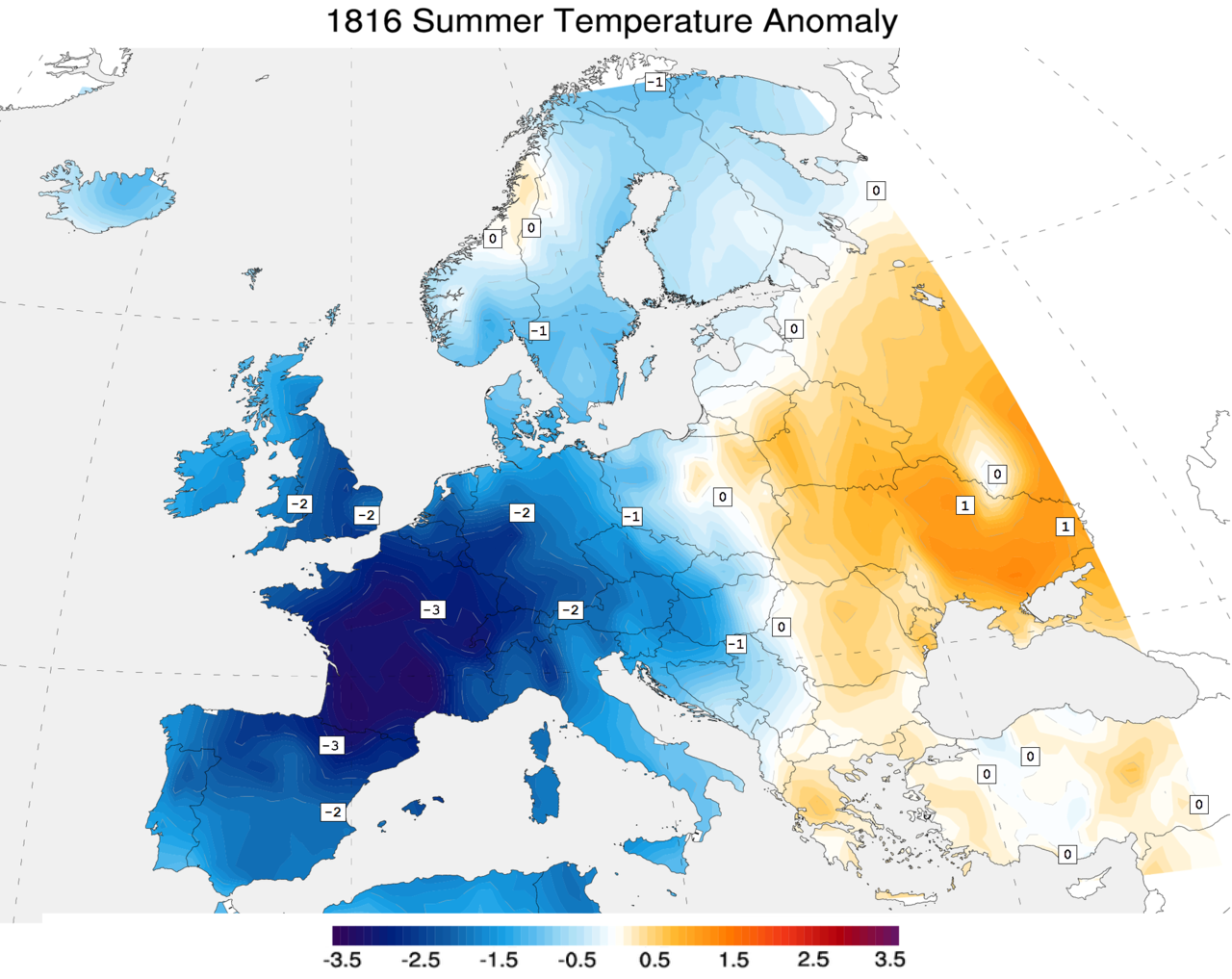



Causes and atmospheric effects
Volcanic plumes reached the stratosphere, where sulfate aerosols spread globally and reduced the amount of solar radiation reaching Earth's surface. Contemporary observers recorded persistent cloudiness, lower-than-normal summer temperatures and unseasonable frosts. Scientists later used such episodes to develop the concept of volcanic forcing of climate and to study the climatic role of stratospheric aerosols.
Impacts on agriculture, economy and migration
The abnormal weather produced widespread crop failures, reduced harvests and higher food prices in parts of Europe, North America and elsewhere. Reports from the period describe late frosts, localized summer snowfalls and waterlogged fields that destroyed grain and potato crops. Food shortages and rising prices contributed to social unrest, food riots in some regions and accelerated migration by families seeking more reliable land and work.
Regional effects
- Europe: Failed harvests and shortages in several countries exacerbated hardship in the fragile post-war economy.
- North America: Farmers in parts of New England and the mid-Atlantic recorded unusually cold conditions and harvest losses, prompting some westward movement.
- Beyond the North Atlantic: Atmospheric impacts were noted worldwide, though effects varied with latitude and local weather systems.
Cultural and scientific responses
The bleak summer also had cultural consequences. A group of writers gathered near Lake Geneva in 1816—including Lord Byron and Percy Bysshe Shelley—where Mary Shelley began writing Frankenstein. The climatic anomaly encouraged more systematic weather observation and stimulated interest in the links between volcanoes and climate, contributing to early developments in meteorology and volcanology.
Political context and legacy
1816 occurred during a period of political realignment after the Napoleonic Wars, and environmental stress amplified social and economic pressures in some regions. Historically, the year is remembered as a clear example of how a large volcanic eruption can affect global climate, food supplies and human societies. Its study has informed modern understanding of volcanic winters, climate sensitivity to aerosols and the need for monitoring volcanic activity and atmospheric conditions.
Related articles
Author
AlegsaOnline.com 1816 — The Year Without a Summer and Its Global Consequences Leandro Alegsa
URL: https://en.alegsaonline.com/art/111768