
1775: Outbreak of the American Revolutionary War and global context
The year 1775 marked the start of armed conflict between Great Britain and its North American colonies, key military and political developments leading toward independence, and other cultural and international events.
1775 is widely remembered as the year when disputes between Great Britain and its Thirteen Colonies escalated into open warfare and sustained political mobilization. What began as a series of local confrontations and congressional debates developed into organized military forces, diplomatic efforts, and a drive among colonists that ultimately produced a declaration of independence the following year.
Image gallery
10 Images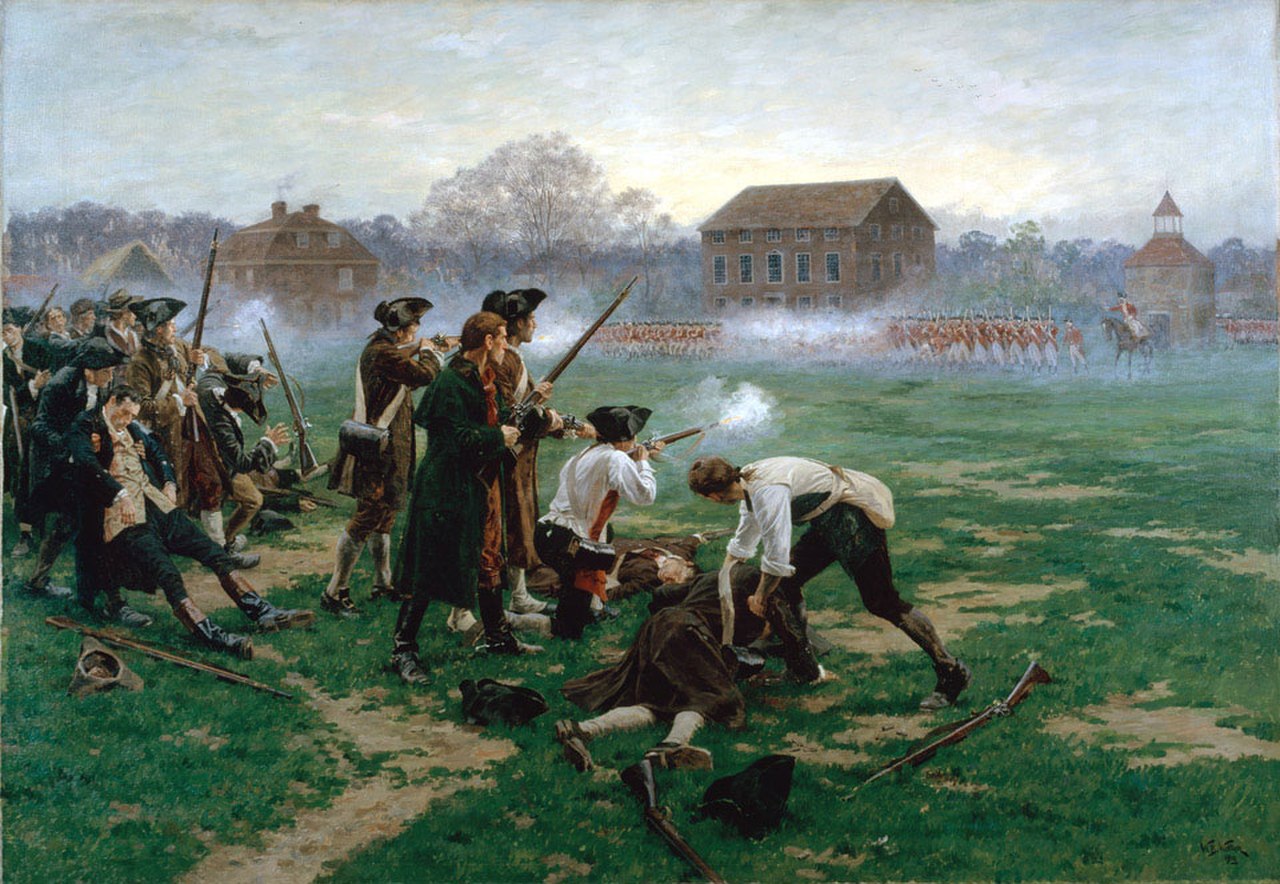



North America: outbreak and early campaigns
Armed clashes in Massachusetts in spring 1775 transformed political tensions into military conflict. On April 19 colonial militia and British troops fought at Lexington and Concord, actions often described as the first exchanges of the Revolutionary War. Soon after, the Second Continental Congress met in Philadelphia on May 10 to coordinate colonial responses.
- May 10: Colonial forces captured Fort Ticonderoga in New York.
- June 14: Delegates authorized the creation of a Continental Army; George Washington was named commander-in-chief on June 15.
- June 17: The Battle of Bunker Hill near Boston demonstrated colonial resolve despite British tactical victory.
- July–December: Diplomatic efforts, including the Olive Branch Petition, attempted reconciliation; King George III declared the colonies in rebellion in August.
- October–December: Continental naval and marine forces were authorized (October 1775 and November 10 recognized today as the U.S. Marine Corps’ founding date), while an invasion of Canada culminated with an unsuccessful assault on Quebec on December 31.
Political and military significance
During 1775 the colonies moved from disparate protest to coordinated resistance: they raised armies, established supply lines, and pursued both military operations and diplomatic appeals. British policy hardened in response, and royal proclamations framed the conflict as rebellion, narrowing the space for compromise. The patterns set in 1775 shaped the conduct of the wider war in 1776 and beyond.
Culture, notable births, and broader context
While military and political drama dominated North America, 1775 also saw cultural and social developments elsewhere. Notably, the English novelist Jane Austen was born in December 1775. The year took place within an era of expanding global trade, European rivalry overseas, and intellectual currents—Enlightenment ideas about rights and governance—that influenced events in the Atlantic world.
In historical perspective, 1775 is a turning point: a year in which political dispute became armed conflict, colonial institutions began operating as a de facto national government, and the foundations were laid for the revolutionary transformations that followed.
Related articles
Author
AlegsaOnline.com 1775: Outbreak of the American Revolutionary War and global context Leandro Alegsa
URL: https://en.alegsaonline.com/art/111718