
1531 (year)
Year 1531 AD — notable for the founding of the Schmalkaldic League, the death of Huldrych Zwingli at Kappel, the reported Guadalupe apparition in Mexico, and continuing Iberian expansion in the Americas.
1531 was a year in the 16th century marked by confessional realignments in Europe, intensified Atlantic expansion by Iberian powers, and events that later gained strong cultural and religious significance. Its events reflect the overlapping processes of religious reform, princely politics and colonial encounters that characterized the early modern period.
Image gallery
6 Images


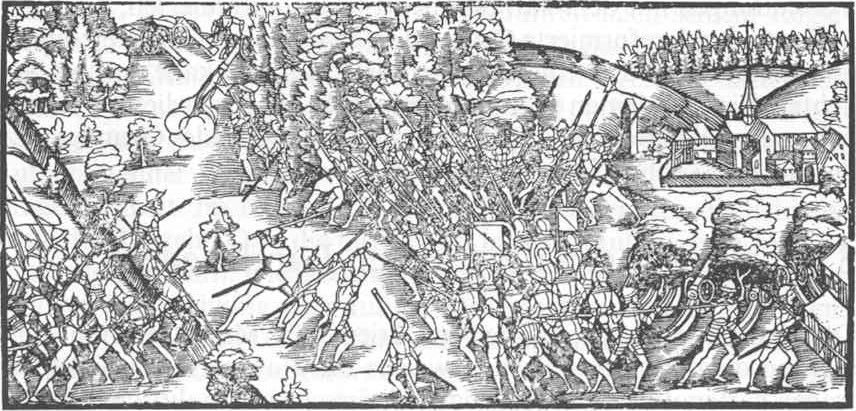


Politics and warfare
In early 1531 several Protestant princes and imperial cities moved to coordinate their defense and preserve newly adopted religious reforms. The Schmalkaldic League, an alliance of Protestant territorial rulers and cities centered in central Germany, was formed in 1531 to provide collective security and a negotiating bloc within the Holy Roman Empire. Confessional tensions elsewhere led to localized warfare and shifting alliances among princes, city governments and imperial authorities.
Reformation and religious events
The partitioning of Christendom continued to produce violent confrontations. On 11 October 1531 the Second War of Kappel in the Swiss Confederacy culminated in a clash between Catholic and Protestant cantons. The Swiss Reformer Huldrych Zwingli was killed in the fighting, ending his leadership and affecting the course of the Reformation in the Alpine regions. In Mexico, reports of a Marian apparition to an indigenous convert in December 1531 gave rise to the devotion known as Our Lady of Guadalupe, which later became a central religious and cultural symbol in the region.
Exploration, conquest and the Americas
Spanish exploration and conquest continued to reshape the Americas. In 1531 expeditions from Panama and other Atlantic ports extended Spanish contact with Andean polities, setting the stage for the campaigns that soon brought large parts of the Inca realm under Spanish control. Missionary activity and colonial administration expanded as new settlements and churches were founded and as indigenous societies confronted epidemic disease, military incursions and new institutions.
Society, culture and other developments
Across Europe the spread of printing, humanist learning and new administrative practices continued to transform urban life and governance. Local conflicts, economic pressures and religious change combined to alter patterns of patronage and cultural production, while maritime trade and missionary networks connected distant regions with increasing regularity.
Notable deaths
- Huldrych Zwingli (1484–1531), Swiss Reformer, killed at the Battle of Kappel.
Legacy and numeric note
The events of 1531 are significant for how they illustrate concurrent processes: the formation of confessional alliances that influenced later imperial politics, and colonial encounters whose religious and cultural reverberations endured in the Americas. As a number, 1531 is an odd four‑digit integer with digit sum 10 and is recognized in elementary arithmetic as a prime number.
Related articles
Author
AlegsaOnline.com 1531 (year) Leandro Alegsa
URL: https://en.alegsaonline.com/art/111456