
Édouard Daladier (1884–1970): French statesman and wartime premier
Overview of Édouard Daladier, French Radical politician, three-time prime minister, signatory of the 1938 Munich Agreement, and his role at the outbreak of World War II.
Édouard Daladier (18 June 1884 – 10 October 1970) was a leading French Radical Party politician who served several times as head of government during the turbulent years before and at the start of the Second World War. He is best known for his role in the late 1930s as prime minister and for signing the Munich Agreement in 1938, an episode that shaped his public reputation and the broader course of European diplomacy.
Image gallery
8 Images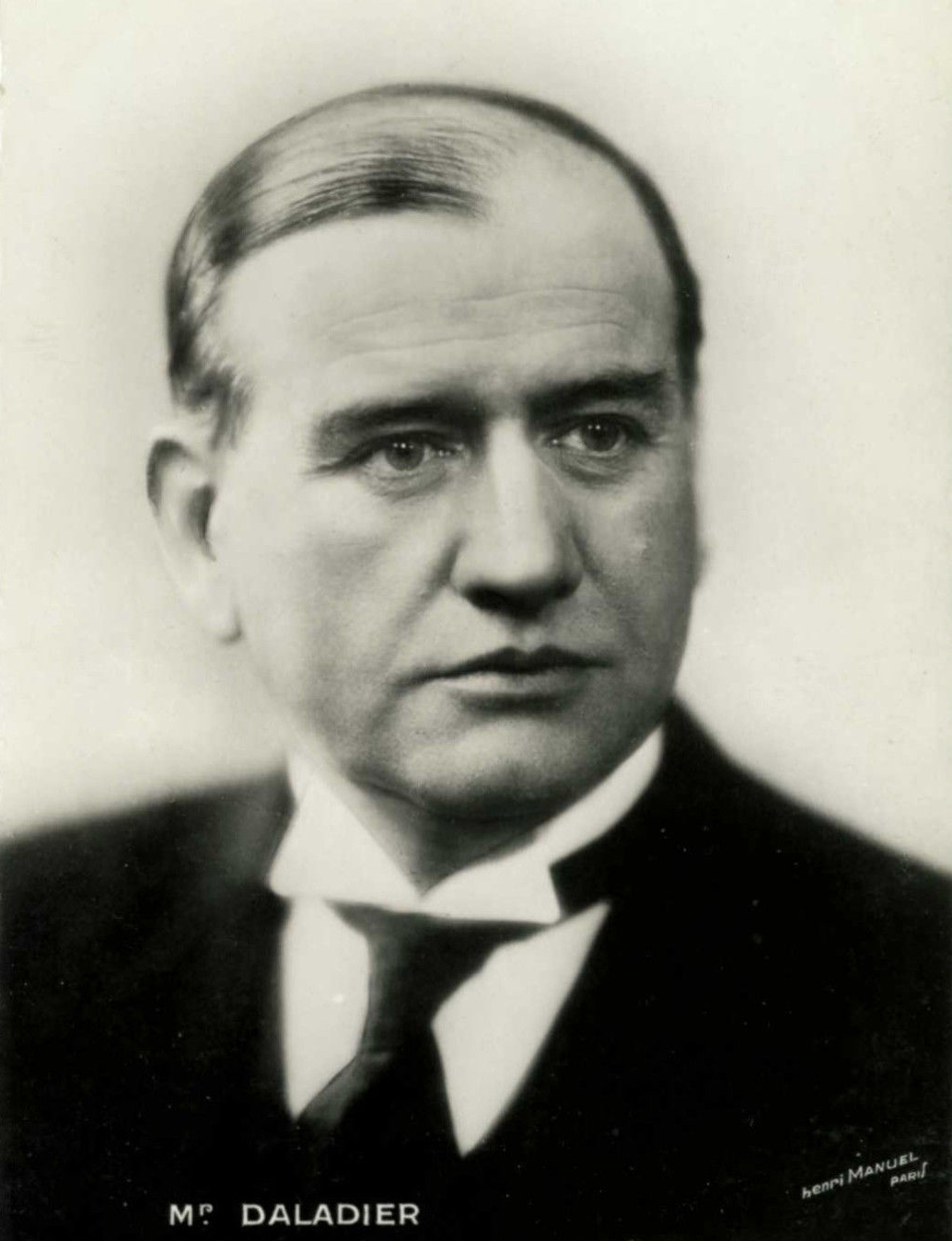


Political career and positions
Daladier rose through the parliamentary ranks in the French Third Republic and held ministerial posts before becoming Prime Minister of France. He led coalition cabinets at a time when French politics was fragmented and the government depended on shifting alliances. He was associated with the Radical Party and pursued policies combining social reform at home with a cautious foreign policy abroad.
Munich Agreement and appeasement
In September 1938 Daladier joined representatives of other powers at a conference in Munich. There he and other signatories accepted terms that permitted Nazi Germany to annex the Sudetenland region of Czechoslovakia without Czechoslovak consent. The accord—commonly called the Munich Agreement—was negotiated alongside leaders such as Neville Chamberlain of Britain and with the presence or endorsement of authoritarian rulers in Europe. Daladier negotiated under intense pressure and later expressed doubts about the agreement's durability.
Relations with authoritarian regimes
The Munich meeting involved interaction, direct or indirect, with the rulers of Germany and Italy. Contemporaries included Adolf Hitler of Germany and Benito Mussolini of Italy, as well as other influential figures and authoritarian leaders whose policies destabilized Europe. Daladier and his colleagues pursued a policy now often described as appeasement—seeking to avoid large-scale conflict by compromise, a choice that remains widely debated by historians.
Role at the outbreak of war and later life
Daladier was serving as prime minister when the European crisis moved toward armed conflict. France, with Britain, declared war on Germany after its invasion of Poland in 1939. Domestic politics, military setbacks, and the fall of France in 1940 ended the cabinets of the Third Republic and transformed the national leadership. After the war Daladier returned to public life for a time and remained a figure of political significance until his death in 1970.
Legacy and notable facts
- Daladier is remembered both for domestic reforms and for his foreign-policy decisions in the late 1930s.
- The Munich Agreement remains a focal point for debates about diplomacy, deterrence, and the limits of compromise.
- Assessments of his record vary: some scholars emphasize the difficult choices he faced; others criticize the concessions made to aggressive regimes.
For further reading and archival materials see government and academic resources on Daladier and the Munich period: biographical summaries, primary documents and diplomatic analyses available through specialist collections and research portals.
Related articles
Author
AlegsaOnline.com Édouard Daladier (1884–1970): French statesman and wartime premier Leandro Alegsa
URL: https://en.alegsaonline.com/art/110852