
Zener diode
A semiconductor diode engineered to operate in controlled reverse breakdown for voltage reference and regulation, named after Clarence Zener and widely used in power supplies, clamps, and reference circuits.
A Zener diode is a specially manufactured semiconductor diode designed to conduct in reverse when a particular voltage — the Zener or breakdown voltage — is reached. Unlike a regular diode, which is normally used to allow current in one direction, a Zener diode is intended to be operated in its reverse region so it can hold a nearly constant voltage across its terminals even as current varies.
Image gallery
8 Images




Operation and characteristics
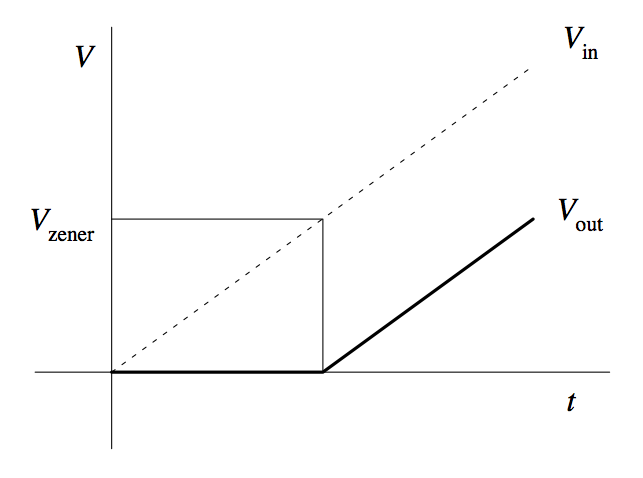
The device is made from a p–n junction with heavy doping to create a sharp breakdown characteristic. When a reverse bias exceeds the Zener voltage the diode enters a controlled breakdown region and conducts; the behavior arises from two related physical processes. At relatively low breakdown voltages the dominant mechanism is quantum-mechanical tunneling (the Zener effect). At higher voltages carrier multiplication by impact ionization (avalanche breakdown) dominates. Many diodes operate in a mixed mode near the transition between these mechanisms, and this affects temperature dependence and noise.
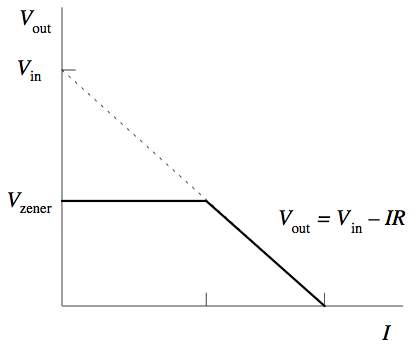
Key practical characteristics include the nominal Zener voltage, the dynamic (small-signal) resistance in breakdown, the maximum power dissipation, knee shape of the I–V curve, and temperature coefficient. Manufacturers specify a test current where the nominal voltage is measured; outside that current range the voltage will vary. The diode symbol is similar to an ordinary diode but with bent ends on the bar to denote the Zener type.
Uses and examples
Zener diodes are widely used for low-cost voltage regulation and reference purposes. Common applications include:
- Shunt voltage regulator: a Zener is placed across a supply with a series resistor to keep voltage near the Zener value under varying loads.
- Voltage reference: providing a stable reference for comparators, ADCs and some simple power supplies.
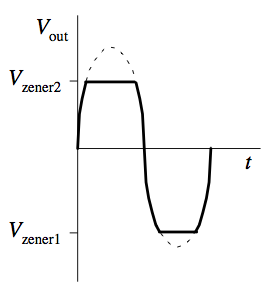
- Transient suppression and clipping: limiting voltage spikes on signal lines or protecting sensitive components.
- Level shifting and waveform shaping in simple circuits.
Typical discrete Zener diodes are available in many nominal voltages and power ratings, making them convenient for hobbyist and industrial designs. For higher precision or lower drift, dedicated voltage reference ICs are preferred.
Designers must provide proper current limiting (usually a series resistor) and observe maximum power and thermal limits. Zener diodes can be noisy, have finite dynamic resistance, and their voltage varies with temperature; below about 5–6 volts the temperature coefficient is often negative (Zener effect), while above that it is usually positive (avalanche effect).
Historically the name honors Clarence Zener, who described the tunneling breakdown mechanism. Today the term covers devices engineered to exploit controlled breakdown, and they remain a small, economical solution for regulation and protection tasks. For more general background on diodes and semiconductor behavior see reverse voltage discussions and introductory resources.
Related articles
Author
AlegsaOnline.com Zener diode Leandro Alegsa
URL: https://en.alegsaonline.com/art/110503
Sources
- commons.wikimedia.org : Zener diodes
- ocw.weber.edu : "Zener Diode"