
List of large wind farms (100 MW and above)
Overview of large wind farms (100 MW+): definitions, components, history, notable projects and categories, and their role in electricity systems and decarbonization.
Overview
This article describes large wind farms — utility-scale wind power installations with a rated electrical capacity of 100 megawatts (MW) or more. Such collections of turbines are key contributors to renewable electricity supplies and are commonly grouped as operating, under construction, or proposed projects. By mid‑2014 global installed wind capacity reached roughly 336 gigawatts (GW) and wind supplied about 4% of worldwide electricity; growth has continued since then as nations expand renewable generation.
Image gallery
7 Images




Characteristics and components
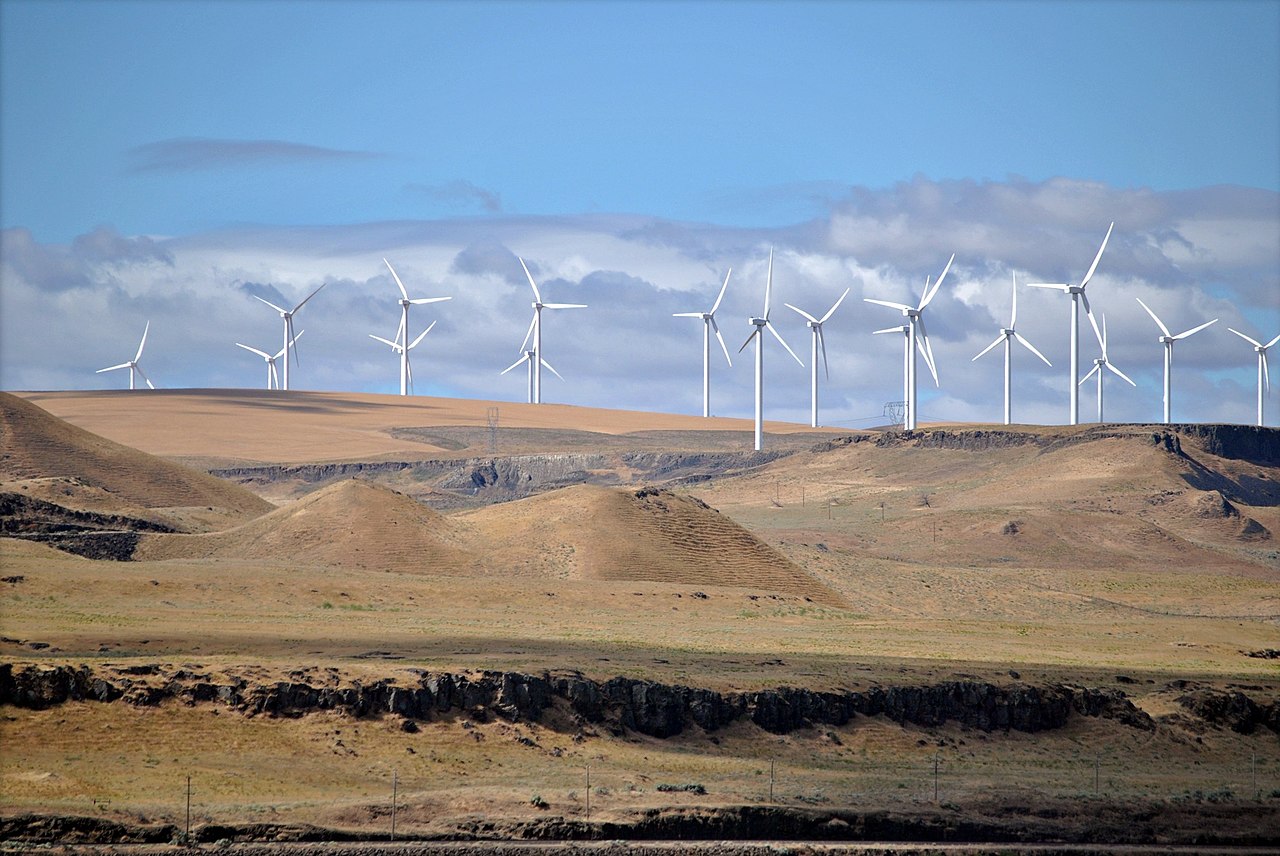
Large wind farms are measured by nameplate capacity, but their actual electricity output depends on wind resource, turbine design and grid integration. Typical elements include turbine generators, towers and blades, array cabling, on‑site substations and grid‑connection infrastructure. Offshore installations add foundations, export cables and specialized vessels.
- Turbines: rotors, nacelles, gearboxes or direct‑drive generators.
- Electrical: transformers, switchgear and transmission links.
- Support: access roads, maintenance facilities and control systems.
History and development
Modern wind farms evolved from small wind turbines for local use to utility projects in the late 20th century. Large‑scale deployment accelerated in the 1990s and 2000s with policy support, falling costs and improved turbine technology. Europe was an early leader, and rapid expansion later occurred in China, the United States and elsewhere. Offshore wind matured as a separate class, offering higher and steadier winds but higher construction costs.
Examples and categories
Well‑known large projects illustrate regional differences: sprawling onshore clusters in China and the United States, purpose‑built offshore arrays in northern Europe, and mixed projects in other regions. Wind farms are often catalogued by status (operating, under construction, proposed) and by location (onshore vs offshore). Notable names frequently cited in lists include large Chinese onshore clusters, major U.S. wind farms, and landmark offshore arrays.
- Onshore: widespread, lower construction cost, easier to expand.
- Offshore: higher yields, complex installation, larger turbines.
- Status: operating, under construction, proposed/planned.
Uses, importance and issues
Large wind farms supply bulk electricity to grids, help meet renewable energy targets and reduce fossil‑fuel emissions. Their variable output requires grid balancing, forecasting and sometimes storage or complementary generation. Environmental and social factors — land use, wildlife interactions and visual impact — are part of planning and permitting decisions. Economically, large wind projects can create jobs and local investment but also raise questions about transmission and market integration.
Further reading and resources
For background on technology and policy, see resources on wind power and regional overviews such as Europe. For developments in North America and Asia consult national agencies and project lists, for example pages focusing on the United States or specific country studies like Denmark. These sources provide up‑to‑date registries of large wind farms and summaries of capacity and generation trends.
Questions and answers
Q: What is the generating capacity of wind farms listed in the article?
A: The wind farms listed in the article have a generating capacity of 100 megawatts (MW) or more.
Q: What is the current status of wind farms listed in the article?
A: The wind farms listed in the article are either currently operating, under construction, or proposed.
Q: How much has wind power capacity expanded as of June 2014?
A: Wind power capacity has expanded quickly to 336 GW in June 2014.
Q: What percentage of total worldwide electricity usage is produced by wind energy production?
A: Wind energy production was about 4% of total worldwide electricity usage.
Q: In which regions is wind power widely used?
A: Wind power is widely used in Europe, the United States, and Asia.
Q: What percentage of electricity generation does wind power account for in Denmark, Spain and Portugal, and the Republic of Ireland?
A: Wind power accounts for approximately 19% of electricity generation in Denmark, 11% in Spain and Portugal, and 9% in the Republic of Ireland.
Q: Is wind power usage increasing or decreasing?
A: Wind power usage is growing fast.
Related articles
Author
AlegsaOnline.com List of large wind farms (100 MW and above) Leandro Alegsa
URL: https://en.alegsaonline.com/art/124793
Sources
- gwec.net : GWEC, Global Wind Report Annual Market Update
- gwec.net : Global wind energy markets continue to boom – 2006 another record year
- gwec.net : Global Wind 2008 Report
- ieawind.org : IEA Wind Energy: Annual Report 2008
- awea.org : California U.S. Wind Energy Projects - California
- awea.org : awea.org
- sustainablebusinessoregon.com : sustainablebusinessoregon.com
- renewableenergyworld.com : E.ON Delivers 335-MW of Wind in Texas
- awea.org : AWEA: U.S. Wind Energy Projects - Texas
- cez.cz : CEZ: Fantanele-Cogealac Wind Park
- archive.awea.org : AWEA: U.S. Wind Energy Projects - Indiana
- renewableenergyaccess.com : Babcock & Brown and BP Announce Full Commercial Operation of one of the Largest Wind Farms in the U.S.
- londonarray.com : London Array Project home page
- offshorewind.biz : "UK: Greater Gabbard Offshore Wind Farm Generates Power"