
Yuki people (Ukomno'm): Indigenous people of Round Valley, California
The Yuki (self-name Ukomno'm) are an Indigenous people from Round Valley in Mendocino County, California. This article covers their identity, language, traditional lifeways, history, and contemporary situation.
The Yuki are an Indigenous people whose ancestral homeland is the Round Valley area in what is now Mendocino County, California. They call themselves Ukomno'm, generally translated as "Valley People," reflecting a long connection to the valley's grasslands and oak woodlands. The commonly used name "Yuki" is not their own word but an exonym adopted by outsiders and recorded by European Americans; the designation was transmitted through neighboring groups and early ethnographers. For general reference see Yuki people.
Image gallery
3 Images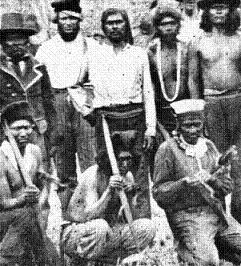


Language and identity
The Yuki language belongs to the small Yukian family and historically had several dialects across the valley and nearby hills. By the 20th century the language had dramatically fewer fluent speakers; it is now considered severely endangered, with revitalization efforts led by community members and linguists. Early documentation of the language and cultural practices was carried out by anthropologists and linguists, which provides a basis for contemporary language learning and cultural programs. Further resources can be found through tribal and academic collections: language and culture resources.
Traditional lifeways and culture
Traditionally the Yuki lived in small, seasonally mobile communities that relied on diverse local resources. Key aspects of their lifeways included:
- Gathering and processing acorns from oak groves as a staple food, along with seeds, bulbs, and wild plants.
- Hunting deer and smaller game; fishing and harvesting of freshwater resources where available.
- Skilled basketry and other material crafts used for storage, processing, and ceremonial use.
- Social organization around extended families and regional bands, with ceremonial life that included songs, dances, and specialist roles.
These practices were adapted to local seasonal cycles and the valley environment, producing a distinct cultural landscape that endured for generations.
History of contact and change
Contact with European Americans during the 19th century brought profound disruptions. Like many California Indigenous communities, the Yuki experienced disease, dispossession of land, and violent conflicts that sharply reduced their population and altered traditional patterns of life. In the mid-to-late 1800s many Yuki were forced onto reservations and consolidated into settlements such as the Round Valley Reservation. The historical record includes episodes of severe hardship and resistance as communities negotiated survival under colonial pressures.
Contemporary status and revitalization
Today many people of Yuki descent are enrolled in or associated with the Round Valley Indian Tribes, a multi-tribal government that represents descendants from several local nations. Contemporary tribal life blends cultural revival—language classes, basketry workshops, and ceremonies—with governance, education, and economic initiatives. Efforts to teach the Yuki language to younger generations and to preserve traditional ecological knowledge are ongoing. For tribal programs and current initiatives see Round Valley resources and community pages at tribal information.
Notable distinctions: The name "Yuki" is externally assigned rather than a self-designation; the community's own term Ukomno'm emphasizes place-based identity. Their experience illustrates broader themes in California Indigenous history—rich regional cultures, severe colonial impacts, and resilient cultural renewal.
Related articles
Author
AlegsaOnline.com Yuki people (Ukomno'm): Indigenous people of Round Valley, California Leandro Alegsa
URL: https://en.alegsaonline.com/art/110196
Sources
- library.sdsu.edu : "California Indians and Their Reservations: Yuki Indians."