
Yoshino Province
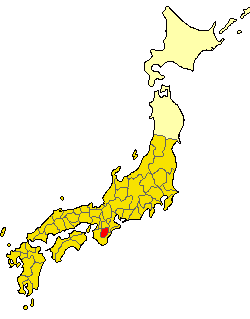
Yoshino Province was a short-lived administrative province of early Nara-period Japan (716–738), located in the mountainous area of what is now Nara Prefecture on Honshū, later notable for its cultural and religious landscape.
Overview
Yoshino Province was an administrative division established in 716 during the early Nara period of Japan. The province existed for a relatively brief interval, ending in 738, and occupied territory within the modern boundaries of Nara Prefecture on the island of Honshū. Historical records sometimes render the name with the character 監 and the alternate reading Washū; these forms reflect how early documents described temporary or special administrative arrangements.
Image gallery
3 Images

Geography and character
The area associated with the old province is mountainous and forested, centered on the Yoshino mountain range south of Nara city. Steep valleys, cedar forests and highland basins defined local life and economy. The region’s terrain made it distinct from the lowland agricultural districts that dominated much of central Japan.
Administrative history
Yoshino Province was created as part of broader administrative reorganizations under the ritsuryō system, which sought to formalize provincial boundaries and governance. The unit was short-lived: by 738 the separate province designation had been removed and its territory was reabsorbed into neighboring jurisdictions. The exact administrative arrangements and reasons for the brief existence are recorded only sparsely in surviving chronicles.
Cultural and religious importance
Although its life as a province was brief, the Yoshino area gained lasting cultural significance. Over subsequent centuries the mountains became associated with religious retreat, mountain ascetic practices, and a rich tradition of temple and shrine sites. The landscape is celebrated for seasonal phenomena, including famous cherry blossoms and venerable cedar groves that have cultural resonance in literature and pilgrimage.
Legacy and modern context
Today the historical footprint of Yoshino Province corresponds broadly to parts of the modern Yoshino District and surrounding municipalities within Nara Prefecture. Its short administrative existence is mainly of interest to scholars of early Japanese government and to local history because it illustrates the fluidity of provincial organization during the Nara period and the way natural landscape shaped human settlement.
Notable facts
- Dates of existence: established in 716 and abolished in 738.
- Often referred to in historical documents with variant names and characters.
- The region remained important culturally and religiously long after the provincial unit ceased to exist.
Related articles
Author
AlegsaOnline.com Yoshino Province Leandro Alegsa
URL: https://en.alegsaonline.com/art/109996
Sources
- books.google.com : Kaempfer's Japan: Tokugawa Culture Observed, p. 122
- books.google.com : Kūkai: Major Works, p. 22
- jstor.org : "Kōfuku-ji and Shugendo,"
- books.google.com : "The Lacquer Industry of Japan,"
- books.google.com : Japanese life, love, and legend: A visit to the Empire of the "Rising Sun," p. 170
- books.google.com : "How Japanese Lacquerware is Made,"