
XM8 rifle: a lightweight 5.56 mm modular weapon developed by Heckler & Koch
The XM8 is a lightweight, modular 5.56 mm rifle family developed by Heckler & Koch in the 2000s and evaluated by the US Army for its reliability, ergonomics and variants before program cancellation.
Overview
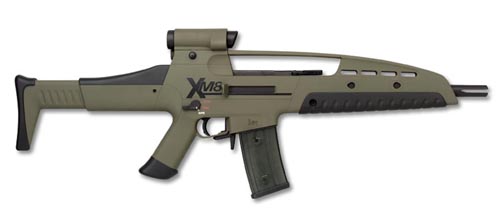
The XM8 is a family of lightweight, modular assault rifles chambered for the 5.56×45 mm NATO cartridge. Originally developed by Heckler & Koch, the XM8 was presented as a modern, simplified replacement for existing small arms. It is often described in press and testing reports as a compact, polymer-framed rifle with a conventional gas-operated action and a detachable 30-round magazine.
Image gallery
7 Images




Design and characteristics
The XM8 emphasizes modularity, ergonomic controls and low weight. Reported specifications include a 30-round magazine capacity and a light unloaded mass often cited around 2.66 kg (5.9 lb). The design uses synthetic materials for the receiver and furniture, an upper rail for optics and accessories, and ambidextrous controls intended to suit a variety of users.
- Caliber: 5.56 mm NATO.
- Magazine: 30-round detachable box (STANAG-compatible in many descriptions).
- Construction: polymer components and a metal barrel/bolt group.
- Features: modular rail, ambidextrous controls, quick-change barrel options in some variants.
Development and testing
The XM8 emerged in the early 2000s as part of efforts to modernize infantry small arms. Heckler & Koch adapted concepts from its earlier designs to produce a lighter, simplified weapon family that could cover roles from carbine to light support arm. The rifle underwent trials and demonstrations to U.S. military evaluators; some reports of limited testing compared its performance to the M4 family.
In one set of tests reported publicly, the XM8 performed well in dust and reliability assessments, and proponents highlighted its reduced stoppage rate compared with competing systems. Such test results were cited when the US Army and other stakeholders were evaluating potential service weapons. Details and interpretations of tests varied between sources, and broader procurement decisions were influenced by technical, programmatic and budgetary factors.
Variants, roles and uses
Heckler & Koch promoted the XM8 as a family rather than a single rifle, with several role-specific variants described in manufacturer materials and press reports. Typical variants mentioned include compact carbines for close-quarters use, designated marksman versions with longer barrels and optics, and light support or automatic variants with higher-capacity magazines or different barrel lengths. The modular approach was intended to let units adapt the weapon to mission requirements without large logistical burdens.
Notable facts and legacy
Although the XM8 received attention for its weight, modularity and reported test performance, it was never adopted as a universal service rifle by the U.S. military. Program cancellations and shifts in procurement priorities meant the XM8 did not enter widespread service. Nevertheless, it influenced discussions about modular weapon families and the trade-offs between weight, reliability and commonality. The XM8 also contributed ideas that appear in later small-arms programs and commercial offerings from several manufacturers.
Readers seeking detailed technical data, acquisition history or comparative test reports can consult official procurement documents and manufacturer publications for primary-source material; summaries and news articles also document the weapon's public development and evaluations. For a concise look at the XM8 in a broader small-arms context, see contemporary reviews and after-action reports from the period when it was actively evaluated in trials such as the reported dust test.
Further information about related weapons and the manufacturer is available via manufacturer and defense-industry resources: rifle overview, Heckler & Koch, 5.56 mm NATO, U.S. Army documents and the referenced testing reports.
Related articles
Author
AlegsaOnline.com XM8 rifle: a lightweight 5.56 mm modular weapon developed by Heckler & Koch Leandro Alegsa
URL: https://en.alegsaonline.com/art/109502