
Women Airforce Service Pilots (WASP)
WASP was a United States civilian pilot program in World War II. Women flew noncombat missions—ferrying, testing, towing, and instruction—to release male pilots for combat duty; later honored with veteran status.
Overview
The Women Airforce Service Pilots (commonly called WASP) was a United States program of civilian women pilots formed during World War II. Its members were federal civil service employees who undertook a variety of noncombat flying duties so that male military pilots could be reassigned to combat units. Although they wore uniforms and performed military-style tasks, WASP members had no official military rank while the program operated.
Image gallery
10 Images




Formation and organization
The program grew from two earlier efforts that recruited experienced women pilots: a ferrying unit and a training detachment. Leadership and administration were civilian-managed, and the program consolidated under the name WASP in 1943. Noted aviation figures helped shape the effort and advocate for expanded roles for women in the air services.
Training and primary duties
WASP candidates completed a rigorous flight training curriculum at designated training fields before receiving assignments. Their flying tasks included:
- Ferrying new or repaired aircraft from factories and depots to air bases.
- Testing repaired or modified aircraft to ensure airworthiness.
- Towing aerial targets for live gunnery practice.
- Serving as chase and liaison pilots, and providing flight instruction in some cases.
Service, scale and end of program
WASP pilots flew thousands of hours in scores of aircraft types, from trainers to fighters and bombers, performing essential logistics and training support. The program was disbanded in late 1944 as the military reduced training and ferrying needs. While serving in uniformed roles, WASP members remained civilian employees and were not originally granted the same benefits as military veterans.
Recognition and legacy
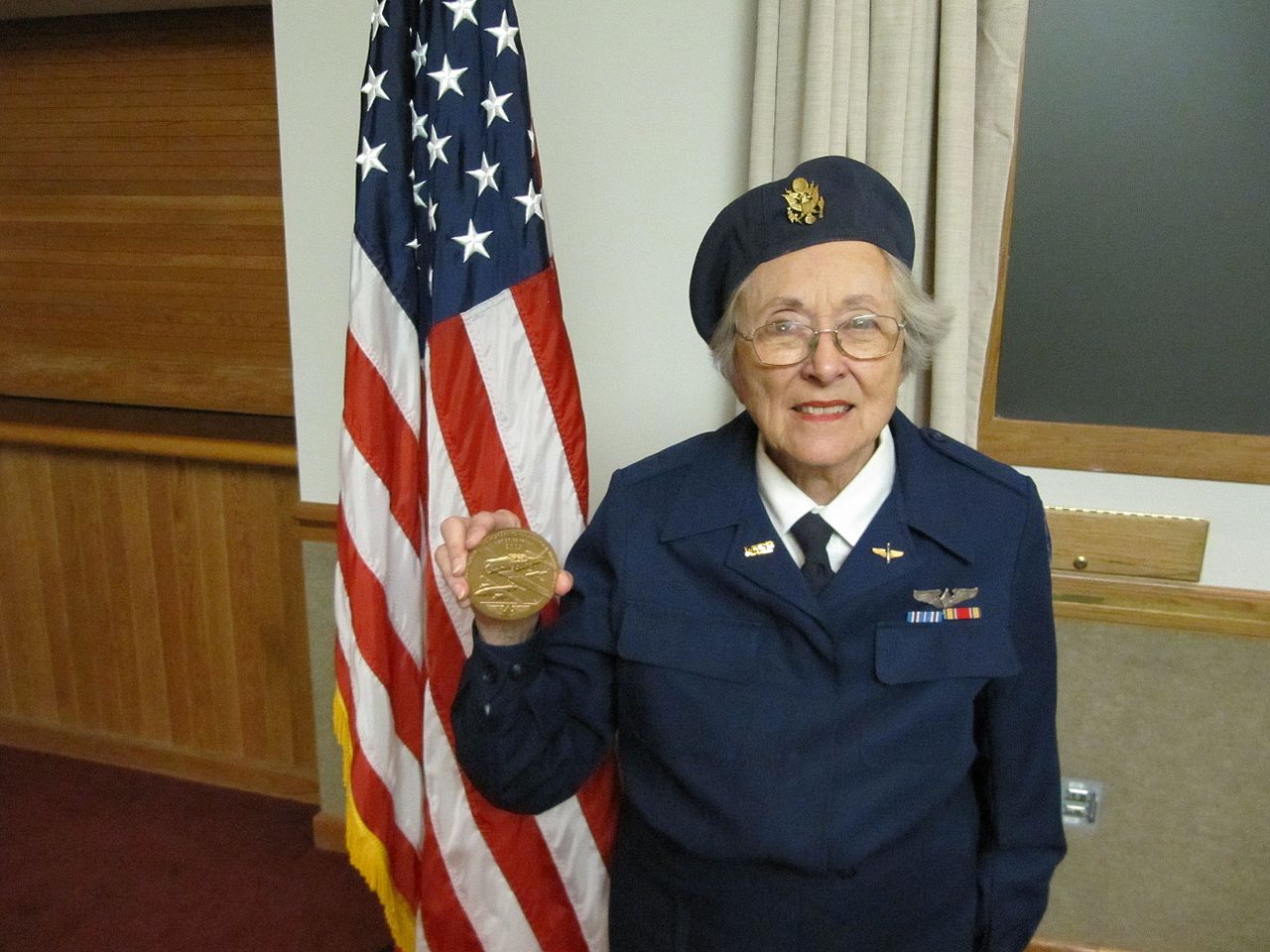
After the war, WASP contributions were for many years little known to the public. In subsequent decades their service received formal recognition: survivors and historians worked to secure veteran status and public honors, and the pilots are remembered today as pioneers who expanded opportunities for women in aviation. Their training, professionalism, and sacrifice influenced postwar changes in military and commercial aviation communities.
Notable facts
- WASP members flew a wide range of aircraft and performed duties that directly supported combat operations without being in combat roles.
- The program demonstrated women's ability to handle advanced aircraft and complex missions under pressure.
- WASP alumni later became advocates for women in aviation and public servants, helping preserve the program's history.
Related articles
Author
AlegsaOnline.com Women Airforce Service Pilots (WASP) Leandro Alegsa
URL: https://en.alegsaonline.com/art/108865