
World Bank Group
A multinational development institution of five organizations that provides finance, advice and technical assistance to reduce poverty and promote economic development worldwide.
Overview
The World Bank Group is a family of five international institutions that works with member countries to reduce poverty and promote sustainable economic development. It provides financing, policy advice and technical assistance across public and private sectors. Headquartered in Washington, D.C., the Group operates through offices around the world and is owned by its member governments. For general information see the World Bank Group portal.
Image gallery
10 Images




Structure and components
The Group comprises five distinct organizations with different mandates: the International Bank for Reconstruction and Development (IBRD), which lends to middle‑income and creditworthy low‑income countries; the International Development Association (IDA), which offers concessional loans and grants to the poorest nations; the International Finance Corporation (IFC), which supports private sector development; the Multilateral Investment Guarantee Agency (MIGA), which provides political risk insurance and guarantees; and the International Centre for Settlement of Investment Disputes (ICSID), which facilitates arbitration of investment disputes. Together they supply a mix of financing, guarantees and advisory services to governments and businesses.
Origins and development
The institutions trace their origins to the post‑World War II era and the 1944 Bretton Woods conference, where the framework for international financial cooperation was established. Initially focused on reconstruction and capacity building, the Group’s priorities have evolved to emphasize poverty reduction, infrastructure, human capital, and more recently climate change and fragility. Its policies and instruments have adapted in response to global economic shifts and development research.
Activities, instruments and areas of work
The World Bank Group carries out project financing, policy lending, technical assistance, analytical work and capacity building. Typical sectors include infrastructure, education, health, agriculture, urban development and climate resilience. Financial instruments range from concessional credits and grants to market‑rate loans, guarantees and equity. The Group also produces research and data used by policymakers, and supports knowledge sharing and reform design in member countries. For country and sector guidance consult development resources.
Governance and funding
Member governments are shareholders and set direction through a Board of Governors and an Executive Board. The Group’s president leads day‑to‑day operations. Funding comes from member capital, donor contributions (notably to IDA), and capital market borrowing, particularly by the IBRD. Its financial model mixes concessional resources for low‑income countries with self‑sustaining lending operations for wealthier members.
Distinctive features and critiques
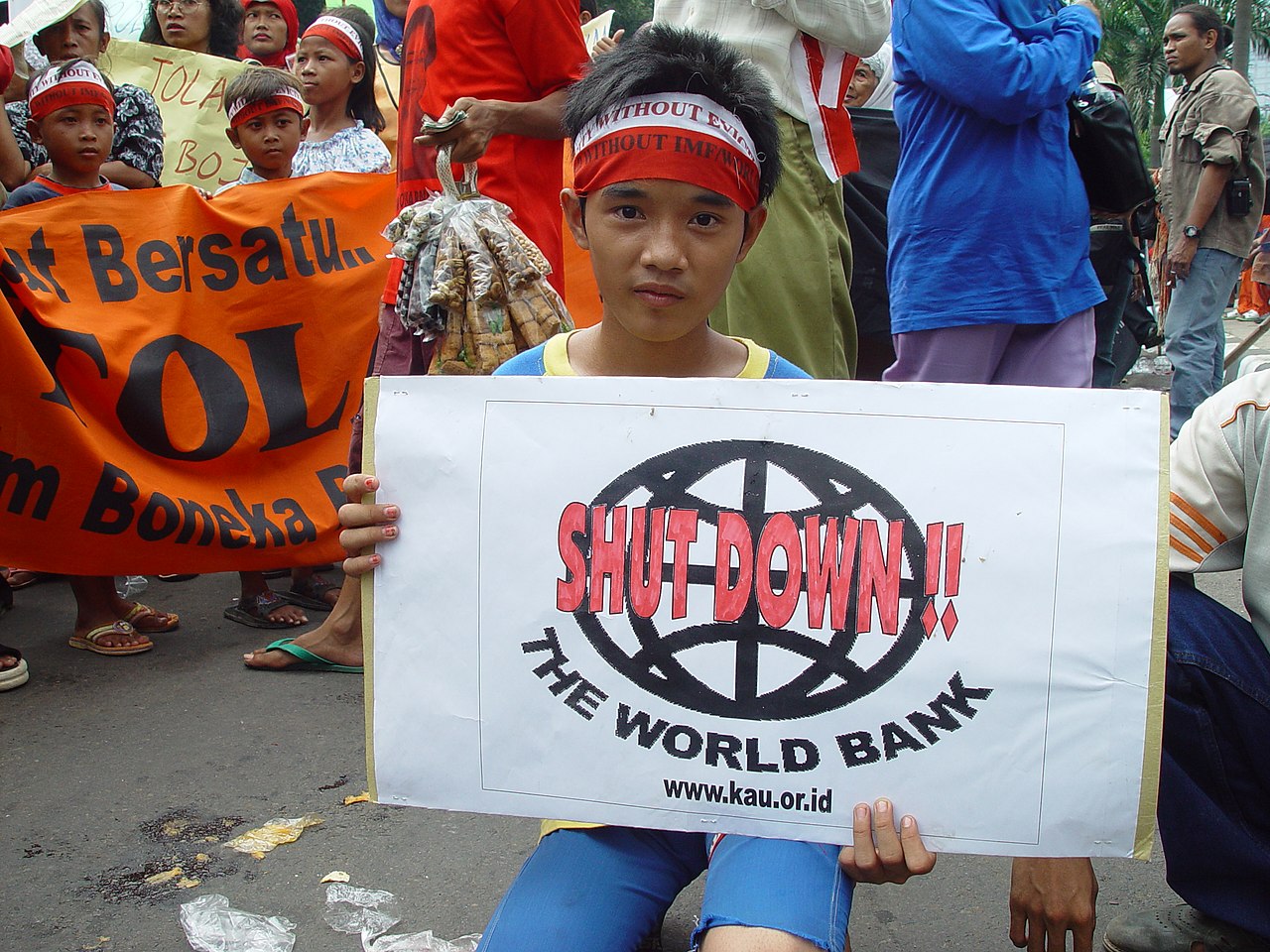
The World Bank Group is distinct from the International Monetary Fund (IMF), which focuses on macroeconomic stability and balance‑of‑payments assistance. Informally, "the World Bank" often refers specifically to IBRD and IDA together. Over decades it has faced criticism on topics such as conditionality, social and environmental impacts of projects, and institutional governance; these concerns have prompted reforms, stronger safeguard policies and increased emphasis on transparency. Its central role in global development finance and policy debates remains widely recognized. The Group’s main headquarters are in Washington, D.C.; further information about locations is available at headquarters and offices and information for member countries can be found via member services.
Questions and answers
Q: What is the World Bank Group?
A: The World Bank Group is a group of five international organizations, which gives advice and finance to member countries for economic development and reducing poverty.
Q: What is the purpose of the World Bank Group?
A: The purpose of the World Bank Group is to provide advice and finance to member countries for economic development and reducing poverty.
Q: Who owns the World Bank Group?
A: The World Bank Group is a non-profit-making international organization owned by member governments.
Q: Where is the headquarters of the World Bank Group located?
A: The headquarters of the World Bank Group is located in Washington, D.C.
Q: How many member countries does the World Bank Group have offices in?
A: The World Bank Group has offices in 124 other member countries.
Q: What does the World Bank Group do for member countries?
A: The World Bank Group provides advice and finance to member countries for economic development and reducing poverty.
Q: Is the World Bank Group a profit-making organization?
A: No, the World Bank Group is a non-profit-making international organization owned by member governments.
Related articles
Author
AlegsaOnline.com World Bank Group Leandro Alegsa
URL: https://en.alegsaonline.com/art/109072