
William Clarke Quantrill
Confederate guerrilla leader (1837–1865) active on the Missouri–Kansas border during the American Civil War; led irregular raids including the 1863 Lawrence Massacre and died in Kentucky in 1865.
Overview
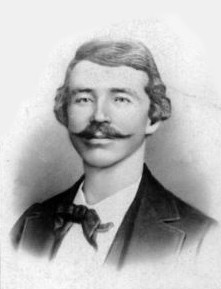
William Clarke Quantrill (July 31, 1837 – June 6, 1865) was a controversial leader of irregular Confederate forces during the American Civil War. He is best known for commanding a mobile band of guerrillas and raiders who operated along the border between Missouri and Kansas. Described in contemporary and later accounts as a bushwhacker, partisan, and raider, Quantrill became a symbol of the brutal, personal nature of border warfare.
Image gallery
6 Images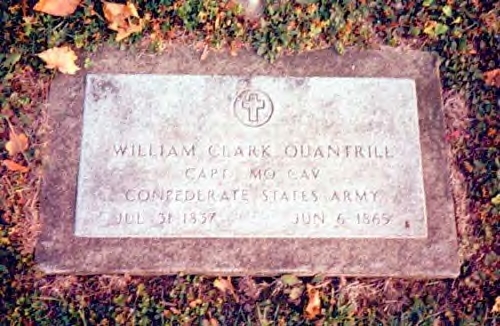



Organization and tactics
Quantrill led a loosely organized force made up of Confederate sympathizers, local outlaws, and young men attracted to irregular combat. His command relied on speed, surprise and small-unit mobility rather than conventional military formations. These tactics allowed his men to conduct raids on towns, ambush patrols, destroy supplies and then disperse before larger Union forces could respond. Quantrill's men were sometimes irregularly uniformed and operated outside formal military controls, a source of controversy during and after the war.
Notable actions
The most infamous event linked to Quantrill was the August 1863 attack on Lawrence, Kansas, known as the Lawrence Massacre. In that raid his force killed a large number of male residents and burned portions of the town, an act that intensified retaliation and hardened attitudes on both sides of the border. Other raids and skirmishes in the region contributed to the cycle of violence often described as part of the larger guerrilla struggle in the western borderlands.
Final months and death
As Union patrols and mounted columns increased their efforts to suppress guerrilla activity, Quantrill's effectiveness declined. In 1865 he was mortally wounded and died after an ambush in Kentucky, while being pursued by forces aligned with the Union. His death came in the closing months of the civil conflict and removed a central figure from the border insurgency.
Legacy and assessment
Historians continue to debate how to classify Quantrill and his followers: as partisan fighters with Confederate sympathies, criminal marauders, or a mixture of both. His actions left a deep imprint on local memory; the Lawrence raid in particular shaped postwar politics, law enforcement responses and community reconstruction. Several men associated with Quantrill later gained notoriety in the postwar era, and his reputation has been variously romanticized and condemned in popular culture and historical writing.
Context and further notes
- Region: violent competition across Missouri and Kansas during the 1850s–1860s.
- Conflict: part of irregular warfare within the broader American Civil War.
- Memory: the Lawrence attack remains central to debates about wartime atrocity and retaliation.
- Affiliations: described in sources as a leader of Confederate irregulars or guerrillas active in the borderlands.
Quantrill's career illustrates how civil conflict can create irregular leaders whose actions cross the boundary between military combat and criminal violence, producing contested legacies that are still studied by historians of the Civil War era.
Related articles
Author
AlegsaOnline.com William Clarke Quantrill Leandro Alegsa
URL: https://en.alegsaonline.com/art/108288