
Willi Sitte — East German painter and cultural leader
Willi Sitte (1921–2013) was a prominent German painter and long-time head of the East German Association of Visual Artists, known for large-scale figurative work, Socialist Realist themes and a contested political role.
Overview
Willi Sitte (28 February 1921 – 8 June 2013) was a German painter and one of the most visible artistic figures of the German Democratic Republic (GDR). He combined a sustained studio practice with an influential institutional role; his career is discussed both for its artistic achievements — large figurative canvases, murals and public commissions — and for his political position within the cultural structures of the GDR.
Image gallery
1 Image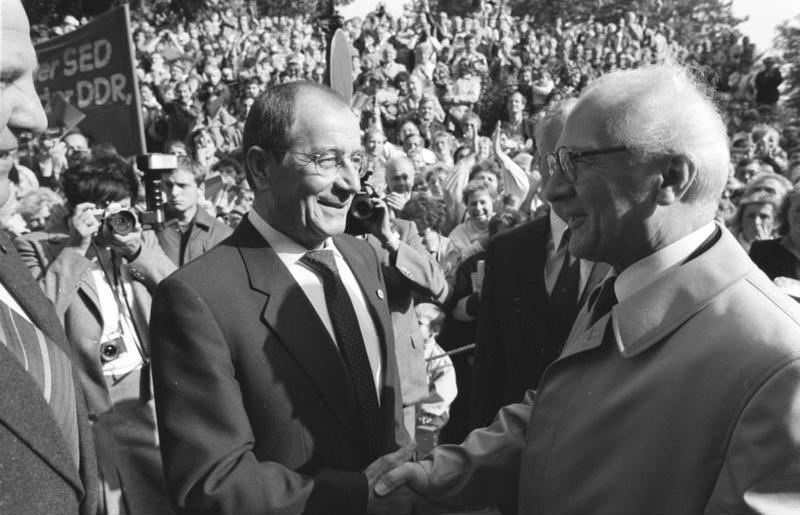
Origins and early life
Sitte was born in Kratzau, in the historic region of Bohemia, at a time when that territory formed part of Czechoslovakia. Coming from a German-speaking family in Central Europe, he later relocated to what became East Germany after World War II and established his career there. His formative years and early training shaped a preference for figurative representation and narrative subjects.
Artistic style and themes
Sitte is commonly associated with large-scale figurative painting and, in practice, with many of the subjects promoted under Socialist Realism: work, collective life, historical episodes and public commemoration. His technique combined emphatic drawing with broad, expressive brushwork; portraits and group scenes frequently occupy monumental formats intended for public visibility. He also worked in drawing and on mural schemes for civic buildings, producing images designed for collective settings as well as private exhibitions.
Institutional role and activities
For many years Sitte served as president of the GDR's artists' association (the Association of Visual Artists), an office that involved organizing exhibitions, overseeing commissions and advising cultural policy. This position made him a central figure in the official art world: he helped shape which projects received public support and took part in debates about art's role in socialist society. Biographical overviews and galleries provide further context on his institutional activity at additional sources.
Reception and controversies
Sitte's public prominence generated mixed responses. Within the GDR he was widely recognized and received state honors for contributions to public art; after reunification his political alignment and close ties to the GDR cultural apparatus prompted critical reassessment. Scholars and critics have debated the degree to which his work should be read primarily as propaganda, as formal achievement, or as a more complex combination of conviction, compromise and artistic practice.
Later life and legacy
Following German reunification Sitte continued to work and to exhibit; museums and collections in Germany and beyond hold examples of his paintings and drawings. Defenders emphasize his technical skill, compositional strength and commitment to large-scale figuration; others emphasize the ethical and political questions raised by his institutional role. He lived and worked in Halle, Germany, and died there on 8 June 2013 at the age of 92. For further reading and biographical context see general reference entries and catalogues linked through public resources (historical context, regional background).
Further notes
- Common themes: labor, collective life, historical commemoration and portraiture.
- Mediums: oil painting, drawing, mural schemes and public commissions.
- Legacy: works remain part of museum collections and public debates about art and politics in 20th-century Germany.
Related articles
Author
AlegsaOnline.com Willi Sitte — East German painter and cultural leader Leandro Alegsa
URL: https://en.alegsaonline.com/art/108181
Sources
- bild.de : "DDR-Maler Willi Sitte (†92) tot!"