
Wilhelm Genazino: German Novelist and Observer of Everyday Life
Concise overview of Wilhelm Genazino: life, journalistic beginnings, major works (including the Abschaffel trilogy), themes, style, awards and literary legacy.
Wilhelm Genazino (22 January 1943 – 12 December 2018) was a German writer and former journalist noted for fiction that turns everyday experience into careful, quietly ironic narratives. Born in Mannheim, he began his professional life in journalism and cultural publishing, and later gained recognition across the German-speaking world for novels, short stories and essays that attend to private anxieties, urban routines and the interior life of solitary characters.
Image gallery
3 Images

Early life and career
Genazino worked as a journalist during the early part of his career, contributing to and editing small cultural outlets. He wrote for the satirical magazine Pardon and served as a co-editor of the magazine Lesezeichen. These formative years in periodical culture influenced his eye for social detail and his economical prose style. For concise biographical information and bibliographical pointers see general resources and introductions (further reading).
Literary themes and style
Genazino's fiction is commonly characterized by a focus on the minutiae of everyday life: small disappointments, repetitive labour, fleeting urban observations and the private interiority of characters who feel out of step with their surroundings. His narrative voice mixes restrained humor and melancholy, favoring patient, precise description over dramatic plot turns. Readers frequently note his compact sentences, ironic distance and a sustained attention to the ways language shapes consciousness.
Major works and reception
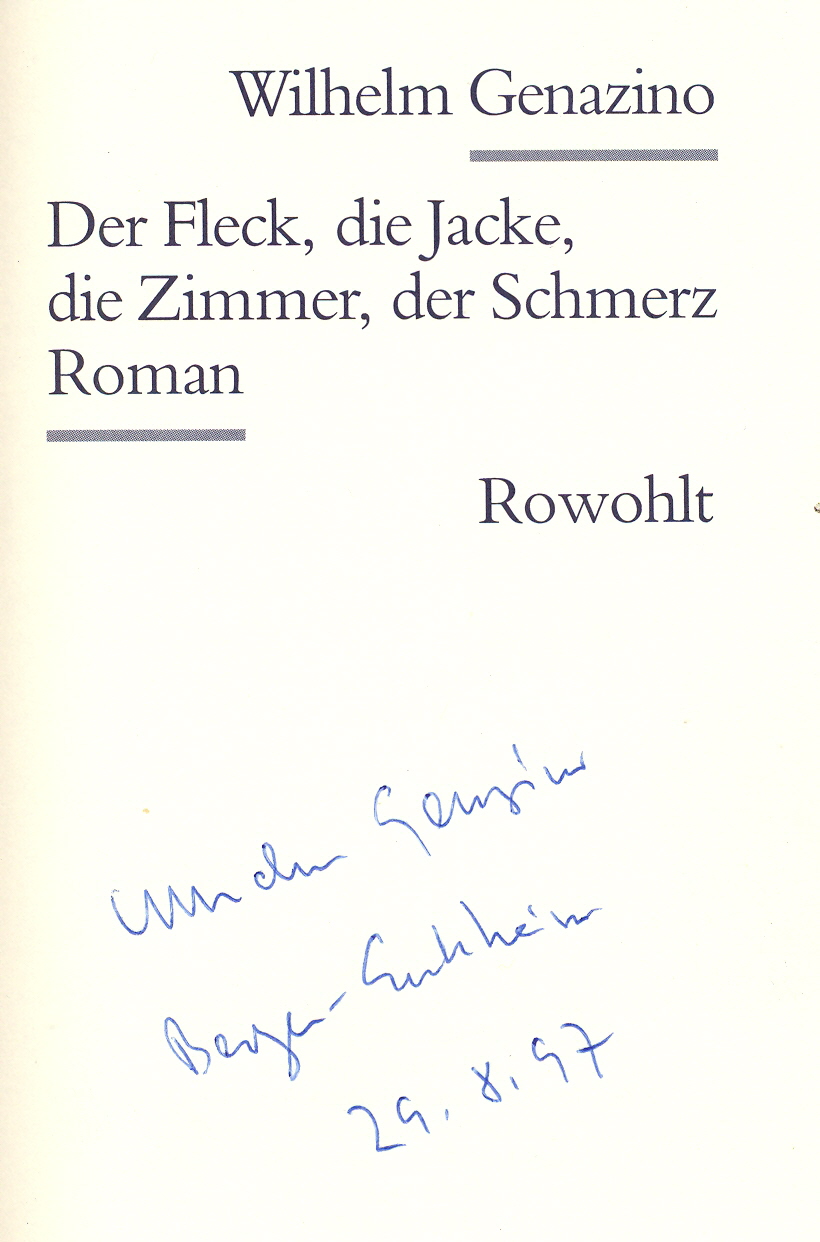
Among Genazino's best-known achievements is the so-called Abschaffel trilogy, which follows a recurring figure and explores themes of alienation, work and the search for meaning in late 20th-century life. Across his career he published novels, story collections and essays; critics praised his capacity to render subtle states of mind and to find emotional depth in ordinary moments. His work has been the subject of scholarly discussion and reviews in literary journals, and readers often encounter his writing in translations and anthologies.
- Key project: the Abschaffel trilogy, a defining sequence in his oeuvre.
- Common concerns: urban malaise, identity, language, memory and solitude.
- Style markers: laconic, observant prose with a blend of satire and compassion.
Awards, membership and recognition
Genazino received significant recognition within German literary institutions. In 1990 he became a member of the Academy for Language and Poetry in Darmstadt (Akademie), and in 2004 he was awarded the Georg Büchner Prize (Georg Büchner Prize), one of the most prestigious honors in German letters. These acknowledgments marked his standing among peers and his visibility in contemporary debates about prose and literary form.
Death and legacy
Genazino continued to publish and to attract readers until late in life. He died on 12 December 2018 in Frankfurt, reportedly of lung cancer (obituary and reports). His work remains of interest to students of postwar and contemporary German literature for its distinctive focus on everyday consciousness and for demonstrating how modest, concentrated narratives can yield ethical and aesthetic insight. Editions, translations and critical studies provide entry points for new readers.
For introductions, bibliographies and critical overviews consult general literary resources and selected essays (further reading). Genazino's writing is often recommended for readers who appreciate narrative restraint, a humane outlook and finely tuned observations of ordinary life.
Related articles
Author
AlegsaOnline.com Wilhelm Genazino: German Novelist and Observer of Everyday Life Leandro Alegsa
URL: https://en.alegsaonline.com/art/108119
Sources
- kleist.org : "Kleistpreis 2007 an Wilhelm Genazino"
- deutscheakademie.de : "2004 Wilhelm Genazino"
- orf.at : Schriftsteller Wilhelm Genazino ist tot