
Wilhelm Mohnke: Waffen-SS commander and controversial figure of World War II
German SS-Brigadeführer Wilhelm Mohnke (1911–2001) commanded units of the Leibstandarte SS and led the defence of Berlin's government district in 1945; his career included awards and persistent allegations of war crimes.
Wilhelm Mohnke (1911–2001) was a German military officer who served in the Waffen-SS during World War II. Born in Lübeck, he became a member of the elite Leibstandarte SS Adolf Hitler (LSSAH) and rose through its ranks to command battalion and regimental formations. By war's end he held the rank of SS-Brigadeführer, a position roughly equivalent to a brigadier-level officer in other armies, and was a central figure in the defence of Berlin's government quarter during the closing days of the conflict.
Image gallery
3 Images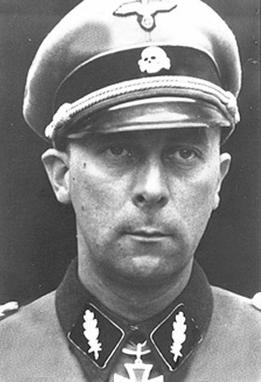


Military career and commands
Mohnke joined the SS in the 1930s and was attached to the LSSAH, the personal bodyguard formation for Adolf Hitler that evolved into a combat division. He saw combat from the early campaigns of the war, including the invasion of France in 1940, where he led company and later battalion-sized units. In later years he commanded larger formations and was recognised by his superiors for aggressive frontline leadership.
During the Allied advances of 1944 Mohnke was awarded the Knight's Cross of the Iron Cross, a high German military decoration of the period, for actions during the fighting in France and the subsequent withdrawal. He retained positions of responsibility through 1945 and was assigned to organise the defence of the central government district in Berlin in April 1945, following direct orders issued from Adolf Hitler in the final days of the Third Reich.
Battle of Berlin and final actions
As Soviet forces closed on central Berlin, Mohnke was charged with holding key buildings and streets in the government quarter and to coordinate remaining units of mixed origin. Accounts from the siege describe chaotic urban combat, improvised defensive groups, and last-ditch attempts to protect government installations. Mohnke and other senior officers operating in the city were among the last to implement Hitler's commands to resist to the end.
Allegations, investigations and legal status
Throughout and after the war Mohnke's name has been associated with allegations of unlawful killings and mistreatment of prisoners. In particular, he has been accused of involvement in the killing of surrendered British soldiers following the 1940 fighting in northern France and Belgium; sources assert that some 80 British prisoners were murdered in incidents that have been widely discussed by historians and veterans. He was detained and questioned by Allied authorities after the war and was the subject of later investigations by German prosecutors. However, Mohnke was never convicted in a criminal trial for these allegations, and inquiries at different times concluded there was insufficient evidence to bring a successful prosecution.
Contemporaries and later analysts offer differing assessments: supporters have stressed his role as a front-line leader and recipient of decorations such as the Knight's Cross, while critics point to the broader record of the Waffen-SS and to specific accusations linked to units under his command. He served in the Waffen-SS, an armed branch of the SS that combined military functions with political loyalty to the Nazi regime (Waffen-SS), and his biography is often discussed within studies of that organisation and its wartime conduct.
Later life and legacy
After release from Allied custody, Mohnke lived in postwar West Germany and largely avoided public political life. He died in 2001 near Eckernförde in Damp (Damp). Historians continue to examine his wartime record as part of wider efforts to understand unit-level behaviour in the Wehrmacht and SS, and his case remains a reference point in debates about command responsibility, wartime atrocities and postwar accountability.
Related articles
Author
AlegsaOnline.com Wilhelm Mohnke: Waffen-SS commander and controversial figure of World War II Leandro Alegsa
URL: https://en.alegsaonline.com/art/108127